Breast Augmentation with Fat Grafting in Bangalore
At Pink Apple Aesthetics, Jayanagar, breast augmentation with fat grafting is performed by Dr. Pinky Devi Ayyappan, MCh (Plastic Surgery) — a female, board-certified plastic and reconstructive surgeon with 12+ years of experience and fellowship training in Belgium under Dr. Patrick Tonnard and Dr. Alexis Verpaele, whose nanofat technique principles underpin modern fat grafting science. The procedure is planned with realistic, anatomy-specific goals — and the honest guidance that distinguishes the right candidates from those better served by implants.
What Is Breast Augmentation with Fat Grafting (Fat Transfer / Lipofilling)?
Breast augmentation with fat grafting is a two-step procedure that simultaneously reduces fat from areas where it is unwanted and adds it to the breasts where more volume is desired. There are no implants, no foreign materials, and no permanent internal structures of any kind.
Step 1 — Fat harvest: using gentle liposuction technique, fat is removed from a donor site on the body. The most common donor sites are the abdomen, inner and outer thighs, flanks, and inner knees — areas where patients typically have excess fat. This harvest produces a contouring benefit at the donor site in addition to providing the material for breast augmentation.
Step 2 — Fat processing and injection: the harvested fat is processed immediately in a closed, sterile system — centrifuged or washed to separate viable fat cells from blood, oil, and fluid. The purified fat is then loaded into fine syringes and injected into the breast tissue in multiple small passes at different depths, using a micro-droplet injection technique. This ensures each tiny parcel of fat is surrounded by vascularised tissue from which it can develop its own blood supply and survive permanently.
The result: a modest but entirely natural-feeling breast enhancement — with no visible scars on the breast itself, no implant monitoring requirements, no capsular contracture risk, and no implant-related complications of any kind.
Also known as: fat transfer breast augmentation, breast lipofilling, autologous fat transfer breast, natural breast augmentation, breast augmentation without implants, breast fat injection, fat grafting to breast, natural boob job Bangalore.
Before and After Procedures
Look At The Difference
Results shown are from actual patients of Dr. Pinky Devi Ayyappan at Pink Apple Aesthetics, Bangalore. Individual outcomes vary based on donor fat availability, volume injected, fat survival rate, breast anatomy, and the specific goals discussed at consultation. All images are shared with patient consent.
Who Is the Right Candidate for Fat Transfer Breast Augmentation — And Who Is Not
This procedure is genuinely excellent for the right patient — and genuinely unsuitable for others. Being honest about this distinction is the most important service Dr. Pinky provides at the consultation. Many patients come having read about fat transfer breast augmentation and wanting it specifically, only to find that an implant would give them the result they actually want. The reverse is equally true: many patients who assumed they needed implants are excellent candidates for fat grafting.
You are a good candidate if:
- You want a subtle, natural enhancement — a half-cup to one-cup size increase. Fat transfer is not suited to patients wanting two or more cup sizes of augmentation.
- You have adequate donor fat — you have a moderate amount of excess fat in the abdomen, thighs, or flanks that can be harvested. Very lean patients (BMI under 19 to 20) may not have sufficient donor fat for meaningful breast augmentation.
- You specifically want to avoid implants — for personal, medical, or lifestyle reasons. No implant monitoring, no BIA-ALCL concerns, no capsular contracture, no future implant replacement.
- You want the dual benefit of body contouring — slimming the abdomen or thighs while enhancing the breast, in a single procedure.
- You want to improve breast symmetry — fat grafting is excellent for correcting mild asymmetry where one breast is slightly smaller than the other.
- You are a post-breast surgery patient wanting volume improvement — including patients who have had lumpectomy, radiation, or previous breast surgery and want to improve breast contour and volume without additional implants.
- You have good skin elasticity — the breast skin needs adequate elasticity to accommodate the added volume and support fat survival
You may not be the right candidate if:
- You want a significant size increase (more than one cup size) — fat transfer cannot safely deliver this in a single session. The breast can only accommodate a limited volume of fat per procedure; trying to inject too much produces poor fat survival and potential complications.
- You have significant breast ptosis (sagging) — fat grafting adds volume but does not lift. A significantly ptotic breast needs a mastopexy — adding fat to a sagging breast makes it heavier and lower, not lifted. The combination of fat grafting with a mastopexy is possible but should be planned carefully.
- You are very lean with minimal donor fat — if there is insufficient fat to harvest, the procedure cannot achieve meaningful breast augmentation.
- You want a specific, predictable size — fat survival is variable (20 to 40% resorption is expected). The final volume is less precisely controllable than with an implant. Patients who want to target a very specific cup size are better served by implants.
Dr. Pinky’s approach: at every fat transfer breast augmentation consultation, the patient’s goals are assessed against what the anatomy can realistically achieve. If implants would give you the result you actually want, Dr. Pinky will tell you clearly and explain why. If fat grafting is the right solution for your anatomy and goals, it will be planned precisely around your donor fat availability and breast dimensions.
Breast Augmentation with Fat Grafting Cost at Pink Apple Aesthetics
Breast augmentation with fat grafting at Pink Apple Aesthetics starts from ₹1,50,000 to ₹2,50,000 (terms and conditions apply). Your confirmed cost is provided after consultation with Dr. Pinky, based on the volume of fat harvest required and the extent of donor site liposuction.
The cost of fat transfer breast augmentation is higher than a simple breast liposuction procedure because it involves two surgical components — fat harvest (liposuction) and fat processing and injection — each with their own surgical time and facility requirements. It is comparable to implant-based augmentation in total cost for most patients.
What your cost typically includes:
- Surgeon's fee — Dr. Pinky Devi Ayyappan, MCh Plastic Surgery.
- Anaesthesia — general anaesthesia or IV sedation with local, as planned.
- Surgical facility charges.
- Fat processing — sterile, closed-system centrifugation.
- Compression garments — for donor liposuction areas.
- Supportive bra — for breast recovery.
- Pre-operative blood tests.
- Pre-operative breast imaging — where clinically indicated.
- Post-operative medications.
- Follow-up appointments — at 1 to 2 weeks, 1 month, and 3 months (final result assessment).
What affects the final cost:
- Volume of fat harvest — more donor sites and larger volume harvest increases surgical time.
- Number of donor areas — single vs multiple liposuction sites.
- Need for second session — if a top-up is needed at 3 months for additional volume.
- Combination with mastopexy — if a breast lift is being combined in the same session.
Breast augmentation with fat grafting is a cosmetic procedure and is not covered by health insurance. EMI payment options are available at Pink Apple Aesthetics.
How Does Fat Survive After Transfer? The Science That Determines Your Result
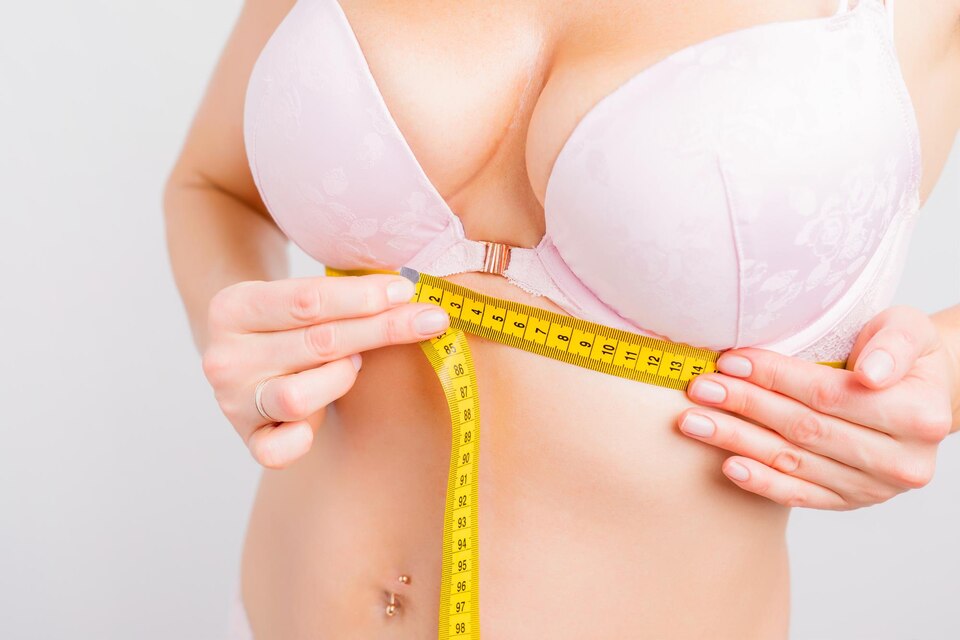
Fat survival is the central science of fat grafting — and it is the most misunderstood aspect of the procedure. Understanding it explains why technique matters enormously, why the reported volume injected is always more than the final volume retained, and why two patients with the same amount of fat transferred can have very different outcomes.
How fat cells survive after transfer
Transferred fat cells are completely dependent on receiving oxygen and nutrients from the surrounding tissue in order to survive. They have been removed from their original blood supply and must establish connections with new blood vessels in the recipient tissue — a process called neovascularisation — within approximately 48 to 72 hours of injection. Fat cells that succeed in forming these connections survive permanently. Fat cells that do not form connections within this window are reabsorbed by the body — this is the fat resorption that accounts for the predictable 20 to 40% volume reduction in the 3 months after surgery.
Why micro-droplet injection technique maximises survival
The single most important factor in fat survival is the size of each injected fat parcel. A large bolus of fat injected into one location cannot all establish blood vessel connections — the fat cells in the centre of the bolus are too far from the nearest blood supply to survive. This produces oil cysts, fat necrosis, and poor overall retention. Modern fat grafting uses a micro-droplet technique: the fat is injected in multiple tiny passes, each depositing a thin thread of fat surrounded by tissue on all sides. Every micro-droplet is close to vascularised tissue — every fat cell has the best possible chance of surviving. This is why experienced technique produces significantly better fat survival rates than volume-injection approaches.
- Dr. Pinky's technique: micro-droplet multi-pass injection at multiple depths within the breast tissue. This is the internationally established standard for maximising fat graft survival and producing smooth, natural contour.
The 20 to 40% resorption — what to expect
An initial resorption of 20 to 40% of the injected fat volume is expected in every patient in the 3 months after surgery. This is normal, predictable, and factored into the surgical plan — Dr. Pinky injects a calculated volume that accounts for this resorption so that the final settled result meets the patient's target. The fat that survives at the 3-month mark is permanent — it does not continue to reduce.
Weight stability after fat grafting is important. The transferred fat cells behave exactly like the fat cells at the donor site — they grow when you gain weight and shrink when you lose it. Patients are advised to maintain a stable weight after the procedure to preserve the result.
Fat Transfer Breast Augmentation vs. Implants — Which Is Right for You?
This is the most important comparison for any patient researching breast augmentation. Neither approach is universally better — the right choice depends entirely on your goals, your anatomy, and your priorities.
| Fat Transfer Augmentation | Silicone Implant Augmentation | |
|---|---|---|
| Size increase | Half to one cup size per session — modest, natural | Any size — from subtle to significant |
| Material | Your own fat — no foreign material | Medical-grade silicone — permanent internal device |
| Feel | Entirely natural — indistinguishable from native breast | Very good — modern cohesive gel close to natural |
| Scars on breast | None — tiny injection punctures, imperceptible | Small (3-5cm) scar at fold, armpit, or areola |
| Body contouring | Yes — simultaneous liposuction of donor area | No additional body contouring |
| Predictability of size | Variable — 20-40% resorption expected; final size at 3 months | Precise — implant cc volume determines result |
| Long-term monitoring | No device to monitor. Standard mammography unaffected | MRI/ultrasound every 5-7 years for silicone rupture screening |
| Implant-specific risks | None — no capsular contracture, no BIA-ALCL | Capsular contracture, implant displacement, BIA-ALCL (very rare with smooth/nano surface) |
| Ptosis correction | No lift — adds volume only | Some visual lift with volume addition; augmentopexy for full lift |
| Recovery | Similar to implants — 2-3 weeks for return to full activity | 1.5-3 weeks for light activities; 4-6 weeks for full activity |
| Revision | Top-up session possible after 3 months if more volume needed | Implant revision/exchange is surgical — more involved |
Does Fat Transfer Breast Augmentation Affect Breast Cancer Screening?
This is one of the most important safety questions in fat transfer breast augmentation — and one that deserves a straightforward, evidence-based answer rather than dismissal or overclaiming.
What the evidence says
Breast fat grafting can produce small calcifications and oil cysts in the breast over time — these are radiological findings that appear on mammograms. Early in the history of fat transfer breast augmentation, there was concern that these calcifications could be confused with the calcifications associated with breast cancer on mammography, potentially leading to unnecessary biopsies or missed diagnoses.
Current evidence from multiple large clinical studies — including long-term follow-up of thousands of patients — is reassuring: the calcifications associated with fat grafting have a distinct radiological appearance (coarser, well-defined, 'egg-shell' pattern) that experienced breast radiologists can differentiate from the microcalcifications associated with malignancy. Breast cancer has not been shown to occur more frequently in patients who have undergone fat transfer breast augmentation than in the general population.
Practical implications for patients
- Pre-operative baseline mammography — recommended for women aged 35 and above, or those with a family history of breast cancer, before undergoing fat transfer breast augmentation. This provides a clear pre-procedure baseline for future comparison.
- Inform your radiologist and breast screening service — always inform any radiologist or breast screening provider that you have had fat transfer breast augmentation. This allows them to interpret your imaging with the appropriate clinical context.
- Standard screening should continue — fat transfer breast augmentation does not exempt patients from standard breast cancer screening. All patients should continue age-appropriate mammographic screening according to national guidelines.
At Pink Apple Aesthetics, pre-operative breast imaging is arranged where clinically indicated before fat transfer breast augmentation. Dr. Pinky discusses the imaging implications clearly at every consultation — so patients understand exactly how to manage their ongoing breast health screening after the procedure.
Fat Transfer Breast Augmentation for Indian Patients — Body Type and Fat Availability
Indian and South Asian body composition has specific characteristics that affect fat transfer breast augmentation planning — and this is a topic that no Bangalore competitor addresses specifically.
Indian body fat distribution
Indian patients tend to carry a higher proportion of central (abdominal) body fat relative to their overall BMI compared to other ethnic groups. This is relevant to fat transfer breast augmentation because the abdomen is the most common and highest-yield donor site. For most Indian patients who are at a healthy weight with even a small amount of abdominal fullness, there is typically sufficient donor fat for meaningful breast augmentation of half to one cup size.
The lean Indian patient
Patients with a BMI under approximately 19 to 20, or those who are very lean in the typical liposuction donor areas, present a genuine challenge for fat transfer breast augmentation. Dr. Pinky assesses donor fat availability at consultation and will be honest if the available donor fat is insufficient for meaningful augmentation. In these patients, implants are typically the more appropriate solution.
Post-pregnancy Indian women
Many Indian women who consult for breast augmentation are post-pregnancy patients who have both modest post-lactational breast deflation AND excess abdominal fat from pregnancy. This is the ideal patient profile for fat transfer breast augmentation — the donor site (abdomen) provides the material, while the recipient site (breast) receives the restoration of lost volume.
Breast tissue density in Indian patients
Younger Indian women tend to have denser breast tissue. Denser breast tissue can accommodate fat grafts well and is associated with good fat survival, as the dense glandular structure provides good structural support for the injected fat.
What Happens During Breast Augmentation with Fat Grafting — Step by Step
Step 1 — Consultation and planning
Dr. Pinky assesses the breast dimensions, skin quality, degree of any ptosis, and whether the patient’s goals are achievable with fat transfer. She assesses donor fat availability at the candidate sites (abdomen, thighs, flanks) and calculates the approximate volume of processed fat that can be expected from harvest. She discusses the expected result, the resorption timeline, and whether a second session is likely to be needed. If implants would serve the patient’s goals better, she will say so.
Step 2 — Pre-operative preparation
Blood tests and pre-operative assessment. Stop smoking at least 4 weeks before (smoking significantly impairs fat graft survival). Stop blood thinners and relevant supplements 1 to 2 weeks before. Stable body weight for at least 3 months before the procedure. Baseline breast imaging for patients aged 35 and above.
Step 3 — The surgery (2 to 3 hours)
Performed under general anaesthesia or local anaesthesia with intravenous sedation, depending on the volume of liposuction and fat grafting planned. The donor areas are infiltrated with tumescent solution (saline with adrenaline) to minimise bleeding during liposuction. Fat is harvested using a fine, blunt-tipped liposuction cannula with low-trauma suction — gentle technique is critical to maximise the viability of harvested fat cells. The harvested fat is processed immediately in a closed, sterile system. The refined fat is injected into the breast tissue in multiple micro-droplet passes at different depths throughout the breast. Both breasts are augmented in the same session. Small compression garments are applied to the liposuction donor areas. A supportive bra is applied to the breasts.
Step 4 — Recovery: first two weeks
Compression garments on the donor liposuction areas are worn for 3 to 4 weeks. A supportive bra (not underwired, not compression) is worn day and night for 3 to 4 weeks — the breast should be supported but not compressed, as excessive pressure can impair fat survival. Bruising and swelling at both the donor and breast areas peaks at 3 to 5 days and resolves progressively. Most patients return to desk work at 7 to 10 days. Driving is avoided for 1 to 2 weeks. Strenuous exercise and direct pressure on the breasts is avoided for 4 to 6 weeks.
Step 5 — The 3-month settling phase
The breasts appear swollen and fuller than the final result immediately after surgery — this is expected and partially represents the surgical swelling in addition to the injected fat. As swelling resolves and fat resorption occurs over the following 3 months, the breasts settle into their final volume. The 3-month result is the stable, accurate assessment of what has survived. If additional volume is desired at this point, a second session can be planned. Most patients are satisfied at 3 months; some request a top-up for a modest additional increase.
What Are the Risks of Fat Transfer Breast Augmentation?
Proper care before and after surgery is essential for optimal healing and results.
- Variable fat survival (20–40% resorption) — the most predictable aspect of the procedure. Every patient experiences some fat resorption. This is factored into the surgical volume plan and managed at the 3-month follow-up.
- Swelling and bruising — at both the donor liposuction sites and the breasts. Peaks at 3 to 5 days; largely resolved by 2 to 3 weeks.
- Oil cysts and fat necrosis — if fat cells fail to survive in localised areas, they can form oil cysts or areas of calcified fat necrosis. These are usually small, self-resolving, and benign — but can occasionally require aspiration or monitoring.
- Irregular contour — uncommon with micro-droplet technique; more likely with large-volume bolus injection in inexperienced hands.
- Infection — uncommon; managed with antibiotics. Risk is similar to any breast surgery.
- Need for second session — if fat survival is below the target volume, a second session at 3 months can add further volume. This is not a complication — it is a known possibility that is built into the planning.
- Radiological changes on mammogram — as described, calcifications from fat necrosis can appear on mammography. Experienced radiologists can identify these as benign. Pre-operative baseline imaging and informing future screening providers is the management strategy.
- Donor site contour changes — asymmetry or irregularity at the liposuction donor site is possible in any liposuction procedure; minimised with gentle, even technique.
Fat transfer breast augmentation is one of the safest breast procedures because it introduces no foreign materials into the body. The risk profile is principally related to the liposuction component (donor site) and the biological variability of fat survival — not to implant-related complications.
Why Choose Dr. Pinky Devi Ayyappan for Breast Augmentation with Fat Grafting?
MCh (Plastic, Reconstructive & Aesthetic Surgery)
India’s highest postgraduate qualification in plastic surgery. Formal training in both fat grafting technique and breast surgery, including the oncoplastic principles that underpin safe fat injection into breast tissue.
Fellowship training in fat grafting technique — Belgium
Dr. Pinky’s DAFPRS Fellowship was completed under Dr. Patrick Tonnard and Dr. Alexis Verpaele in Belgium — the surgeons who developed the nanofat grafting technique published in Plastic and Reconstructive Surgery in 2013. Fat grafting technique, micro-droplet injection principles, and fat processing science are core components of this fellowship training.
Female, board-certified plastic surgeon
One of very few female MCh plastic surgeons in Bangalore. For an intimate consultation about breast augmentation, many women specifically seek a female surgeon.
Honest candidacy assessment
Dr. Pinky will not recommend fat transfer for patients who would be better served by implants, and vice versa. The right procedure for the right patient is non-negotiable.
Micro-droplet injection technique
The internationally established standard for maximising fat survival and smooth, natural breast contouring.
Breast imaging safety integrated
Pre-operative imaging where indicated and clear post-operative radiological guidance as standard.
4.9 stars from 191+ verified Google reviews
Consistent, trusted surgical outcomes.
Times of India Top Brand 2024
Recognised among Bangalore’s leading aesthetic clinics.
Breast Augmentation with Fat Grafting — Frequently Asked Questions

How much size increase can I expect from fat transfer breast augmentation?
Most patients achieve a half-cup to one full cup size increase per session. The exact result depends on how much fat can be harvested from the donor sites, how much can be safely injected per breast, and how much of the injected fat survives the 20 to 40% resorption. A second session at 3 months can add further volume if needed. Patients wanting two or more cup sizes of augmentation are generally better served by implants — this is something Dr. Pinky will discuss honestly at consultation.
Is the result of fat transfer breast augmentation permanent?
The fat that survives the 3-month resorption period is permanent — it integrates into the breast tissue, develops its own blood supply, and behaves exactly like native breast fat. It will grow when you gain weight and shrink when you lose weight — exactly as normal breast fat does. Patients who maintain a stable weight after the procedure preserve their result long-term.
Does fat transfer breast augmentation affect breast cancer screening?
It can cause changes visible on mammograms — specifically, oil cysts and benign calcifications from areas of fat necrosis. Experienced breast radiologists can differentiate these from malignant-type microcalcifications. Patients should: have a pre-operative baseline mammogram where indicated (age 35+), inform their radiologist and breast screening service that they have had fat transfer breast augmentation, and continue all standard age-appropriate breast cancer screening without interruption.
Can fat transfer be combined with a breast lift?
Yes — but with specific planning considerations. A breast lift (mastopexy) combined with fat transfer can simultaneously improve breast position (the lift) and volume (the fat grafting). The combination is carefully planned because both procedures affect the breast blood supply and tissue — the fat grafting volume is typically conservative when combined with a lift to reduce the risk of compromising healing. Dr. Pinky will advise on whether the combination is appropriate and safe for your specific anatomy at consultation.
How is fat transfer breast augmentation different from regular breast augmentation with implants?
The core difference is the material: fat transfer uses your own fat; implants use a silicone or saline device. Fat transfer produces a more subtle, natural result with no scars on the breast and no implant-related risks. Implants produce a more predictable, larger size increase with a permanent device. Fat transfer is the right choice for modest, natural enhancement; implants are the right choice for meaningful size increases, precise size control, or significant ptosis correction. Neither is universally superior — the right choice depends on your goals and anatomy.
What happens to the fat over time — will it be affected by weight changes?
The surviving fat cells are metabolically active — they respond to weight changes exactly as the fat in the rest of your body does. Weight gain causes all fat cells (including the transferred ones) to enlarge; weight loss causes them to shrink. Significant weight loss after fat transfer breast augmentation can reduce the breast volume achieved by the procedure. For this reason, a stable weight for at least 3 months before the procedure and maintained afterwards is strongly recommended.
I am quite lean — am I still a candidate?
It depends on how lean. Fat transfer breast augmentation requires a sufficient volume of harvested fat — approximately 400 to 600 ml of aspirated fat to yield 200 to 300 ml of processed, injectable fat per breast. Very lean patients (BMI under 19 to 20) may not have this available in accessible donor sites. Dr. Pinky assesses donor fat availability at consultation — both visually and by gentle palpation of the candidate donor areas. If donor fat is insufficient for meaningful augmentation, implants are a more appropriate alternative. Some patients with a modest amount of abdominal or thigh fat are still good candidates even if they consider themselves lean overall.