
Brow Lift Surgery in Bangalore
Heavy brows, deep forehead furrows, and a permanent look of tiredness or anger — these are changes that creep up quietly over the years and are impossible to hide. A brow lift is one of the most transformative yet underappreciated procedures in facial rejuvenation. Done well, it restores the natural resting position of the brows and opens up the upper face in a way that looks completely natural — not stretched, not surprised, just rested and refreshed.
At Pink Apple Aesthetics, Jayanagar, brow lift surgery (browplasty / foreheadplasty) is performed by Dr. Pinky Devi Ayyappan, MCh (Plastic Surgery) — a board-certified plastic surgeon with over 12 years of experience and international fellowship training in facial surgery in Belgium, Seoul, and Italy.
What Is Brow Lift Surgery (Browplasty / Foreheadplasty)?
A brow lift — also called a forehead lift, browplasty, or foreheadplasty — is a surgical procedure that repositions the eyebrows to their correct anatomical height and removes or smooths excess forehead skin. It addresses the structural causes of a heavy, hooded, or angry-looking upper face, producing results that last for years and that no non-surgical treatment can replicate at the same level.
A brow lift works on the forehead and brow region specifically and can address:
- Descended or low-set eyebrows — when the brows have drooped below their natural position, giving the face a permanently heavy, tired, or stern expression even when completely relaxed.
- Horizontal forehead lines — the deep creases across the forehead caused by years of frontalis muscle activity working to lift descended brows, and by natural skin ageing.
- Frown lines and glabellar furrows — the vertical lines between the eyebrows (the '11 lines') caused by the corrugator and procerus muscles that pull the brows inward and down, giving an angry or worried expression.
- Upper eyelid hooding caused by brow descent — when the brow sags, it pushes excess skin down onto the upper eyelid, creating an appearance that is often mistaken for eyelid excess. Lifting the brow can resolve this without needing upper eyelid surgery.
- Asymmetric brows — when one eyebrow sits noticeably lower than the other, a brow lift can correct or significantly improve the difference.
One of the most common diagnostic errors in upper face assessment is attributing upper eyelid heaviness entirely to excess eyelid skin when the true cause is brow descent. Dr. Pinky specifically assesses the brow-eyelid relationship at consultation — operating on the wrong structure produces the wrong result. This careful distinction is a hallmark of proper plastic surgical assessment.
Why Do Eyebrows Descend With Age? The Anatomy Behind Brow Ptosis
To understand why a brow lift works, it helps to understand the forces that cause the brow to descend in the first place.
The forehead has two opposing groups of muscles: the frontalis — which runs vertically up the forehead and lifts the brow — and the depressor muscles (corrugator supercilii, procerus, and orbicularis oculi) which pull the brow inward and downward. In youth, these muscles are in balance and the brow rests at or slightly above the orbital rim (the bony margin of the eye socket).
As the decades pass, three things happen simultaneously:
- The forehead skin and subcutaneous tissue lose elasticity and volume — causing the skin to sag and the brow to descend below its original position.
- The depressor muscles progressively overpower the frontalis — the brow is pulled further downward, contributing to the furrowed, angry appearance.
- The frontalis works harder to compensate — continuously raising the brow against gravity creates the horizontal forehead lines that are among the earliest signs of facial ageing.
This is why treating forehead lines with Botox alone — while effective for softening the lines temporarily — can sometimes make brow descent worse by weakening the very muscle the brow depends on for elevation. A brow lift addresses the structural causes directly and permanently, rather than managing the symptoms of a structural problem.
Brow Lift Surgery Cost at Pink Apple Aesthetics
Brow lift surgery at Pink Apple Aesthetics starts from ₹1,50,000 to ₹2,00,000 (terms and conditions apply). Your confirmed cost is provided after a personal consultation with Dr. Pinky, once your brow anatomy, technique, and goals have been assessed.
We do not publish a fixed price because the cost depends on which brow lift technique is appropriate for you, whether the procedure is performed under local or general anaesthesia, and whether it is combined with any other upper face procedures. Quoting a number without examining you first would not be honest or useful.
What your brow lift cost typically includes:
- Surgeon's fee — Dr. Pinky Devi Ayyappan, MCh Plastic Surgery.
- Anaesthesia fee — local with sedation for endoscopic and lateral techniques; general anaesthesia for coronal or combined procedures.
- Surgical facility / operating theatre charges.
- Post-operative medications — prescribed pain relief, antibiotics if indicated.
- Pre-operative blood tests.
- Follow-up appointments — Dr. Pinky monitors your healing at suture removal and at 1 month and 3 months.
What affects the final cost:
- Technique selected — endoscopic and lateral brow lifts are less involved than a coronal open lift.
- Anaesthesia type — local with sedation is less expensive than general anaesthesia.
- Combination with upper blepharoplasty — adding eyelid surgery to a brow lift in the same session involves additional surgical time.
- Use of fixation devices (endotines) — absorbable fixation devices, when used, are factored into the procedure cost.
Brow lift surgery is a cosmetic procedure and is not covered by health insurance in most cases. Where the procedure is performed for documented functional brow ptosis causing visual obstruction, partial coverage may occasionally apply — we recommend checking directly with your insurer. EMI options are available at Pink Apple Aesthetics.
Types of Brow Lift Surgery at Pink Apple Aesthetics
The right brow lift technique depends on your hairline, forehead height, the degree of brow descent, the specific areas you want to address, and your recovery preferences. Dr. Pinky will assess all of these during your consultation and recommend the most appropriate approach.
1. Endoscopic Brow Lift
The endoscopic brow lift is the most commonly recommended technique today for patients with a normal or low hairline. Three to five small incisions — each approximately 1 cm — are made behind the hairline. A thin camera (endoscope) and fine instruments are passed through these incisions, allowing the surgeon to release the brow ligaments and reposition the forehead tissues under direct vision. The brow is secured at its new elevated position using internal fixation devices (sutures or small absorbable fixation implants called endotines).
Key advantages: no long visible scars, no change to the hairline position, shorter recovery than open techniques, and a natural-looking result. Best suited for patients with mild to moderate brow descent and a normal or lower forehead height.
2. Lateral Brow Lift (Temporal Lift)
The lateral brow lift uses small incisions within the temporal hairline on each side to lift and reposition the outer (lateral) portion of the brow — the part that most commonly descends and contributes to a hooded outer eye appearance. It does not address the central or inner brow and so is best suited to patients whose descent is predominantly in the outer third of the brow rather than across the full brow. Recovery is fast and results are natural. This technique is frequently combined with upper blepharoplasty or facelift.
3. Coronal (Open) Brow Lift
The traditional open brow lift uses a single incision running from ear to ear across the top of the scalp, hidden within or just behind the hairline. It provides the greatest access and allows comprehensive correction of the entire forehead and brow, including deep corrugator muscle resection to permanently reduce frown lines. Best suited to patients with significant, full-forehead brow descent and deep furrowing. The main trade-off is a longer scar (hidden in the hair) and a longer recovery than endoscopic techniques. For patients with a high forehead, a trichophytic or pretrichial incision just at the hairline is used instead, which prevents the hairline from being elevated further.
4. Direct Brow Lift
The incision is placed directly above the eyebrow in a natural skin crease or at the brow margin. This technique is most precise for positioning and is particularly useful for patients who have significant asymmetry, very heavy brows, or medical brow ptosis (where the brow descent is functionally obstructing vision). The scar sits close to the brow but within the natural skin crease and fades well over time. Best suited to men with thick brows or patients requiring functional correction.
5. Endotine-Assisted Brow Lift
Endotines are small, bioabsorbable fixation devices that hold the elevated forehead tissues in their new position during healing. They dissolve over several months once the tissues have healed in place. They can be used with endoscopic or limited-incision techniques. The use of endotines provides reliable, precise brow position control and removes the need for permanent fixation sutures. Dr. Pinky will advise whether this approach is appropriate for your anatomy.
6. Combined Brow Lift + Upper Blepharoplasty
When both the brow and the upper eyelid contribute to upper face heaviness, combining a brow lift with upper eyelid surgery (upper blepharoplasty) in a single session gives the most complete, harmonious result for the upper face. This combination avoids the common mistake of operating on the eyelid skin alone when the true problem is brow descent — an error that can leave inadequate eyelid skin and an unnatural appearance.
Who Is a Good Candidate for Brow Lift Surgery?
Brow lift surgery is suitable for adults across a wide age range — from patients in their 30s with genetic brow heaviness to patients in their 60s with significant age-related brow descent. A good candidate typically has:
- Visible brow descent — the eyebrows have fallen below their natural position, creating heaviness over the eyes and a permanently tired or stern expression.
- Deep forehead lines or frown lines — particularly the horizontal creases from a compensating frontalis muscle or the vertical '11 lines' between the brows.
- Upper eyelid heaviness caused by brow descent — if the brow is the cause of the hooded eyelid appearance rather than excess eyelid skin, brow lift is the correct procedure.
- Good general health — no uncontrolled medical conditions that affect healing or surgical safety.
- Non-smoker or willing to stop — smoking impairs the healing of scalp and forehead skin and significantly increases the risk of wound complications.
- Realistic expectations — a brow lift restores the brow to a natural, youthful position. It does not change the character of your face, produce an artificially arched or raised brow, or stop the ageing process.
- Stable hairline (for endoscopic technique) — patients who are actively experiencing significant hairline recession may be better served by a direct or trichophytic approach to avoid changing the hairline position further.
There is no fixed minimum age for a brow lift. Younger patients in their 20s and 30s with genetic brow heaviness or very early forehead lines can be excellent candidates, just as patients in their 50s and 60s are. The surgery is based on anatomy, not age.
What to Expect: From Consultation to Your Result
Step 1 — Consultation with Dr. Pinky
Dr. Pinky will assess your brow position relative to the orbital rim, examine the degree and pattern of descent (lateral vs full brow), evaluate your forehead skin quality and height, and assess whether brow descent is contributing to the appearance of your upper eyelids. She will discuss which technique is most appropriate for your anatomy, show you what the natural restored brow position looks like on your face, and walk you through the entire surgical plan.
She will specifically determine whether brow lift alone is sufficient, or whether combining it with upper blepharoplasty would give a better overall result for the upper face.
Step 2 — Pre-Operative Preparation
Blood tests and a medical assessment are completed before your surgery date. You will receive written instructions covering: stopping smoking at least 4 weeks before surgery, pausing blood-thinning medications and certain supplements, fasting requirements on the day, and arranging for a trusted adult to accompany you home. If you have hair colour planned, complete it before surgery — you should not colour or chemically treat hair for 6 weeks after a scalp-based brow lift.
Step 3 — The Surgery
Brow lift surgery typically takes 1 to 2 hours depending on the technique. Endoscopic and lateral brow lifts can often be performed under local anaesthesia with sedation, which shortens recovery and reduces anaesthetic risk. Coronal and combined procedures are performed under general anaesthesia. The procedure is day-care in most cases — no overnight admission is required.
Step 4 — The First Week
Some swelling and bruising around the forehead and upper eyelids is expected and normal, peaking at 2 to 3 days and then gradually resolving. A head dressing may be applied for the first 24 hours. Any numbness or altered sensation across the forehead is very common and typically resolves over several weeks to months as the sensory nerves adjust. Sutures or staples in the scalp are removed at 7 to 10 days. Keeping the head elevated — even during sleep — in the first week significantly reduces swelling.
Step 5 — Weeks 2 to 4
By week 2, most patients feel comfortable returning to work and social situations. Any residual bruising around the eyes is easily concealed with light makeup from about 10 to 14 days. Temporary itching of the scalp as the sensory nerves regenerate is common from week 2 onwards — this is a good sign. Strenuous exercise and heavy lifting should be avoided for 3 to 4 weeks.
Step 6 — Your Final Result
The brow settles into its final, natural position over 6 to 8 weeks. Results are long-lasting — most patients maintain the improvement for 7 to 10 years before any significant re-descent occurs, because the procedure addresses the structural causes of brow descent rather than simply treating the skin surface. The forehead continues to age naturally after surgery, but from a significantly improved baseline.
What Are the Risks of Brow Lift Surgery?
Brow lift surgery performed by a board-certified plastic surgeon is a safe and well-established procedure. As with any surgery, there are risks that every patient should know clearly before deciding:
- Swelling and bruising — expected and temporary, typically concentrated around the forehead and upper eyelids. Most resolves within 2 weeks.
- Temporary forehead and scalp numbness — very common after any forehead or scalp incision as the sensory nerves are affected. Typically resolves over 2 to 6 months as nerve function returns.
- Temporary scalp itching — a normal part of nerve regeneration during healing. Usually begins in week 2 and resolves gradually.
- Temporary hair thinning near incisions — minor hair loss adjacent to scalp incisions can occur and typically recovers within 3 to 6 months. Persistent hair loss is uncommon.
- Asymmetry — minor differences between the two brow positions during healing are normal. Significant asymmetry requiring revision is uncommon with careful surgical planning.
- Over-elevation (surprised appearance) — the most recognised complication of brow lift and almost always the result of poorly planned surgery that elevates the brow beyond its natural position. Entirely preventable with anatomy-based, position-specific surgical planning.
- Scarring — all scalp and hairline incisions heal to fine lines that are hidden within the hair. Visible scars are rare. For direct brow lift, the scar sits above the brow and fades well, though this technique is chosen only for patients where it is most appropriate.
- Infection — uncommon; managed with antibiotics if it occurs.
- Need for revision — a small proportion of patients may wish for further refinement, typically after 12 months of full healing.
At Pink Apple Aesthetics, Dr. Pinky walks every patient through risks that are specifically relevant to their anatomy and health history at consultation. An informed patient is the foundation of a well-planned procedure and a satisfied outcome.
Surgical Brow Lift vs. Botox Brow Lift — Which Is Right for You?
A ‘Botox brow lift’ is a popular non-surgical treatment and a reasonable first step for early brow descent. But it has clear limitations that patients deserve to understand honestly before making a decision.
| Surgical Brow Lift | Botox Brow Lift | |
|---|---|---|
| Best suited to | Moderate to significant brow descent, deep frown lines, structural brow asymmetry | Mild early brow descent, maintenance, patients not ready for surgery |
| Longevity | 7 to 10 years | 3 to 4 months per treatment |
| Frown line correction | Can permanently reduce glabellar frowning via muscle modification | Temporary relaxation only — lines return when Botox wears off |
| Brow position control | Precise and predictable — surgeon sets the brow position | Subtle and variable — 1 to 3 mm elevation at best |
| Forehead skin | Excess skin removed or repositioned permanently | No skin removal — surface effect only |
| Downtime | 7 to 14 days before social presentability | Minimal — 1 to 2 days |
| Caution | Surgical decision — requires assessment and planning | Botox paralyses frontalis — can worsen brow heaviness if injected incorrectly |
If Botox makes your forehead feel heavier after treatment — or if your brow has been getting progressively lower despite regular Botox — this is a sign that surgical brow lift is a more appropriate solution for where you are. Dr. Pinky will assess this honestly at your consultation.
Why Choose Dr. Pinky Devi Ayyappan for Your Brow Lift?
The brow and forehead region is anatomically complex — the facial nerve branches, the supraorbital and supratrochlear neurovascular bundles, and the frontalis, corrugator, and orbicularis muscles all pass through the operative field. Achieving a natural, lasting result requires not just technical skill, but a refined understanding of the three-dimensional anatomy of the forehead and upper face.
- MCh (Plastic, Reconstructive & Aesthetic Surgery) — India's highest postgraduate qualification in plastic surgery, covering formal training in the anatomy and surgery of the face, forehead, and upper eyelid region.
- DAFPRS Fellowship — Belgium (Dr. Patrick Tonnard & Dr. Alexis Verpaele) — trained by two of the world's leading facial rejuvenation surgeons in comprehensive facial lifting techniques, including upper face and forehead rejuvenation. This fellowship is exceptionally rare among Indian plastic surgeons.
- Facial Aesthetic Surgery Fellowship — Seoul, South Korea — trained at YK Plastic Clinic and Jayjun Plastic Surgery in facial aesthetics including upper face and periorbital procedures for Asian anatomy.
- Observership — Dr. Giovanni Botti, Villa Bella, Italy — further training in advanced European facial aesthetic surgery.
- 12+ years of surgical experience — across facial cosmetic and reconstructive procedures.
- 4.9 stars from 191+ verified Google reviews — consistent results and patient care.
- Times of India Top Brand 2024 — recognised among Bangalore's leading aesthetic clinics.
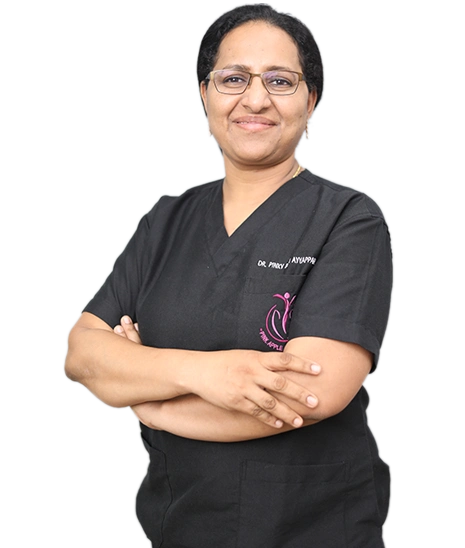
The most common error in brow lift surgery is over-elevation — producing an artificially surprised or arched appearance. Dr. Pinky’s approach to brow lift is position-specific and anatomy-driven: the brow is restored to its correct natural height for your face, not pushed beyond it. This is what produces results that no one can identify as surgical.
Brow Lift Surgery — Frequently Asked Questions

What is the difference between a brow lift and a forehead lift?
They are the same procedure described from two different perspectives. A ‘forehead lift’ describes the surgical access and technique — operating through the forehead and scalp. A ‘brow lift’ or ‘eyebrow lift’ describes the result — elevation of the brow position. Browplasty and foreheadplasty are the formal medical terms. All four terms refer to the same family of procedures.
Will I look surprised or unnatural after a brow lift?
Only if the brow is elevated beyond its natural position. The feared ‘surprised look’ is the result of outdated techniques or poorly planned surgery that pushed the brow higher than its correct anatomical height. When a brow lift is planned using the patient’s own natural brow position as the target — which is exactly how Dr. Pinky approaches it — the result looks like a natural, rested version of you. Nobody should be able to tell you have had surgery.
How is a brow lift different from Botox for the brow?
Botox can relax the depressor muscles and subtly raise the brow by 1 to 2 mm — a useful treatment for early brow descent. But it cannot remove excess skin, reposition descended brow tissue, or correct significant brow asymmetry. It also wears off every 3 to 4 months and, if used for years to compensate for brow descent, can progressively weaken the frontalis muscle that lifts the brow. A surgical brow lift addresses the structural cause of descent and provides a lasting result.
Do I need a brow lift, or upper eyelid surgery (blepharoplasty)?
This is one of the most important questions in upper face assessment. Many patients who believe they need upper eyelid surgery actually have brow descent as the primary cause of their upper eyelid heaviness — and operating on the eyelid without addressing the brow can produce an inadequate result or, in some cases, leave the eyelid with insufficient skin. Dr. Pinky specifically assesses the brow-eyelid relationship at every upper face consultation. In some patients, brow lift alone is sufficient; in others, combining brow lift with upper blepharoplasty gives the best overall result for the upper face.
How long does a brow lift last?
Most patients maintain the improvement from brow lift surgery for 7 to 10 years. The result is long-lasting because the procedure addresses the structural causes of brow descent — releasing the ligaments that tether the brow in a descended position and securing the tissues at a higher level. The ageing process continues, but from a significantly improved starting point. Maintaining stable weight and avoiding excessive sun exposure extends longevity.
What is the recovery time for brow lift surgery in Bangalore?
Most patients are comfortable returning to work and social activity within 7 to 14 days. Bruising and significant swelling resolve within 2 weeks. Strenuous exercise and heavy lifting resume at 3 to 4 weeks. Scalp sensation, if affected, gradually returns over 2 to 6 months. The final brow position fully settles at 6 to 8 weeks, with minor continued softening over 3 months.
Can a brow lift be combined with other procedures?
Yes, and it frequently is. The most common combination is brow lift with upper blepharoplasty (eyelid surgery) for comprehensive upper face rejuvenation. Brow lift is also commonly combined with facelift, neck lift, or non-surgical treatments such as fat grafting or laser resurfacing. Combining procedures in one session is more efficient and typically more cost-effective than separate surgeries. Dr. Pinky will advise on the most appropriate combination for your facial goals at consultation.
Is there scarring after a brow lift?
For endoscopic and lateral brow lifts, incisions are made within the hairline and are completely hidden by the hair once healed — there are no visible scars in normal hairstyles. For a coronal brow lift, the incision runs across the scalp within the hair and heals to a thin line concealed by the hair. For a direct brow lift, the scar sits above the eyebrow in the natural skin crease and fades to a very fine line over months. Your surgeon will select the technique whose scars are most appropriate for your hairline and anatomy.
Can men have brow lift surgery?
Yes. Brow descent and forehead ageing affect men as significantly as women. Men often present with heavier brows, deeper glabellar frown lines, and more significant forehead furrows than women of the same age. The surgical principles are identical — the target brow position is adjusted for the flatter, more horizontal male brow ideal compared to the slightly arched female ideal. A direct brow lift above the brow is sometimes preferred in men with thick brows, as the scar is well concealed within the brow hair.


