

You loved your breast augmentation results. The shape was beautiful, the symmetry was right, and you finally felt confident. Then, months or years later, you start noticing something is off. One implant looks higher. They sit too far apart when you lie down. There’s an unfamiliar dent or fold under one breast.
This is implant displacement — and it’s more common than most patients realise.
At Pink Apple Aesthetics in Bangalore, we regularly see patients seeking second opinions on breast implant displacement in Bangalore after their original procedure was done elsewhere. The good news? Most cases are correctable. The better news? With the right surgical planning, many can be prevented entirely.
What Is Breast Implant Displacement?
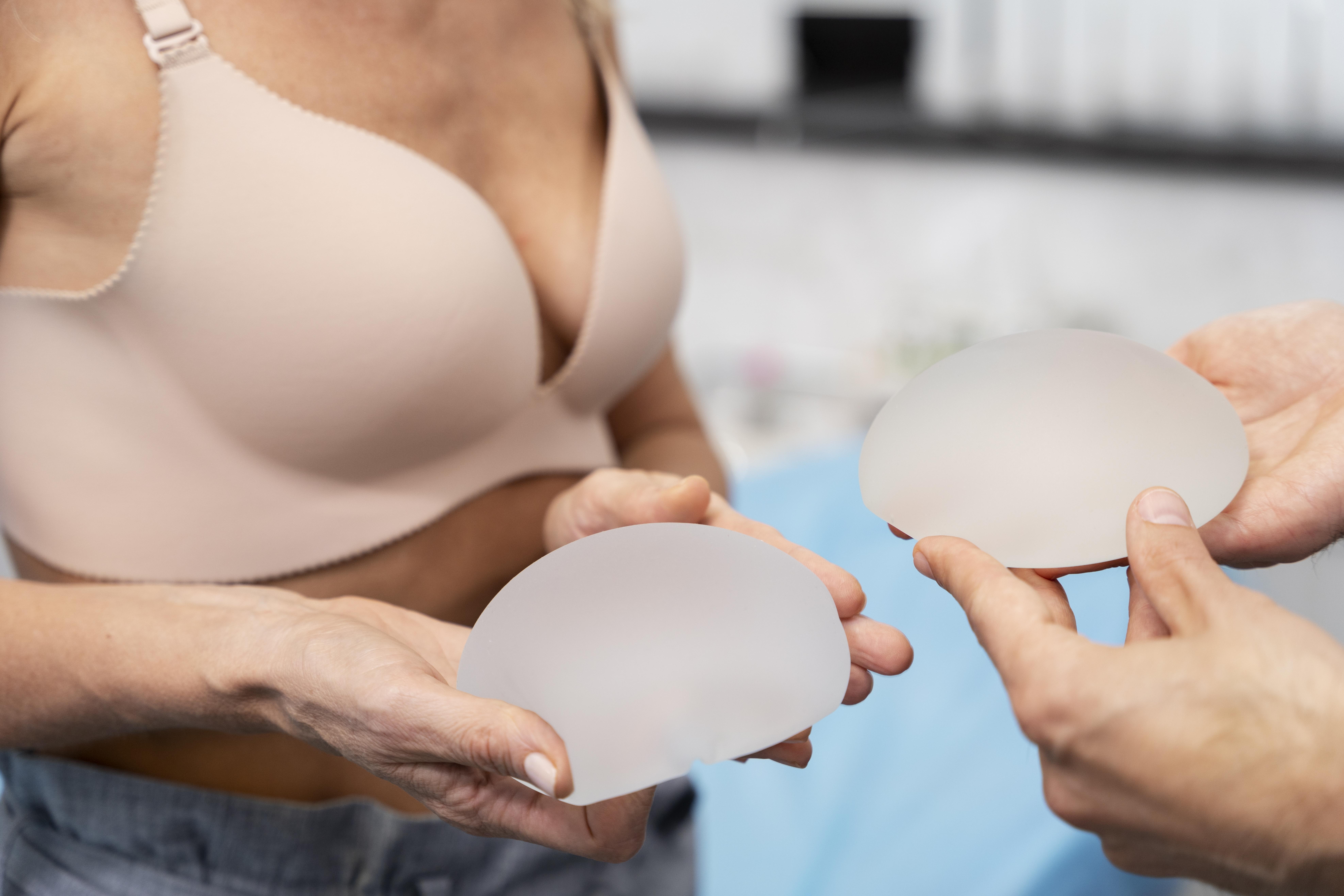
Breast implant displacement (medically known as implant malposition) occurs when an implant moves out of its intended pocket — either gradually over years or, in rare cases, suddenly after trauma. The implant itself is usually intact; what has changed is its position relative to the breast tissue, the nipple, and the chest wall.
It is not the same as implant rupture, capsular contracture, or BIA-ALCL — though displacement can sometimes occur alongside these.
The Five Main Types of Displacement
Understanding which type of displacement you have determines the treatment. The most common categories are:
1. Bottoming Out — The implant migrates downward, below the natural breast crease (inframammary fold). The nipple appears to point upward, and the breast looks “empty” on top.
2. Lateral Displacement — The implant slides toward the armpit, especially noticeable when lying down. The breasts appear too far apart with no cleavage in the centre.
3. Symmastia — Often called “uniboob,” this is when the implants migrate toward the midline of the chest, eliminating the natural gap between the breasts.
4. Superior Malposition (High-Riding Implants) — The implants remain too high on the chest and never “drop” into a natural position. Often the result of capsular contracture or under-developed pockets.
5. Animation Deformity — Specific to sub-muscular placement, where the implants visibly distort or shift when the chest muscles contract.
What Causes Implant Displacement?

Displacement is rarely the result of a single factor. Common causes include:
- Surgical technique — over-dissected or under-dissected pockets, especially during the original procedure
- Implant size disproportionate to tissue — large implants in thin tissue carry higher displacement risk
- Capsular contracture — scar tissue distorting the implant position
- Trauma — high-impact accidents, sports injuries, or aggressive massage
- Aging and gravity — natural tissue laxity over time
- Significant weight changes — particularly post-pregnancy or rapid weight loss
- Returning to high-impact exercise too early — running, weightlifting, or yoga before the pocket has stabilised
- Sleeping on the stomach in the early healing months
- Smooth-surface implants — slightly higher displacement risk than textured ones in some cases
Symptoms to Watch For
Patients searching for breast implant revision surgery in Bangalore usually notice one or more of these signs:
- Visible asymmetry between the breasts
- One implant clearly sitting higher or lower than the other
- Implants moving outward when lying flat (creating a wide gap)
- Loss of cleavage or, conversely, no separation between breasts
- Visible rippling or folds in the implant
- Nipple position no longer matching the implant centre
- A “double bubble” — a horizontal indent across the lower breast
- Pain, tightness, or unusual firmness
- Visible distortion when flexing the chest muscles
Mild positional changes during healing are normal in the first 3–6 months. Persistent or worsening changes after that window warrant a clinical assessment.
Treatment Options
Treatment depends on the type, severity, and underlying cause of displacement.
Conservative management — For very early or mild displacement caught within weeks of surgery, compression garments, supportive bands, and modified activity may help guide the implant back into position.
Capsulorrhaphy — Surgical tightening of the existing capsule with internal sutures to reinforce the pocket and prevent further movement.
Capsulectomy with pocket revision — Removing the existing scar tissue capsule and creating a new pocket — often necessary for bottoming out and severe lateral displacement.
Site change surgery — Moving the implant from a sub-glandular to a sub-muscular plane (or vice versa) to provide better support.
Acellular dermal matrix (ADM) reinforcement — Adding a biological mesh to support thin or stretched tissue, particularly useful in revision cases.
Implant exchange — Replacing the implant with a more appropriate size, profile, or type alongside pocket correction.
As one of the best cosmetic surgery clinics in Bangalore for revision procedures, we evaluate each case individually. There is no one-size-fits-all surgical fix for displacement.
Frequently Asked Questions
- Can breast implants move after surgery? Yes. Implants can shift during healing or years later due to gravity, capsule changes, or trauma. Mild settling in the first six months is normal; significant or asymmetric displacement is not.
- How do I know if my breast implant has displaced? The clearest signs are visible asymmetry, implants sitting unusually high or low, loss of cleavage, or the appearance of folds or dents. A clinical exam and, in some cases, ultrasound or MRI confirms it.
- Can implant displacement be fixed without surgery? Only if caught very early. Once the capsule has matured around an incorrectly positioned implant, surgical correction is required. No massage, garment, or non-surgical method can reposition a settled implant.
- How long after surgery can implants displace? Displacement can occur anytime — within weeks (usually due to surgical technique or activity), or years later (usually due to gravity, capsule changes, or weight fluctuation).
- Does sleeping on my side or stomach cause displacement? In the first 6–12 weeks, yes — this is why surgeons insist on back-sleeping. After full healing, normal sleep positions are usually safe.
- Is breast implant displacement dangerous? It is rarely a medical emergency. However, it can affect appearance, comfort, and confidence — and untreated displacement can worsen over time, making revision more complex.
- How much does breast implant revision surgery cost in Bangalore? Costs vary widely based on the complexity of the revision, whether implants need replacing, and whether techniques like ADM are required. A consultation with a qualified plastic surgeon in Bangalore is the only way to get an accurate quote.
When to See a Specialist
If you’ve noticed any of the symptoms above for more than a few weeks, schedule a consultation. Early evaluation often means simpler, less invasive correction. Late presentations frequently require more complex revision.
For patients considering revision after a previous breast augmentation surgery in Bangalore, our team specialises in evaluating displacement, reviewing original surgical records, and planning corrective procedures with realistic, honest expectations.
Concerned your implants may have shifted? Get an expert assessment.
📍 Pink Apple Aesthetics — Bangalore 📞 Book a confidential consultation with our revision specialists.
This article is for educational purposes only and does not replace personalised medical advice. All surgical decisions should be made in consultation with a qualified plastic surgeon registered with the National Medical Commission.


