
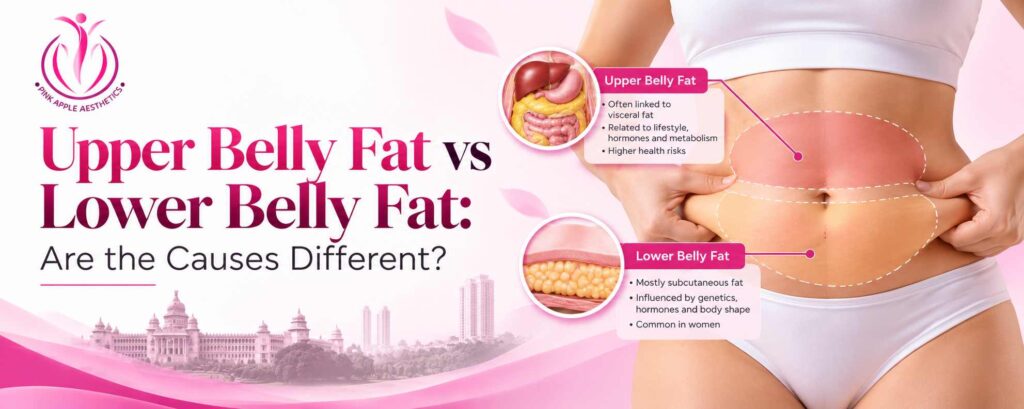
Upper belly fat and lower belly fat can affect body shape in different ways. Some people notice fullness around the upper abdomen, just below the rib cage, while others struggle with fat deposits around the lower stomach. Although both may appear to be belly fat, their underlying causes are not always the same.
For people considering liposuction in Bangalore, understanding the difference between upper and lower abdominal fullness is an important first step. Fat distribution, skin elasticity, abdominal muscle structure, digestive symptoms and overall health can all influence the appearance of the abdomen.
This guide explains the possible causes of upper and lower belly fat, how they differ, and when lifestyle changes, medical assessment or cosmetic procedures may be appropriate.
What Is Upper Belly Fat?
Upper belly fat refers to fullness in the upper portion of the abdomen, generally between the rib cage and the navel. It can result from subcutaneous fat beneath the skin, visceral fat around the internal organs, or a combination of factors.
Subcutaneous fat is the fat layer directly beneath the skin. Visceral fat is located deeper inside the abdominal cavity, surrounding organs such as the liver and intestines.
These two types of fat have different health implications and cannot be treated in the same way.
Common causes of upper belly fullness
1. Visceral fat accumulation
Excess visceral fat can contribute to a rounded or protruding abdomen. It is associated with metabolic health risks, including type 2 diabetes and cardiovascular disease.
Visceral fat cannot be reliably identified by appearance alone, and liposuction cannot remove it.
2. Subcutaneous fat
Fat beneath the skin may accumulate around the upper abdomen and contribute to a fuller appearance. In selected patients, localised subcutaneous fat may be suitable for body-contouring procedures such as liposuction.
3. Bloating and digestive distension
Gas, constipation and certain digestive conditions can cause the abdomen to appear larger or feel tight. This is different from an increase in body fat. Persistent bloating or unexplained abdominal enlargement should be assessed by a healthcare professional rather than assumed to be a cosmetic concern.
4. Overall weight gain
Changes in body weight can increase fat deposits in different parts of the abdomen. Where fat accumulates depends partly on genetics, hormones, age and individual body composition.
What Is Lower Belly Fat?
Lower belly fat refers to fullness in the abdominal area below the navel. It may appear as a soft fold, a localised bulge or a more general increase in abdominal size.
For some people, this area remains prominent even after losing weight. However, lower abdominal fullness does not always mean that excess fat is the only cause.
Common causes of lower belly fullness
1. Subcutaneous fat deposits
The lower abdomen is a common area for subcutaneous fat accumulation. These deposits may persist despite regular exercise and a generally healthy lifestyle.
For suitable candidates with localised fat and adequate skin quality, liposuction may help improve the contour of this area.
2. Loose skin after weight loss
Following substantial weight loss, the skin may not fully retract to match the reduced body volume. This can leave a fold of loose skin in the lower abdomen.
Liposuction removes fat, not significant excess skin. Patients with substantial skin laxity may need an assessment for procedures that remove excess skin.
3. Pregnancy-related changes
Pregnancy can stretch the abdominal skin and alter the abdominal wall. After childbirth, some individuals experience persistent lower abdominal fullness due to a combination of fat, loose skin and abdominal muscle separation.
Liposuction does not repair separated abdominal muscles. A clinical assessment can help determine which factors are contributing to the appearance.
4. Individual fat distribution
Genetics and hormonal changes influence where the body stores fat. Some individuals naturally accumulate more fat around the lower abdomen than the upper abdomen. This distribution alone does not indicate a medical problem, although overall health and other risk factors should also be considered.
Upper Belly Fat vs Lower Belly Fat: Key Differences
| Feature | Upper belly fullness | Lower belly fullness |
| Possible causes | Subcutaneous fat, visceral fat, bloating or overall weight gain | Subcutaneous fat, loose skin, pregnancy-related changes or overall weight gain |
| Visceral fat involvement | May contribute, particularly with deeper abdominal fullness | May also contribute; location alone cannot determine fat type |
| Skin laxity | Can be present | May be more noticeable after pregnancy or substantial weight loss |
| Can liposuction help? | Potentially, if localised subcutaneous fat is the main concern | Potentially, if localised subcutaneous fat is the main concern |
| Other considerations | Digestive symptoms and metabolic health may need assessment | Excess skin and abdominal muscle separation may need assessment |
The appearance of the abdomen cannot reliably establish whether a person has excess visceral fat or determine which procedure is appropriate.
Why Does Upper Belly Fat Look Different From Lower Belly Fat?
Several factors explain why fat distribution varies between individuals.
Genetics and hormones
Genetics influence the amount and location of fat stored throughout the body. Hormonal changes associated with ageing, menopause and other life stages can also influence body composition.
These factors help explain why two people with similar body weights may have different abdominal shapes.
Age and body composition
As people age, changes in muscle mass, fat distribution and skin elasticity may affect abdominal contours.
A protruding abdomen can reflect several overlapping factors rather than a single layer of fat.
Lifestyle and overall weight changes
Diet, physical activity, sleep and other lifestyle factors can influence overall body fat and metabolic health. However, targeted abdominal exercises cannot selectively remove fat from the upper or lower belly.
A sustainable approach to weight management can help reduce overall body fat where appropriate, but the exact pattern of change varies between individuals.
Can Liposuction Remove Upper and Lower Belly Fat?
Liposuction is a surgical body-contouring procedure that removes selected deposits of subcutaneous fat using a cannula.
It may be suitable for certain patients who have localised abdominal fat, are at a relatively stable weight and understand the limitations and risks of surgery.
Upper abdominal liposuction
Upper abdominal liposuction may be considered when localised fat beneath the skin contributes to the fullness and the patient is an appropriate surgical candidate.
However, if the abdomen protrudes primarily because of visceral fat, bloating or another underlying cause, liposuction will not address the main problem.
Lower abdominal liposuction
Lower abdominal liposuction may help improve contour when subcutaneous fat is the main concern.
If loose skin or abdominal muscle separation contributes significantly to the appearance, liposuction alone may not produce the desired outcome. Other procedures may need to be discussed during a consultation.
What liposuction cannot do
Liposuction is not a treatment for visceral fat, a substitute for weight management or a guaranteed method of achieving a completely flat stomach.
It also does not reliably correct significant excess skin or repair separated abdominal muscles. A qualified plastic surgeon should assess the abdomen before recommending surgery.
To understand the procedure in more detail, visit our Liposuction Surgery in Bangalore service page.
How Can You Reduce Upper and Lower Belly Fat?
The appropriate approach depends on the cause of the abdominal fullness.
For people with excess body fat, a balanced eating pattern, regular physical activity, strength training and sustainable weight management can support overall health and body composition.
Exercise can strengthen the abdominal muscles, but it cannot selectively burn fat from a specific part of the stomach.
When abdominal fullness is related to bloating, constipation or another digestive concern, the underlying cause may need medical evaluation. Persistent or unexplained symptoms should not automatically be attributed to fat accumulation.
If localised subcutaneous fat remains despite a stable weight, a consultation with a qualified plastic surgeon can help determine whether body-contouring surgery is an appropriate option.
When Should You Consult a Plastic Surgeon?
Consider seeking an assessment if you are exploring cosmetic treatment for persistent upper or lower abdominal fullness and want to understand the available options.
A consultation may include an assessment of fat distribution, skin quality, abdominal wall characteristics, medical history, previous weight changes and treatment goals.
It is also an opportunity to discuss the potential benefits, limitations, recovery requirements and risks of surgery.
At Pink Apple Aesthetics in Bangalore, patients can enquire about a consultation with Dr. Pinky Devi Ayyappan, a plastic surgeon, to discuss whether liposuction or another approach may be suitable for their individual circumstances.
Treatment recommendations should be based on clinical assessment rather than the location of belly fat alone.
Frequently Asked Questions
Is upper belly fat more dangerous than lower belly fat?
Not necessarily. The location of visible abdominal fullness does not reliably indicate health risk. Excess visceral fat is associated with metabolic conditions, but it cannot be accurately assessed by appearance alone. A healthcare professional can evaluate relevant health risks.
Why do I have lower belly fat even though I exercise?
Exercise supports health and can contribute to overall fat loss, but it cannot target fat loss from one specific body area. Genetics, skin laxity, abdominal muscle changes and individual fat distribution can also influence lower abdominal appearance.
Can liposuction remove both upper and lower belly fat?
Liposuction may treat selected subcutaneous fat deposits in either area when clinically appropriate. It cannot remove visceral fat or reliably correct significant loose skin or abdominal muscle separation.
Is lower belly fat always caused by weight gain?
No. Lower abdominal fullness can also result from loose skin, pregnancy-related changes, abdominal muscle separation, bloating or other causes. The underlying reason should be assessed before choosing treatment.
Can upper belly fat be reduced without surgery?
Depending on its cause, changes in overall body composition and appropriate lifestyle measures may help reduce abdominal fat. If the fullness is related to bloating or another medical condition, a different approach may be required.
Is liposuction suitable for everyone with belly fat?
No. Suitability depends on factors such as the type and location of fat, skin quality, general health, weight stability and expectations. An individual assessment by a qualified plastic surgeon is necessary before deciding on treatment.
Conclusion
Upper belly fat and lower belly fat can have overlapping but different causes. Subcutaneous fat, visceral fat, loose skin, abdominal muscle changes and digestive distension may all influence the appearance of the abdomen.
Liposuction may help improve selected areas of localised subcutaneous fat, but it does not treat every cause of abdominal fullness. Understanding the underlying factors is essential for setting realistic expectations and choosing an appropriate approach.
If you are considering liposuction in Bangalore, consult a qualified plastic surgeon to discuss your concerns, understand the available options and determine whether the procedure is suitable for you.
Medical review: This article should be reviewed and approved by Dr. Pinky Devi Ayyappan before publication.
Disclaimer: This article is intended for general educational purposes and does not replace individual medical advice or an in-person clinical assessment.


