
Introduction
Liposuction is a cosmetic surgical procedure designed to remove localised deposits of fat and improve body contours. However, the results depend on more than the amount of fat removed. One important consideration is the skin’s ability to adapt to the changes in the underlying tissue.
Patients considering liposuction in Bangalore often ask whether their skin will become firm after surgery or whether loose skin might remain. The answer depends on several factors, including skin elasticity, age, the amount of fat being removed, existing skin laxity and individual anatomy.
Understanding how skin elasticity influences liposuction results can help patients develop realistic expectations and discuss appropriate treatment options with a qualified plastic surgeon.
What Is Skin Elasticity?
Skin elasticity refers to the skin’s ability to stretch and return towards its original shape. This property is supported by structural proteins, particularly collagen and elastin, within the skin.
Collagen provides structural strength, while elastin helps the skin stretch and recoil. Together, these components contribute to skin firmness and flexibility.
When localised fat is removed during liposuction, the overlying skin needs to adapt to the change in volume. Skin with better elasticity may contract more effectively, whereas skin with reduced elasticity may not conform as closely to the new body contour.
However, skin elasticity is only one factor that influences the final result. It cannot guarantee a particular outcome, and it is not possible to predict the degree of skin contraction with complete certainty before surgery.
How Does Skin Elasticity Affect Liposuction Results?
Liposuction removes fat from beneath the skin. It does not directly remove excess skin or reliably tighten significantly loose skin.
The way the skin responds after fat removal can influence the appearance of the treated area.
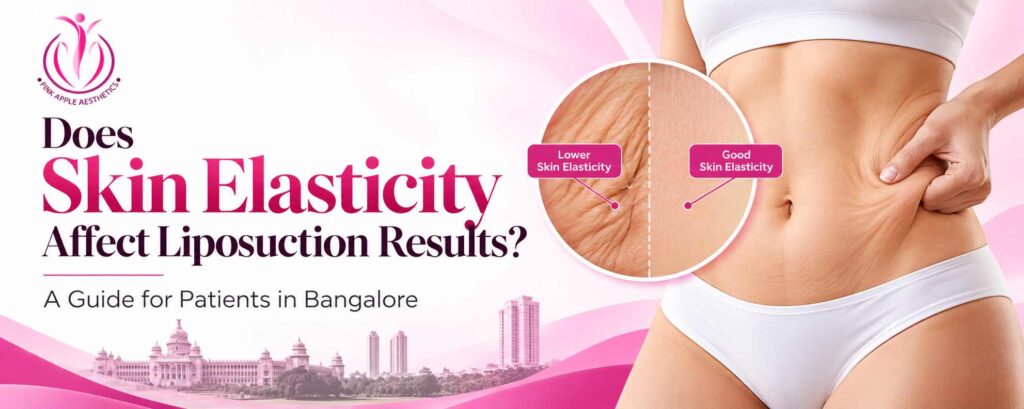
1. Skin with good elasticity
When the skin has relatively good elasticity and there is limited pre-existing laxity, it may adapt more effectively to the reduction in underlying fat.
For appropriately selected patients, this can contribute to a smoother body contour after recovery.
Even in these cases, the final appearance depends on the distribution of fat, the amount removed, surgical technique, healing and other individual factors.
2. Skin with reduced elasticity
When the skin has limited elasticity, it may not contract sufficiently after the underlying fat is removed. This can leave the treated area looking loose or uneven.
Reduced elasticity may be associated with ageing, significant weight fluctuations, pregnancy or prolonged stretching of the skin.
In such cases, removing additional fat does not necessarily improve the appearance. In fact, excessive fat removal can contribute to contour irregularities and make existing skin laxity more noticeable.
3. Significant excess skin
Some patients have substantial excess skin following major weight loss or pregnancy. In these circumstances, liposuction alone may not address the main concern.
A procedure that removes excess skin, such as an abdominoplasty or tummy tuck in appropriately selected patients, may be considered instead of or alongside liposuction.
The appropriate option depends on the patient’s anatomy, medical history, goals and clinical assessment.
What Factors Influence Skin Elasticity?
Skin elasticity varies between individuals. Several factors can influence how the skin responds after liposuction.
Age
As people age, changes in collagen and elastin can reduce skin firmness and recoil. However, age alone does not determine whether someone is suitable for liposuction.
Some older adults have good skin quality, while younger individuals may have significant skin laxity due to weight changes or other factors.
Weight fluctuations
Repeated or substantial changes in body weight can stretch the skin. After weight loss, the skin may not always return completely to its previous shape.
Patients considering liposuction generally benefit from having a stable weight and realistic expectations about the degree of contour improvement that surgery can provide.
Pregnancy
Pregnancy can stretch the abdominal skin and underlying tissues. After childbirth, some individuals experience persistent skin laxity or abdominal muscle separation.
Liposuction may address selected localised fat deposits, but it does not repair separated abdominal muscles or remove significant excess skin. A plastic surgeon can assess which factors contribute to abdominal fullness and discuss suitable options.
Sun exposure and lifestyle factors
Chronic ultraviolet exposure contributes to changes in collagen and elastin. Smoking can also impair tissue healing and increase surgical risks.
Protecting the skin from excessive sun exposure, avoiding smoking and maintaining healthy lifestyle habits can support overall skin health. However, these measures cannot guarantee skin tightening after liposuction or reverse significant pre-existing laxity.
Amount of fat removed
The amount and distribution of fat removed can influence the final contour. Removing larger amounts of fat does not necessarily produce a better result.
When skin elasticity is limited, the skin may have greater difficulty adapting to substantial changes in underlying volume. The surgical plan should therefore account for skin quality, anatomy and patient safety rather than focusing only on fat removal.
Can Skin Tighten Naturally After Liposuction?
Some degree of skin contraction may occur during the months following liposuction, particularly when the skin has adequate elasticity.
However, the response varies between patients. Swelling, tissue healing and changes in the treated area can affect how the results appear during recovery.
It is important to distinguish between normal post-operative swelling and persistent skin laxity. The final contour may take several months to become apparent, and the recovery timeline differs depending on the extent of treatment and individual healing.
Patients should follow their surgeon’s post-operative instructions and attend recommended follow-up appointments. If loose skin remains after recovery, a clinical assessment can help determine whether further treatment is appropriate.
Does Liposuction Tighten Loose Skin?
Liposuction is primarily intended to remove localised subcutaneous fat and improve body contours. It should not be presented as a guaranteed skin-tightening procedure.
Some techniques may be used in selected circumstances with the intention of encouraging tissue contraction, but results vary and depend on the technique, patient characteristics and clinical evidence.
Patients with significant skin laxity should discuss this concern before surgery. The surgeon may recommend a different procedure or explain why liposuction alone is unlikely to achieve the desired result.
Choosing an appropriate procedure is more important than selecting a technique based solely on claims of skin tightening.
How Can a Plastic Surgeon Assess Skin Elasticity Before Liposuction?
A pre-operative consultation helps determine whether liposuction is suitable and what results may reasonably be expected.
The assessment may include:
- Skin quality: Evaluating firmness, flexibility and the presence of loose or hanging skin.
- Fat distribution: Identifying whether the concern relates to localised subcutaneous fat or other causes of body fullness.
- Medical history: Reviewing previous surgeries, weight changes, medications, medical conditions and factors that could affect healing.
- Treatment goals: Understanding the areas the patient wishes to address and discussing achievable outcomes.
- Alternative procedures: Considering whether excess skin removal or another treatment may be more appropriate.
A consultation should also cover surgical risks, recovery, possible contour irregularities, scarring and the limitations of the procedure.
For patients exploring liposuction in Bangalore, an individual assessment by a qualified plastic surgeon can help clarify whether the skin is likely to adapt adequately to the planned change in volume.
Is Liposuction Suitable for Patients with Loose Skin?
Liposuction may be suitable for some patients with mild skin laxity, particularly when localised fat deposits are the main concern. However, the degree of laxity and the characteristics of the skin need to be considered.
Patients with significant excess skin may require a procedure that removes skin rather than fat alone.
For example, a tummy tuck may be considered for selected patients with excess abdominal skin, while other body areas may require different surgical approaches. Such procedures involve different risks, scars and recovery requirements.
There is no single treatment that is appropriate for everyone. A qualified plastic surgeon can explain the available options after examining the area and reviewing the patient’s medical history.
Considering Liposuction at Pink Apple Aesthetics in Bangalore
Patients considering body-contouring surgery should understand both the potential benefits and the limitations of liposuction.
At Pink Apple Aesthetics in Bangalore, patients can enquire about a consultation with Dr. Pinky Devi Ayyappan, a plastic surgeon, to discuss their concerns, assess suitability and understand available treatment options.
The consultation should establish whether localised fat deposits, skin laxity or another factor is contributing to the concern. Patients should receive individualised information about the procedure, possible risks, recovery and realistic expectations before making a decision.
To learn more about the procedure, visit our Liposuction Surgery in Bangalore page.
Frequently Asked Questions
Does skin elasticity affect liposuction results?
Yes. Skin with better elasticity may adapt more effectively after fat removal. Reduced elasticity can increase the likelihood of persistent looseness, although the outcome also depends on anatomy, fat distribution and healing.
Can loose skin become tight after liposuction?
Some skin contraction may occur during recovery, but the extent varies. Liposuction does not reliably correct significant excess skin.
Does age determine whether liposuction will work?
No. Age is one consideration, but skin quality, general health, fat distribution and treatment goals are also important when assessing suitability.
Can exercise improve skin tightening after liposuction?
Exercise can support general health, muscle strength and weight maintenance. However, it cannot reliably remove significant excess skin or guarantee skin contraction after surgery.
Is a tummy tuck better than liposuction for loose abdominal skin?
Not necessarily for everyone. Liposuction targets selected fat deposits, while a tummy tuck removes excess abdominal skin and may address muscle separation when indicated. The appropriate procedure depends on an individual assessment.
How long does it take to see the final results?
The treated area changes during recovery as swelling settles and tissues heal. The timeline varies between individuals, and final contours may take several months to become apparent. Follow your surgeon’s advice regarding recovery and follow-up.
Conclusion
Skin elasticity is an important consideration when planning liposuction because it influences how the skin may adapt after fat removal. Patients with good skin recoil may achieve smoother contours, while those with reduced elasticity or significant excess skin may require a different approach.
Liposuction is not a guaranteed solution for loose skin, and removing more fat does not necessarily produce better results. A qualified plastic surgeon can assess skin quality, fat distribution and individual goals to help determine an appropriate treatment plan.
If you are considering liposuction in Bangalore, seek a consultation to understand your options and develop realistic expectations before proceeding with surgery.
Medical review: This article should be reviewed and approved by Dr. Pinky Devi Ayyappan before publication.
Medical information note: This article is for educational purposes and does not replace an individual medical consultation.


