Tummy Tuck Surgery in Bangalore (Abdominoplasty)
Tummy tuck surgery — medically called abdominoplasty — addresses all three components of a post-pregnancy abdomen simultaneously: the excess skin is removed, the abdominal fat is reduced with liposuction, and the separated muscles are repaired with permanent sutures. The result is a flat, firm, proportionate abdomen — with a scar hidden along the panty or saree blouse line that most patients consider a very fair trade.
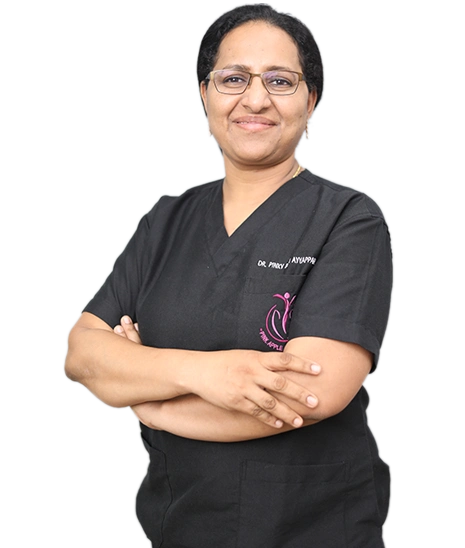
At Pink Apple Aesthetics, Jayanagar, tummy tuck surgery is performed by Dr. Pinky Devi Ayyappan, MCh (Plastic Surgery) — a female, board-certified plastic and reconstructive surgeon with 12+ years of experience and international fellowship training in Belgium and Seoul. For a procedure as personal as abdominal surgery after pregnancy, many women specifically seek a female surgeon. Dr. Pinky combines surgical precision with the empathy this procedure requires.
What Is a Tummy Tuck — And What Does It Actually Correct?
Abdominoplasty addresses three distinct abdominal problems that cannot be corrected by diet or exercise alone:
1. Excess abdominal skin (the problem exercise cannot fix)
When the abdomen is significantly stretched — by pregnancy, major weight gain, or both — the skin is pushed beyond its elastic limit. The collagen and elastin fibres that give skin its snap are irreversibly damaged. After the stretching resolves (after delivery, or after weight loss), the skin does not spring back — it hangs as loose, redundant folds. The more severe the stretch, the more dramatic the skin excess. This skin cannot be tightened by any non-surgical means — creams, radiofrequency, and lasers produce marginal results at best on significant post-pregnancy abdominal skin laxity.
2. Diastasis recti (the muscle separation that causes the rounded abdomen)
Diastasis recti is the separation of the paired rectus abdominis muscles along the midline of the abdomen. During pregnancy, the growing uterus pushes the two muscle bellies apart; the linea alba (the fibrous connective tissue between them) stretches and thins. After delivery, the muscles often fail to return to their original position — leaving a gap that can range from 1 cm to 7 cm or more in width. This gap causes the characteristic rounded, protruding abdomen of post-pregnancy women — even when body weight has returned to normal. The weakness also causes functional problems: poor core stability, chronic lower back pain, and difficulty with physical activity.
This is the most important thing to understand: diastasis recti CANNOT be corrected with exercise. The gap is not a matter of muscle strength — it is a structural separation of tissue. No amount of core training closes the actual gap between the muscles. Only surgical plication — permanent sutures placed to bring the two muscle bellies back together along the midline — repairs diastasis recti. If the abdomen is protruding despite a healthy weight and a consistent exercise routine, diastasis recti is the most likely cause.
3. Stretch marks and excess lower abdominal fat
The excess lower abdominal skin that is removed during a full tummy tuck typically contains most of the stretch marks below the navel — these are excised along with the skin. Stretch marks above the navel remain but move downward toward the scar line as the skin is pulled down. Abdominal liposuction performed as part of the procedure addresses any remaining fat deposits throughout the abdominal region — producing a flatter, more contoured final result than skin excision alone.
A tummy tuck is not a weight-loss procedure. It is a body contouring procedure for patients near their ideal weight who have structural abdominal changes — excess skin, muscle separation, and localised fat — that cannot be corrected by lifestyle measures. The scale may barely change; the shape and firmness absolutely will.
Before and After Procedures
Look At The Difference
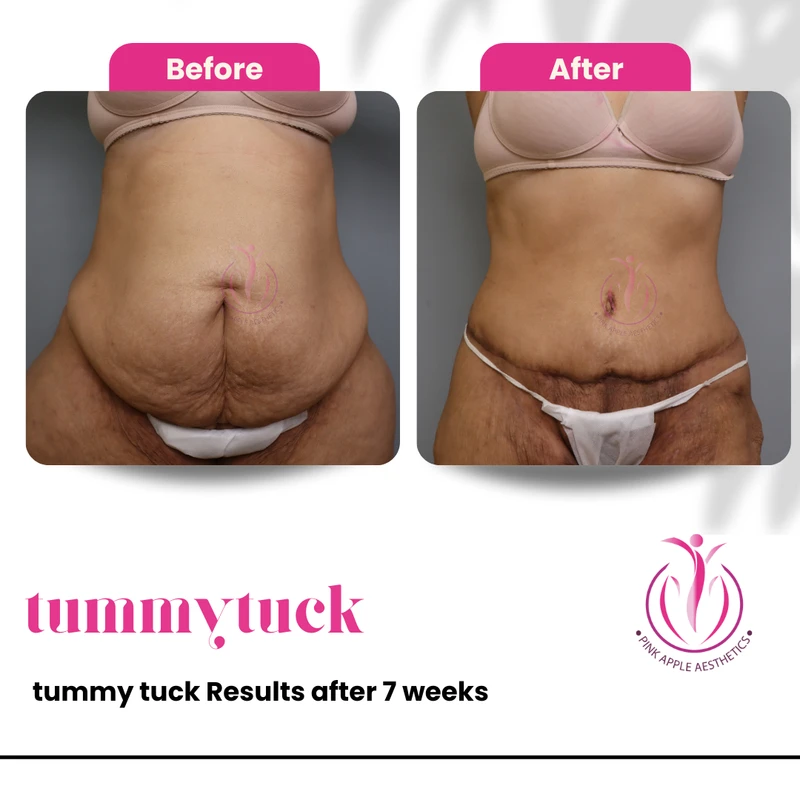
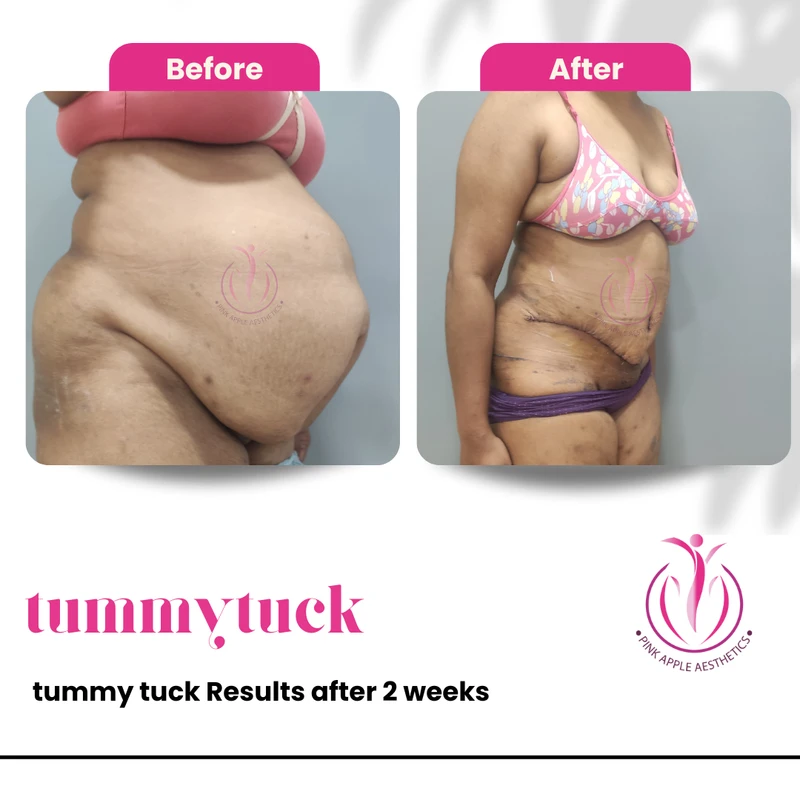
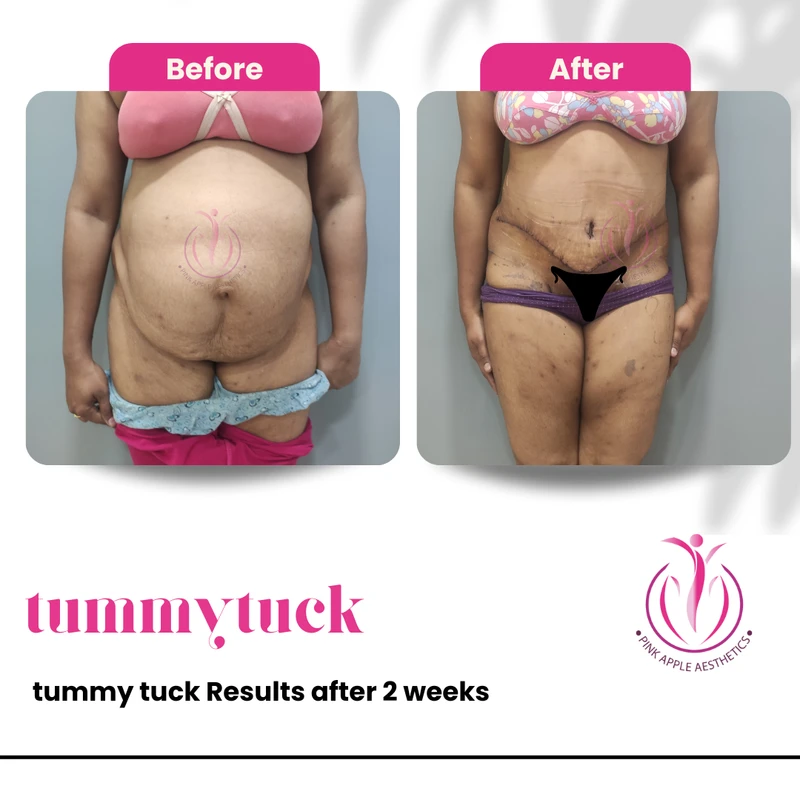
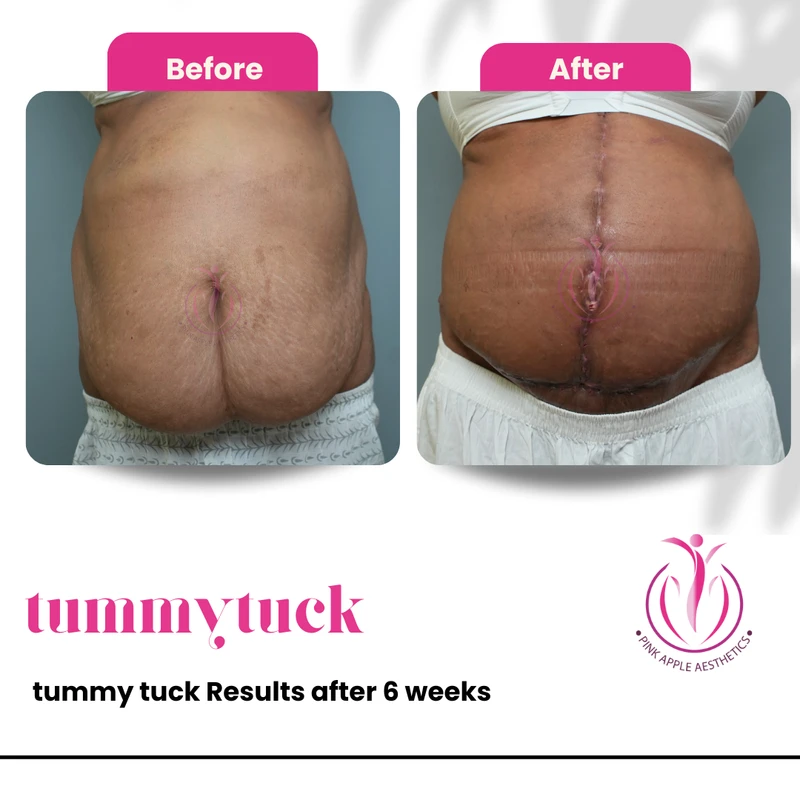
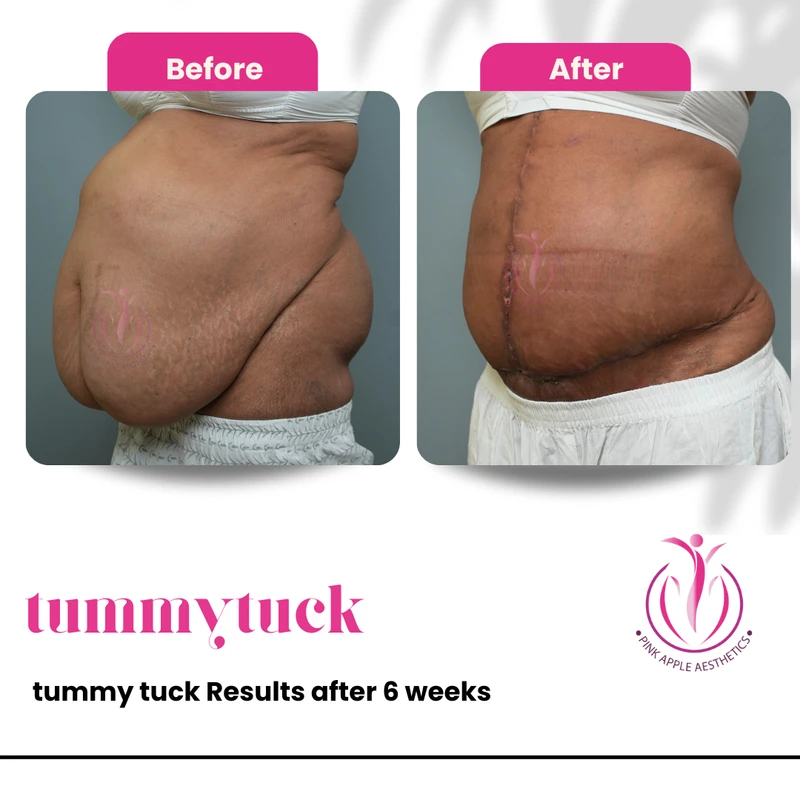
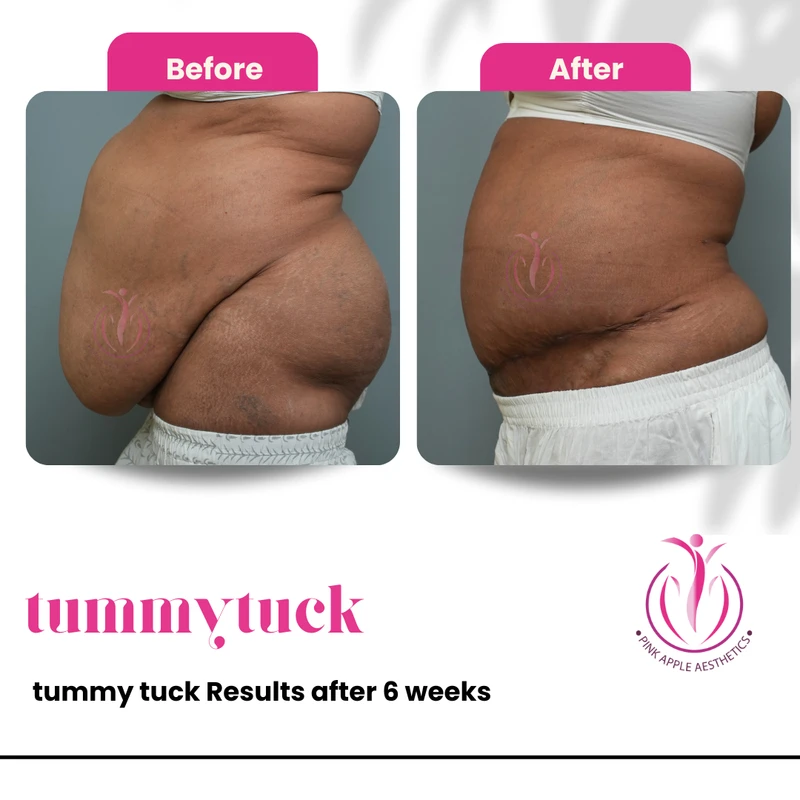
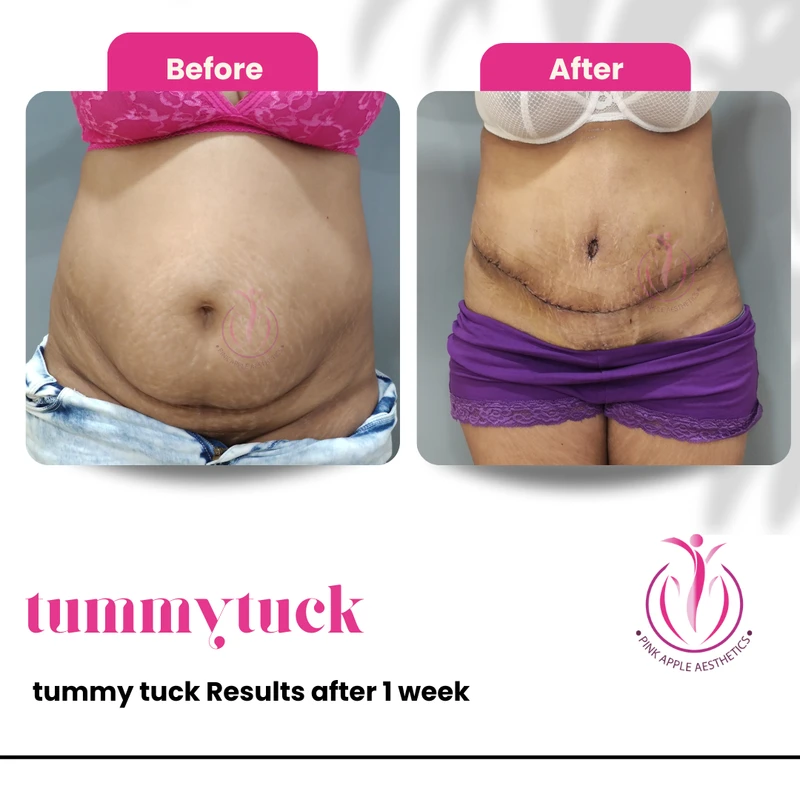
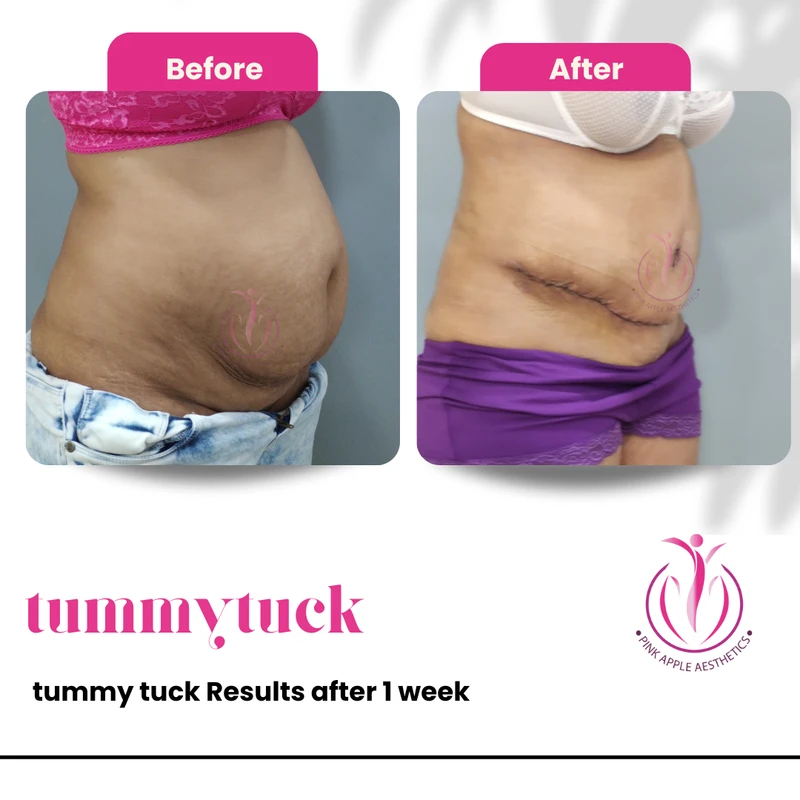
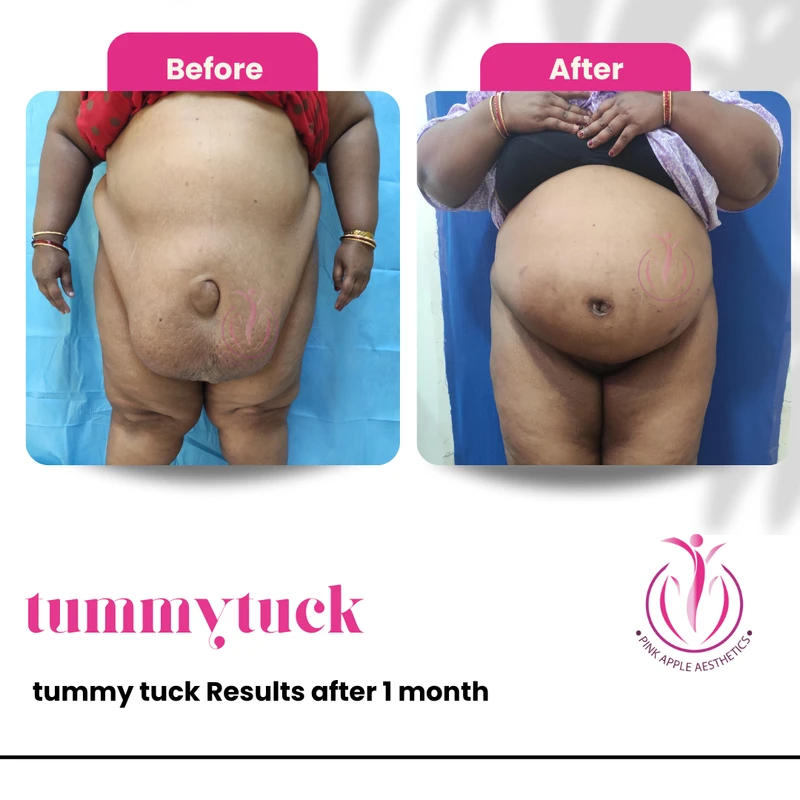
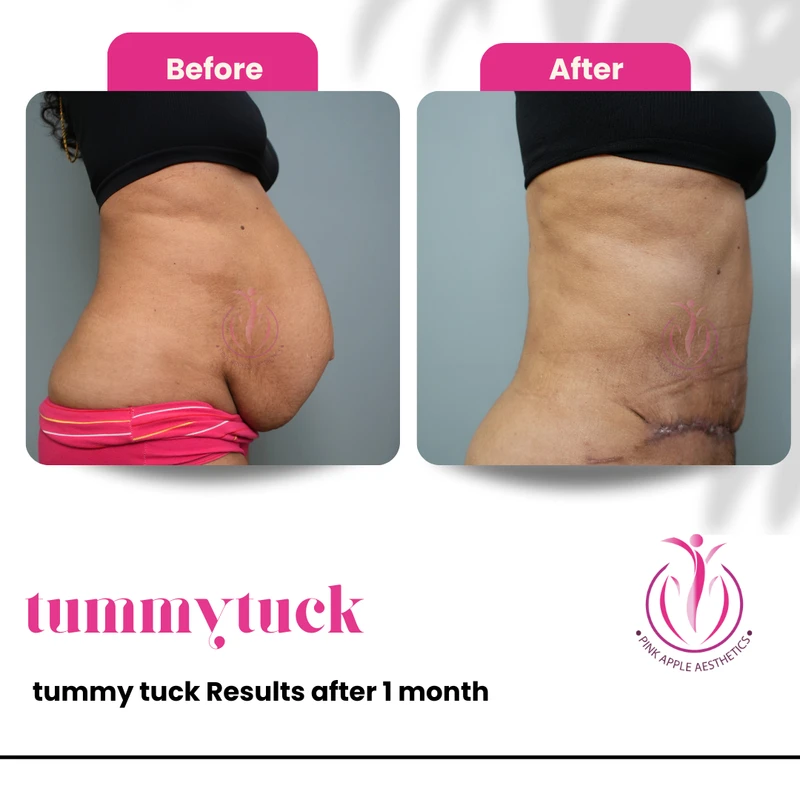
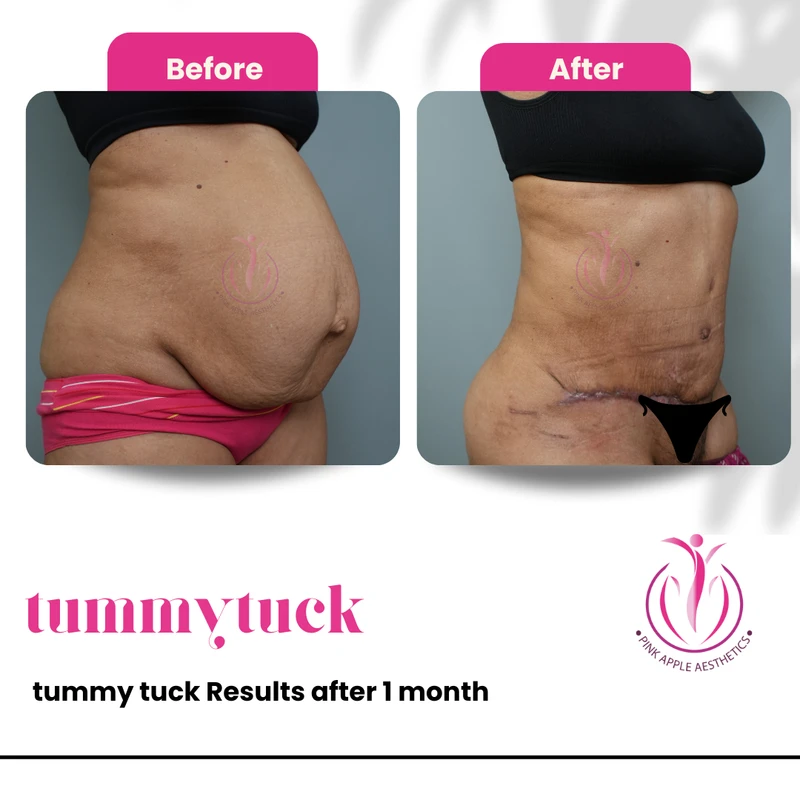
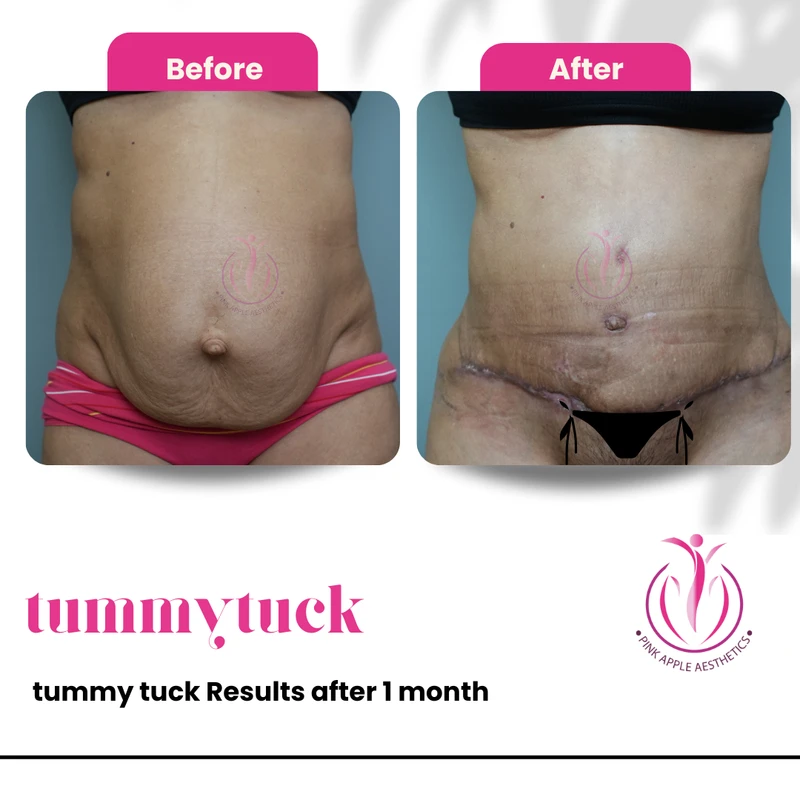
Results shown are from actual patients of Dr. Pinky Devi Ayyappan at Pink Apple Aesthetics, Bangalore. Individual outcomes vary based on abdominal anatomy, degree of skin laxity, diastasis recti width, liposuction extent, and post-operative weight maintenance. All images are shared with patient consent.
Diastasis Recti — The Muscle Separation Behind the Post-Pregnancy Abdomen
Diastasis recti affects an estimated 60 to 70% of women during pregnancy and persists in approximately 30 to 40% of women after delivery. Despite being extremely common, many women are unaware that it exists, or are told by well-meaning fitness instructors that core exercises will fix it — which they cannot.
How to check yourself for diastasis recti
The simple self-check: lie on your back with knees bent. Place your fingers horizontally across the midline of your abdomen, just above the navel. Slowly lift only your head (not your shoulders) off the floor — as if doing a very small sit-up. Feel with your fingers for a gap or a soft, spongy separation between the muscle bellies. A gap of up to 2 cm is considered within normal range. A gap of 2.5 cm or more — approximately two finger-widths — is clinically significant diastasis recti. A gap of three or more finger-widths is substantial.
A more accurate assessment is performed by Dr. Pinky at consultation, using palpation and if needed, ultrasound measurement of the gap width. The width of the gap directly influences the extent of muscle repair required during tummy tuck surgery.
Why exercise makes diastasis recti worse, not better
Many conventional core exercises — particularly crunches, sit-ups, and some yoga poses involving forward spinal flexion — generate a pressure increase inside the abdomen that pushes outward against the weakened linea alba, potentially widening the gap further. This is why women with significant diastasis recti who diligently exercise their core often find their abdomen looking more prominent, not less. Surgery — specifically diastasis repair with plication sutures during tummy tuck — is the only way to physically bring the muscles back to the midline.
If you notice your abdomen ‘coning’ or ‘doming’ along the midline during any exercise or when sitting up, this is a visible sign of diastasis recti. Please mention this at your consultation.
Tummy Tuck Surgery Cost at Pink Apple Aesthetics
Tummy tuck surgery at Pink Apple Aesthetics starts from ₹1,00,000 to ₹1,50,000 (terms and conditions apply). Your confirmed cost is provided after consultation with Dr. Pinky, based on the procedure type (mini vs full vs extended), the extent of liposuction, and the complexity of the diastasis repair.
What your tummy tuck cost typically includes:
- Surgeon's fee — Dr. Pinky Devi Ayyappan, MCh Plastic Surgery.
- General anaesthesia and anaesthesiologist's fee.
- Surgical facility / operating theatre charges.
- One night post-operative admission.
- Drains — placed during surgery; removed at 5 to 7 days.
- Compression abdominal binder — provided for the 6-week recovery period.
- Pre-operative blood tests and investigations.
- Post-operative medications — antibiotics and prescribed pain relief.
- Follow-up appointments — drain removal, suture assessment, 1 month, 3 months, 6 months.
What affects the final cost:
- Procedure type — mini vs full vs extended vs circumferential abdominoplasty.
- Liposuction extent — abdomen only vs flanks and abdomen vs full torso lipoabdominoplasty.
- Complexity of diastasis repair — extent of muscle separation and repair required.
- Combination with other procedures — mommy makeover (breast + tummy tuck + other).
Tummy tuck surgery is cosmetic and is generally not covered by health insurance. However, if a concurrent umbilical or ventral hernia is present and is being repaired during the same surgical session, the hernia repair component may be covered by some health insurance policies as a medically necessary procedure. Patients with a known hernia should check with their insurer before surgery. Dr. Pinky can provide the clinical documentation required to support a partial insurance claim for the hernia repair component where applicable.
EMI payment options are available at Pink Apple Aesthetics. Mommy makeover pricing (tummy tuck combined with breast procedures) is discussed as part of the combined consultation.
Types of Tummy Tuck Surgery — Mini, Standard, Extended, and Lipoabdominoplasty
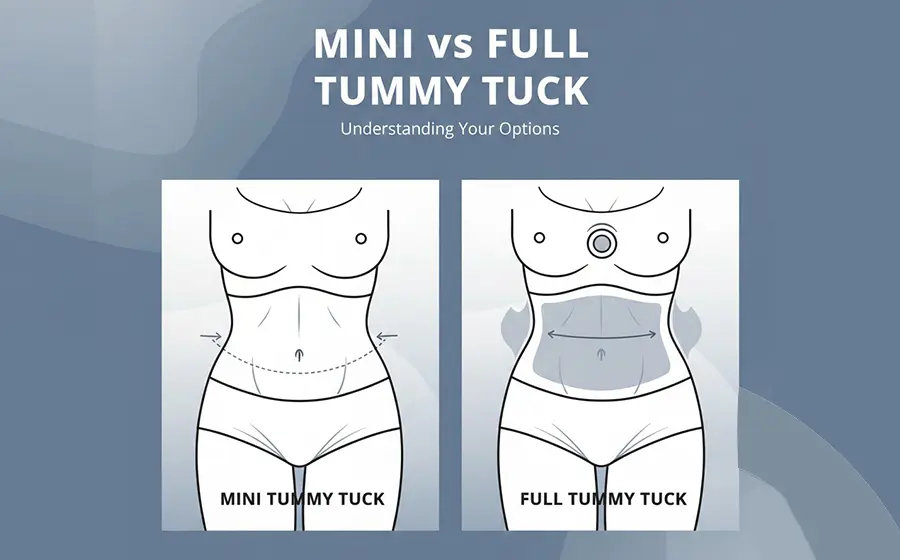
The tummy tuck technique is not a single procedure — it is a spectrum of approaches ranging from a modest lower abdominal refinement to a comprehensive full abdominal reconstruction. The correct approach is determined by the degree of skin laxity, the extent of muscle separation, and whether the concern extends to the flanks, hips, or thighs.
| Technique | What It Addresses | Best Suited To |
|---|---|---|
| Mini Tummy Tuck | Small lower abdominal skin excess only (below the navel). Short incision. No navel repositioning. No diastasis repair above the navel. | Mild lower abdominal skin laxity only. Near-ideal body weight. No significant diastasis recti. No significant upper abdominal concerns. |
| Standard (Full) Abdominoplasty | Full abdominal skin removal (above and below the navel). Complete diastasis recti repair. Navel repositioned to natural height. Liposuction of abdomen and flanks. | Post-pregnancy abdominal changes. Significant skin laxity upper and lower abdomen. Diastasis recti repair needed. This is the most commonly performed tummy tuck. |
| Lipoabdominoplasty | Full abdominoplasty combined with high-volume liposuction of the abdomen, flanks, hips, and adjacent areas in the same session for comprehensive 3D contouring. | Patients wanting full abdominal recontouring including flanks and waist in one session. Higher volume fat removal combined with skin excision and muscle repair. |
| Extended Abdominoplasty | Full abdominoplasty incision extended further around the flanks to address lateral hip and upper thigh skin laxity in addition to the central abdomen. | Post-weight loss patients with lateral hip and flank skin laxity in addition to abdominal concerns. More extensive skin excess. |
| Circumferential (Belt Lipectomy) | Incision completely encircles the torso — removing a belt of excess skin from the abdomen, flanks, back, and buttocks simultaneously. | Significant post-bariatric or post-major weight loss patients with circumferential skin excess affecting the entire lower torso. |
The most common misconception in tummy tuck planning: patients who need a full abdominoplasty choosing a mini tummy tuck because of the smaller scar — and then being disappointed that their upper abdomen, diastasis, and navel are unchanged. Dr. Pinky will be clear and direct at consultation about which procedure addresses your actual abdominal anatomy. The right technique for your anatomy always produces a better result than the shortest scar.
Umbilicoplasty — Reshaping the Belly Button as Part of Tummy Tuck
The belly button (navel or umbilicus) is one of the most anatomically specific parts of the abdominal contour — and it is the part that most distinguishes a natural-looking tummy tuck result from a surgical-looking one. An improperly positioned, oddly shaped, or visibly scarred belly button reveals that surgery has been performed far more obviously than any well-placed abdominal scar.
During a full abdominoplasty, the skin is pulled down over the tightened muscle, which means the belly button — still attached to the abdominal wall underneath — must be brought through a new opening in the re-draped skin. This repositioning is called umbilicoplasty. The shape, position, size, and orientation of the new belly button opening are carefully planned to produce the most natural-looking result — an innie belly button at the correct anatomical height (approximately at the level of the anterior superior iliac spines, or hip bones) with a natural shadow and appearance.
A well-executed umbilicoplasty is one of the hallmarks of a skilled tummy tuck. At Pink Apple Aesthetics, Dr. Pinky pays specific attention to the navel configuration — using suturing techniques that produce a naturally recessed, oval or teardrop-shaped navel that looks completely unchanged from a natural belly button.
Tummy Tuck After Pregnancy in Indian Women — What Makes It Different
The post-pregnancy abdomen is the most common tummy tuck presentation in Bangalore — and Indian women face specific factors that make the post-pregnancy abdominal changes particularly significant:
- Multiple pregnancies close together — each pregnancy cycles the abdomen through maximum stretch and deflation, compounding the muscle separation and skin laxity with each child. Many Indian women present with Grade 3 to 4 diastasis recti from two or three closely spaced pregnancies.
- Extended breastfeeding and rapid weight changes — Indian breastfeeding practices extend the period of hormonal influence on abdominal tissue. Post-weaning weight loss often deflates the abdomen rapidly, leaving skin that cannot retract.
- Saree and blouse fit — the fitted saree blouse exposes the abdominal region completely — the waist, the flanks, and the soft abdominal contour are all visible in a well-draped saree. This makes abdominal contour a particularly clothing-relevant concern for Indian women in a way that less revealing Western clothing does not.
- Expectations of completing the family first — the clinical recommendation is to wait until the family is complete before tummy tuck — future pregnancies stretch the repaired muscles and skin again. For Indian women who plan multiple children, this means timing the surgery carefully.
- The abdominal apron (pannus) — in patients with significant post-pregnancy weight retention, a fold of redundant skin and fat hanging over the pubic area (pannus or apron belly) is common. This causes chronic skin fold infections, rashes, and difficulty with hygiene in addition to the aesthetic concern. Tummy tuck resolves this completely.
For Indian women specifically: the question ‘liposuction or tummy tuck?’ is best answered by examining the abdomen. If there is primarily fat with good skin elasticity — liposuction alone. If there is skin laxity, a pannus, or a diastasis — a tummy tuck is the appropriate procedure. Both procedures may be needed together (lipoabdominoplasty). Dr. Pinky assesses this honestly at every consultation.
Who Is a Good Candidate for Tummy Tuck Surgery?
- Near stable body weight — within approximately 10 to 15% of ideal body weight and weight-stable for at least 6 months. Significant weight loss after tummy tuck can cause new skin laxity.
- Significant abdominal skin laxity — loose, hanging skin that does not retract with diet or exercise. The primary indication for tummy tuck rather than liposuction alone.
- Diastasis recti — clinically significant muscle separation (gap of 2.5 cm or more) causing abdominal protrusion, back pain, or core instability.
- Abdominal pannus — an overhanging fold of skin and fat causing skin fold infections, rashes, or hygiene difficulty.
- Post-pregnancy abdominal changes — combination of skin laxity, muscle separation, and localised fat after one or more pregnancies.
- Post-weight loss abdominal changes — significant skin excess after major weight loss (dietary or post-bariatric).
- Family completed — ideally no further pregnancies planned; future pregnancy will stretch the repaired muscles and may require revision.
- Non-smoker or committed to stopping — smoking significantly impairs healing of the long tummy tuck incision; the complication rate in smokers is substantially higher.
- Good general health — no uncontrolled diabetes, cardiovascular conditions, or clotting disorders. Previous abdominal surgeries (caesarean, appendix, gallbladder) are discussed at consultation for their impact on incision planning.
- Realistic expectations — tummy tuck produces a flat, firm abdomen with a permanent scar along the lower abdomen. The scar is hidden by underwear and swimwear but is present. Weight gain after surgery will affect the result.
There is no upper age limit for tummy tuck surgery. Women in their 40s and 50s are very commonly appropriate candidates. The relevant factors are general health and the condition of the abdominal tissue — not age alone.
What to Expect: From Consultation to Your Final Result
Step 1 — Consultation and abdominal assessment
Dr. Pinky examines the abdomen in detail — measuring diastasis recti width by palpation, assessing skin laxity and elasticity, evaluating fat distribution and pannus if present, and reviewing any previous abdominal surgery history (caesarean incisions, hernias). She draws the planned incision on the abdomen, demonstrates where the skin excision will end (the new navel position, the scar line), and discusses the technique best suited to the anatomy. She is specific about what the procedure will and will not change — including which stretch marks will be excised and which will remain.
Step 2 — Pre-operative preparation
Blood tests, anaesthesia assessment, ECG for patients over 40. Stop smoking 4 to 6 weeks before (non-negotiable for tummy tuck — wound healing complications are significantly higher in smokers). Stop blood thinners 1 to 2 weeks before. Compression garments sized pre-operatively. A high-protein diet in the weeks before surgery supports wound healing. Arrangements made for post-operative care support at home — the first week requires assistance.
Step 3 — The surgery (2 to 4 hours)
Tummy tuck surgery is performed under general anaesthesia. The duration ranges from 2 hours for a mini abdominoplasty to 4 hours for a full lipoabdominoplasty with extended technique. Most patients are admitted for one night post-operatively and discharged the following morning. The procedure sequence: pre-operative markings are drawn while standing. Liposuction of the abdomen and flanks is performed. The skin is elevated from the underlying muscle fascia from the incision up to the navel (and above in full abdominoplasty). The diastasis is repaired with permanent plication sutures along the midline from the sternum to the pubis — restoring the muscle wall. The skin is pulled down under controlled tension, the excess is excised. The navel is brought through a new opening and sutured into its repositioned location. The incision is closed in layers with fine sutures.
Step 4 — Recovery: weeks 1 to 4
This is a significant recovery compared to liposuction alone. Drains are placed and typically removed at 5 to 7 days. A compression abdominal binder is worn for 6 weeks. Walking in a slightly bent posture (to avoid tension on the lower incision) is required for the first 1 to 2 weeks — patients should not straighten fully until the tension has reduced. Most patients return to desk work at 2 to 3 weeks. Driving resumes at 2 to 3 weeks. Heavy lifting and strenuous exercise resume at 6 weeks. Core-specific exercises are avoided for 8 to 12 weeks to protect the muscle repair.
Step 5 — Your result
An initial dramatic improvement is visible within 3 to 4 weeks once swelling begins to resolve. The scar appears pink and firm in the first 3 months — normal healing. With silicone gel and sun protection, the scar fades significantly over 12 to 18 months. The final, fully settled result — including the softened scar and the final abdominal contour — is visible at 6 to 12 months. The result is long-lasting, provided stable weight is maintained and no further pregnancies occur.
What Are the Risks of Tummy Tuck Surgery?
Tummy tuck is a major surgical procedure. Patients should be fully informed:
- Scarring — the horizontal incision from hip to hip is permanent. It is placed along the panty line and hidden by underwear and swimwear, but it is a long scar. Most patients feel this is a very acceptable trade-off for the improvement in abdominal appearance. The scar fades from pink to pale over 12 to 18 months with silicone gel.
- Seroma — the most common specific tummy tuck complication. A collection of lymphatic fluid beneath the elevated skin. Managed with serial aspiration. Drain use reduces (but does not eliminate) seroma. Risk is higher in larger procedures and patients with high BMI.
- Wound healing complications — particularly at the central point of the incision ('T-junction' if combining with a vertical component), delayed healing can occur. Risk is dramatically increased by smoking — this is why stopping smoking is non-negotiable.
- DVT and pulmonary embolism — the most serious systemic risk of major abdominal surgery. Prevented with compression stockings, early mobilisation (walking the same day), and anti-coagulation where indicated.
- Haematoma — blood collection; uncommon with proper technique; managed with drainage.
- Infection — uncommon; managed with antibiotics; drain care and wound hygiene reduce risk.
- Navel complications — poor navel healing, asymmetry, or visibility of scars around the navel. Prevented with careful umbilicoplasty technique.
- Numbness of lower abdominal skin — the lower abdominal skin loses sensation after the skin flap is elevated during the procedure. Sensation typically partially returns over 6 to 12 months but the lower abdomen may have permanently reduced sensitivity.
- Unsatisfactory contour — excess skin remaining after healing (particularly in the lower flanks or 'dog ears' at the ends of the incision) may require minor revision. Planned carefully by extending the incision adequately.
At Pink Apple Aesthetics, the pre-operative preparation phase — specifically stopping smoking, maintaining stable weight, and optimising nutritional status — is treated as seriously as the surgery itself. Most tummy tuck complications are preventable with proper pre-operative preparation and patient compliance.
Why Choose Dr. Pinky Devi Ayyappan for Tummy Tuck Surgery?
MCh (Plastic, Reconstructive & Aesthetic Surgery)
India’s highest postgraduate plastic surgery qualification. Abdominoplasty — including muscle repair, lipoabdominoplasty, and extended techniques — is a core MCh plastic surgery competency.
Female, board-certified plastic surgeon
One of very few female MCh plastic surgeons in Bangalore. For a procedure centred on the post-pregnancy abdomen, many women find the consultation profoundly more comfortable with a surgeon who can personally understand the experience of pregnancy, body change, and the desire to feel like themselves again.
Diastasis recti assessment at every consultation
Dr. Pinky specifically measures the inter-recti distance (the diastasis width) at every tummy tuck consultation. This determines the extent of muscle repair needed and forms the basis of the surgical plan.
Umbilicoplasty precision
Careful attention to belly button shape, position, and orientation is a signature of Dr. Pinky’s tummy tuck technique — producing results that look natural rather than surgical.
Honest procedure selection
Dr. Pinky will advise clearly whether a mini or full tummy tuck serves the patient’s anatomy. Patients who need a full abdominoplasty are not given a mini tummy tuck to reduce the apparent commitment.
Incision placement for Indian clothing
The tummy tuck incision is planned specifically to sit within the panty, saree petticoat, or swimwear line — concealed by the clothing Indian women actually wear.
DAFPRS Fellowship — Belgium (Dr. Patrick Tonnard & Dr. Alexis Verpaele)
Internationally trained with globally recognised plastic surgeons.
4.9 stars from 191+ verified Google reviews
Consistent, trusted surgical outcomes.
Times of India Top Brand 2024
Tummy Tuck Surgery — Frequently Asked Questions

What is diastasis recti and can a tummy tuck fix it?
Diastasis recti is the separation of the paired rectus abdominis muscles along the midline of the abdomen, caused by the stretching forces of pregnancy. A separation of 2.5 cm or more is clinically significant and causes the characteristic rounded, protruding abdomen that persists after pregnancy despite a healthy weight and exercise. Diet and exercise cannot repair the actual muscle separation — no amount of core training closes the structural gap between the muscles. Diastasis repair during tummy tuck — where permanent plication sutures are placed to bring the muscles back together — is the only treatment that physically restores the abdominal wall to its pre-pregnancy configuration. Many women are surprised to learn that their exercise-resistant abdominal protrusion has a surgical solution.
What is the difference between a mini tummy tuck and a full tummy tuck?
A mini tummy tuck uses a short incision and addresses only the lower abdomen below the navel. The navel is not repositioned and diastasis recti above the navel is not repaired. It is appropriate only for patients with mild skin excess limited to the very lower abdomen. A full tummy tuck uses a longer hip-to-hip incision, removes skin from both above and below the navel, repositions the belly button to its correct height, and fully repairs the diastasis recti from the sternum to the pubis. The vast majority of post-pregnancy patients require a full abdominoplasty — a mini tummy tuck will not address their upper abdominal concerns or their diastasis. Choosing a mini when a full is needed is the most common source of tummy tuck disappointment.
Will a tummy tuck remove my stretch marks?
A full tummy tuck removes the stretch marks located in the lower abdominal skin between the incision and the navel — typically including most of the stretch marks acquired during pregnancy. This skin is excised and discarded. Stretch marks above the navel remain but move downward toward the scar line as the upper abdominal skin is pulled down. The stretch marks above the navel may be less visible in their new lower position, but they are not removed. Dr. Pinky will discuss at consultation which specific stretch marks are likely to be included in the excised skin.
When should I have a tummy tuck — before or after my last pregnancy?
The clinical recommendation is to wait until after your family is complete. Future pregnancies will stretch the repaired muscles and the tightened skin again — potentially reproducing the diastasis recti that was repaired and creating new skin laxity. This does not make the tummy tuck pointless — many women have revision surgery after subsequent pregnancies with good results — but timing the first procedure after the last planned pregnancy produces the most durable result. If, however, the current abdominal changes are significantly affecting quality of life, posture, back pain, or clothing function, the decision to proceed before completing the family is legitimate — with clear understanding that a revision may be needed.
Does a tummy tuck help with back pain?
Yes — and this is one of the most consistently reported functional benefits of tummy tuck surgery. Diastasis recti significantly weakens the core muscular support for the spine. The separated muscles cannot generate the intra-abdominal pressure needed for spinal stability, which forces the paraspinal muscles of the lower back to compensate — resulting in chronic muscular fatigue and lower back pain. Repairing the diastasis with plication sutures restores the mechanical function of the anterior abdominal wall, reduces the demand on the back muscles, and improves posture. Many patients report meaningful reduction in back pain within weeks of surgery — often to an extent they did not anticipate from what they thought of as a cosmetic procedure.
How long does the tummy tuck recovery take and when can I exercise?
Return to desk work: 2 to 3 weeks. Driving: 2 to 3 weeks. Walking and light activity: from day 1 (encouraged early to reduce DVT risk). Core exercises and heavy lifting: 8 to 12 weeks — protecting the diastasis repair is important during this period. Full exercise including running and gym: 6 to 8 weeks. The compression binder is worn for 6 weeks. The final, fully settled result is visible at 6 to 12 months as swelling fully resolves.
I have a caesarean section scar — can I still have a tummy tuck?
Yes — and many patients who request tummy tuck surgery have one or more caesarean scars. The tummy tuck incision is planned to incorporate the caesarean scar within the excised skin in most cases — removing the caesarean scar entirely as part of the procedure. This is one of the additional benefits of tummy tuck for Indian women, for whom caesarean delivery rates are high. The caesarean scar position is examined at consultation and its relationship to the planned tummy tuck incision is explicitly discussed.