
Introduction
Gynecomastia is a condition characterised by the enlargement of glandular breast tissue in males. It can occur during puberty, adulthood or later in life and may affect one or both sides of the chest.
The appearance of gynecomastia varies from a small amount of tissue beneath the nipple to more pronounced breast enlargement accompanied by excess skin. Understanding the different grades of gynecomastia can help explain the condition and the factors a clinician considers during an assessment.
Gynecomastia is commonly classified according to the amount of tissue enlargement and the presence of excess skin or breast drooping. However, grading systems differ, and the grade alone does not determine whether treatment is necessary.
This guide explains the four-grade Rohrich classification, the differences between grades, possible causes, diagnostic evaluation and available treatment approaches.
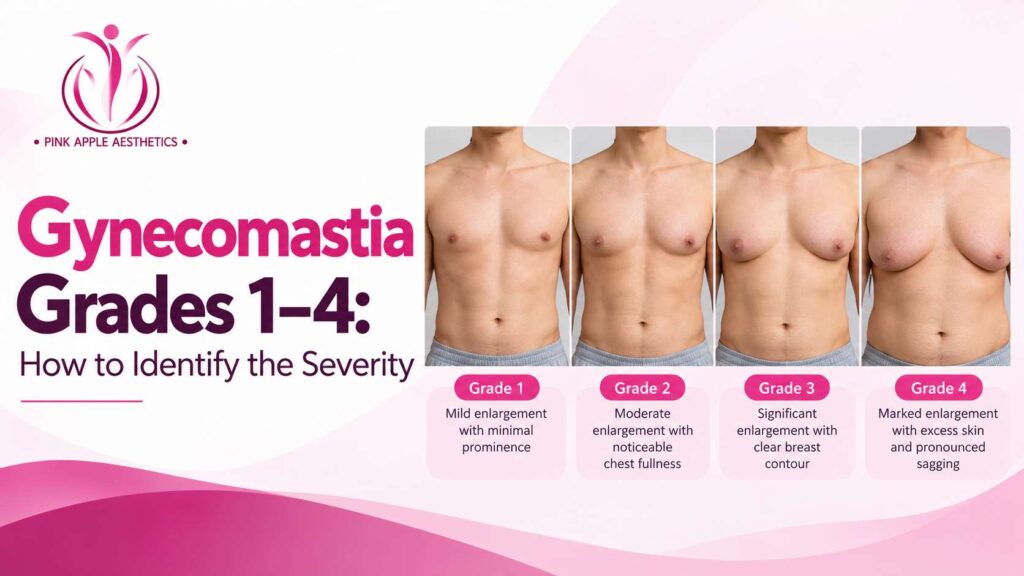
What Are the Four Grades of Gynecomastia?
Gynecomastia grading systems help clinicians describe the extent of breast tissue enlargement and associated skin changes. One classification, proposed by Rohrich and colleagues, identifies four grades based on tissue enlargement and the degree of breast drooping, also called ptosis.
Grade 1 Gynecomastia: Minimal Enlargement
Grade 1 generally describes minimal breast tissue enlargement without significant breast drooping.
Common characteristics:
-
- A small amount of enlargement around the nipple or areola.
-
- Little or no excess skin.
-
- A relatively flat chest contour apart from the localised enlargement.
-
- Possible tenderness or sensitivity, particularly when the condition is recent.
Grade 1 gynecomastia may be difficult to distinguish from normal variations in chest appearance or localised fat accumulation without a clinical examination.
The presence of a small enlargement does not automatically mean that treatment is required. The individual’s age, symptoms, duration of the condition and possible underlying causes are important considerations.
Grade 2 Gynecomastia: Moderate Enlargement
Grade 2 describes moderate breast tissue enlargement without substantial breast drooping in the Rohrich classification.
Common characteristics:
-
- More noticeable enlargement of the chest.
-
- Increased glandular tissue beneath the nipple and areola.
-
- A fuller chest contour.
-
- No significant excess skin or breast drooping.
The extent of enlargement may vary between individuals. Some may have predominantly glandular tissue, while others have a combination of glandular tissue and fat.
A clinician may assess the tissue composition, medical history and possible contributing factors before discussing management options.
Grade 3 Gynecomastia: Severe Enlargement With Mild Drooping
Grade 3 generally describes substantial breast enlargement accompanied by mild breast drooping.
Common characteristics:
-
- More pronounced chest enlargement.
-
- Greater tissue volume.
-
- Mild excess skin or drooping.
-
- A change in the position or contour of the nipple-areola complex.
At this stage, the amount of excess skin and the quality of the skin can become important considerations in treatment planning.
The appearance alone cannot establish the exact amount of glandular tissue present. Clinical assessment helps determine whether the enlargement is primarily glandular, fatty or mixed.
Grade 4 Gynecomastia: Severe Enlargement With Pronounced Drooping
Grade 4 describes severe enlargement accompanied by more pronounced breast drooping in the Rohrich classification.
Common characteristics:
-
- Significant breast enlargement.
-
- Considerable excess skin.
-
- More pronounced breast drooping.
-
- Changes in the chest contour and nipple position.
The presence of excess skin may influence the range of treatment approaches considered. Depending on the clinical findings, a specialist may discuss tissue removal, liposuction, skin reduction or a combination of techniques.
Not everyone with Grade 4 gynecomastia requires the same procedure. Treatment decisions depend on individual anatomy, medical factors, expectations and the findings of the assessment.
Important: These descriptions are general educational guidance, not a method for assigning your own grade. A clinician should assess the condition in person.
How Is Gynecomastia Severity Assessed?
A clinical assessment considers more than the visible size of the chest. A healthcare professional may evaluate:
-
- Tissue enlargement: The amount and distribution of breast tissue.
-
- Tissue composition: Whether the enlargement appears predominantly glandular, fatty or mixed.
-
- Skin excess: Whether the skin has stretched or become redundant.
-
- Breast drooping: The degree of ptosis and the position of the nipple.
-
- Symptoms: Tenderness, pain, changes in the breast or other associated symptoms.
-
- Duration: When the enlargement began and whether it has changed over time.
-
- Medical history: Medications, supplements, hormone-related conditions and other relevant health factors.
Depending on the findings, further investigations may be appropriate. These can include blood tests or imaging when clinically indicated.
There is no single visual feature that reliably determines every person’s grade. Different classification systems may also describe the same chest appearance differently.
What Is the Difference Between Gynecomastia and Chest Fat?
Gynecomastia involves enlargement of glandular breast tissue, whereas pseudogynecomastia refers to chest enlargement primarily caused by fat accumulation.
| Feature | Gynecomastia | Pseudogynecomastia |
| Main tissue involved | Glandular breast tissue, sometimes with fat | Primarily fatty tissue |
| Typical appearance | May include localised fullness beneath the nipple | Often more diffuse chest fullness |
| Clinical assessment | Examines glandular tissue and possible causes | Assesses fat distribution and other findings |
| Management | Depends on the cause, symptoms and severity | Depends on individual findings and goals |
These differences cannot always be established by appearance or self-examination alone. Both conditions may occur together, so professional assessment may be useful when the cause is unclear.
What Causes Gynecomastia?
Gynecomastia can develop when the balance between oestrogen and androgen activity changes. Possible contributing factors include:
-
- Hormonal changes during puberty or ageing.
-
- Certain medications.
-
- Some medical conditions affecting hormone production or metabolism.
-
- Thyroid, liver or kidney disorders.
-
- Certain substances, anabolic steroids or supplements.
In some cases, a specific cause is not identified.
New, persistent or progressive breast enlargement should be assessed by a healthcare professional, particularly when accompanied by other symptoms.
Does the Grade Determine the Treatment?
The grade provides useful descriptive information, but it does not independently determine the appropriate treatment.
Management depends on the underlying cause, the duration of the enlargement, symptoms, age, tissue composition, skin quality and individual circumstances.
Observation and Medical Evaluation
Some cases, particularly those associated with puberty, may improve over time. A clinician may recommend observation and follow-up when appropriate.
If an underlying condition or medication is suspected, the clinician may investigate whether it is contributing to the enlargement. Prescribed medication should not be stopped without medical advice.
Liposuction
Liposuction may be considered when excess fatty tissue contributes to chest enlargement. It does not independently remove all forms of firm glandular tissue or address significant excess skin.
Glandular Tissue Excision
Surgical excision may be considered when firm glandular tissue requires removal. The approach depends on the tissue distribution and clinical assessment.
Skin Reduction
When substantial excess skin or drooping is present, skin reduction may be considered as part of an individualised surgical plan.
Some people may require a combination of techniques, while others may not need surgery. A clinician can explain the potential benefits, limitations, risks and recovery considerations associated with each option.
When Should You Seek Medical Evaluation?
Consider seeking medical advice if you notice persistent or increasing breast enlargement, particularly if the cause is unclear.
Arrange prompt medical evaluation for a new lump, especially if it is hard or fixed, is located away from the nipple, or is associated with nipple discharge, skin changes or enlarged underarm lymph nodes. These findings do not necessarily indicate cancer, but they should not be ignored.
Sudden or rapidly progressing enlargement also warrants assessment.
Frequently Asked Questions
1. What are the four grades of gynecomastia?
In the Rohrich classification, Grade 1 describes minimal enlargement without drooping; Grade 2 describes moderate enlargement without significant drooping; Grade 3 describes severe enlargement with mild drooping; and Grade 4 describes severe enlargement with more pronounced drooping.
2. Is Grade 4 gynecomastia more severe than Grade 1?
Generally, yes. Grade 4 represents more substantial enlargement and skin drooping than Grade 1 in the Rohrich classification. However, the grade does not by itself establish the need for treatment.
3. Can Grade 1 gynecomastia go away naturally?
Some cases, particularly those associated with puberty, may resolve over time. The likelihood depends on the cause and duration. Persistent or unexplained enlargement should be assessed by a clinician.
4. Can exercise reduce gynecomastia?
Exercise may help reduce overall body fat and improve chest muscle definition. However, exercise does not directly remove enlarged glandular breast tissue.
5. Does every grade require surgery?
No. Management may involve observation, evaluation of an underlying cause or surgery, depending on individual findings. The grade alone does not determine the appropriate approach.
6. How is gynecomastia diagnosed?
Diagnosis generally involves a medical history and physical examination. Blood tests or imaging may be recommended when indicated by the findings.
7. Can gynecomastia affect only one side of the chest?
Yes. Gynecomastia can affect one or both sides, and the enlargement may be unequal. New or unusual one-sided changes should be medically assessed.
8. Which specialist should I consult for gynecomastia?
A qualified healthcare professional can evaluate breast enlargement and identify whether further investigation or specialist care is appropriate. A plastic surgeon may discuss surgical options when surgery is being considered.
Conclusion
Gynecomastia grades 1–4 provide a framework for describing male breast enlargement, tissue volume and associated skin changes. The Rohrich classification is one system used for this purpose, but other classifications use different grade definitions.
An accurate assessment considers the cause of enlargement, tissue composition, symptoms, duration and skin changes rather than relying on appearance alone. Understanding these factors helps support informed discussions about observation, further investigation and possible treatment.
Medical review: This article should be reviewed and approved by a qualified medical professional before publication. Add the reviewer’s verified name and credentials only after the review has taken place.
About Pink Apple Aesthetics: For factual information about the clinic’s services and clinical evaluation process, readers may consult the clinic’s official website. Any service information should be accurate, current and presented without guarantees or pressure to undergo treatment.


