
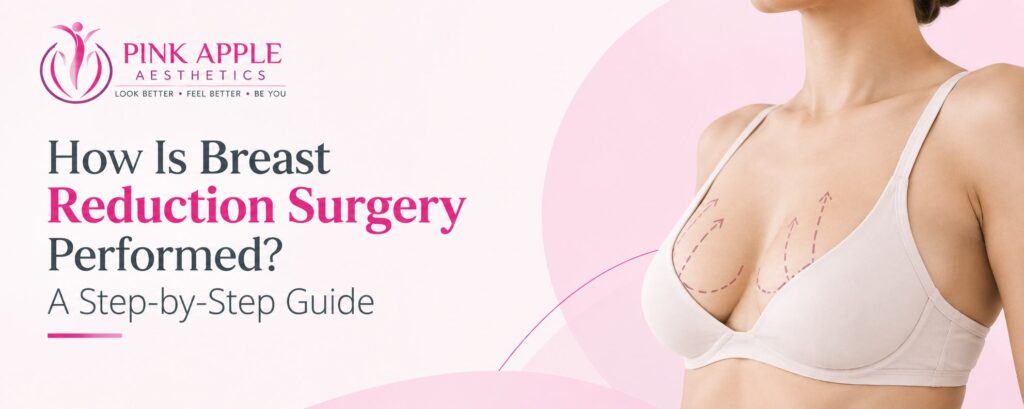
Breast reduction surgery, also known as reduction mammoplasty, is a procedure designed to reduce excess breast volume while reshaping the breasts and, when necessary, repositioning the nipple and areola.
For women considering breast reduction surgery in Bangalore, understanding what happens before, during and after the procedure can make the process easier to understand.
Breast reduction is not simply an operation to remove breast tissue. It involves careful planning to balance breast size, shape, proportion, skin, nipple position and safety.
The exact surgical technique varies from patient to patient depending on breast size, shape, degree of drooping, skin quality, asymmetry and the amount of reduction required.
1. The Initial Consultation
The process begins with a detailed consultation with a qualified plastic surgeon.
During the consultation, the surgeon discusses your:
-
- Reasons for considering breast reduction
-
- Physical symptoms
-
- Medical history
-
- Previous surgeries
-
- Current medications
-
- Lifestyle and activity levels
-
- Expectations from surgery
The surgeon will also examine the breasts and assess their:
-
- Size
-
- Shape
-
- Symmetry
-
- Skin quality
-
- Degree of drooping
-
- Nipple and areola position
-
- Breast fold
-
- Overall proportions
This assessment helps determine whether breast reduction is an appropriate option.
2. Understanding Your Desired Outcome
Before surgery, it’s important to discuss what you mean by “smaller breasts.”
Some patients want a significant reduction because of physical discomfort, while others may want a more moderate reduction with a particular breast shape.
You can discuss:
-
- Desired breast size
-
- Desired breast shape
-
- Physical symptoms
-
- Concerns about scars
-
- Nipple position
-
- Expectations about recovery
Your surgeon can then explain what may realistically be achievable based on your anatomy.
Why isn’t a cup size enough?
Bra sizes vary between brands and don’t directly measure breast volume.
The surgical plan is therefore based on your actual anatomy and proportions rather than simply changing from one cup size to another.
3. Surgical Planning
Once your goals and anatomy have been assessed, the surgeon develops an individualized surgical plan.
Planning may involve determining:
-
- How much tissue should be removed
-
- How much skin needs to be removed
-
- Which incision pattern is appropriate
-
- How the remaining breast tissue will be reshaped
-
- Where the nipple and areola should sit
-
- How breast asymmetry will be addressed
The surgeon also considers the relationship between your breasts and your overall body proportions.
There is no single technique or amount of tissue removal that is appropriate for every patient.
4. Preparing for Anaesthesia
Breast reduction surgery is generally performed under general anaesthesia, meaning you are asleep during the operation.
Before surgery, the anaesthesia team evaluates your medical history and overall health to determine an appropriate anaesthesia plan.
You will receive specific instructions regarding:
-
- Eating and drinking before surgery
-
- Medications
-
- Smoking or nicotine use
-
- Other preparation requirements
These instructions should be followed carefully.
5. Marking the Breasts Before Surgery
Before entering the operating room, the surgeon may make markings on the breasts while you are standing.
These markings help guide the surgical plan.
They may indicate:
-
- Breast boundaries
-
- Midline
-
- Breast fold
-
- Nipple position
-
- Planned incision pattern
-
- Areas of tissue removal
Because the breast changes shape when you lie down, markings made while standing can help the surgeon plan the procedure according to your natural position and proportions.
6. Choosing the Incision Pattern
Different incision patterns can be used for breast reduction.
The choice depends on factors such as:
-
- Amount of reduction required
-
- Breast size
-
- Degree of drooping
-
- Skin excess
-
- Breast shape
-
- Skin quality
Common patterns include:
Vertical or “Lollipop” Pattern
This typically involves an incision around the areola with a vertical incision extending downward.
It may be suitable for certain patients requiring a moderate degree of reduction and reshaping.
Wise Pattern or “Inverted-T” Pattern
This involves an incision around the areola, a vertical incision downward and an incision along the breast fold.
It may be considered when there is more significant excess skin or a larger reduction is required.
Other Techniques
The surgical approach can vary depending on the patient’s anatomy and the surgeon’s preferred technique.
The shortest scar is not necessarily the best option for every patient. The priority is selecting an approach that allows appropriate reduction and reshaping.
7. Removing Excess Breast Tissue, Fat and Skin
Once the appropriate incisions have been made, the surgeon removes a planned amount of excess tissue.
This can include:
-
- Glandular breast tissue
-
- Fat
-
- Excess skin
The amount removed from each breast may not always be identical, particularly when there is pre-existing breast asymmetry.
The goal is not simply to remove as much tissue as possible.
Instead, the surgeon aims to achieve an appropriate reduction while maintaining a healthy and well-shaped breast.
8. Reshaping the Remaining Breast Tissue
This is one of the most important parts of breast reduction surgery.
After excess tissue has been removed, the remaining breast tissue is reshaped to create a smaller and more proportionate breast.
The surgeon considers:
-
- Breast projection
-
- Upper and lower breast shape
-
- Breast width
-
- Symmetry
-
- Overall body proportions
This is why breast reduction is both a reduction and reshaping procedure.
Simply removing tissue without appropriate reshaping would not produce the intended result.
9. Repositioning the Nipple and Areola
When breasts are significantly enlarged or droopy, the nipple and areola may sit lower than desired.
During breast reduction, the nipple and areola are generally repositioned to a more appropriate location as part of the reshaping process.
The exact technique depends on:
-
- Breast size
-
- Degree of drooping
-
- Amount of reduction
-
- Nipple position
-
- Individual anatomy
In most breast reductions, the nipple and areola remain attached to underlying tissue to preserve their blood supply and sensation as much as possible.
In very large or complex reductions, different techniques may sometimes be considered.
10. Closing the Incisions
Once the breast has been reshaped and the nipple positioned appropriately, the incisions are closed.
The final scar pattern depends on the incision technique used.
Commonly, scars may be located:
-
- Around the areola
-
- Vertically down from the areola
-
- Along the breast fold
The surgeon carefully aligns the tissues during closure to support appropriate healing and breast shape.
It’s important to understand that breast reduction surgery produces scars.
Their appearance changes gradually during healing, and the final scar can vary between individuals.
11. Recovery Immediately After Surgery
After the operation, you are taken to a recovery area where the medical team monitors you as you wake from anaesthesia.
You may experience:
-
- Swelling
-
- Bruising
-
- Tightness
-
- Tenderness
-
- Temporary changes in breast sensation
These are common during the early recovery period.
Your surgeon will provide specific instructions regarding wound care, medications, supportive garments and activity.
12. The First Few Days After Breast Reduction
The initial recovery period focuses on rest and protecting the surgical area.
You may be advised to:
-
- Take prescribed medication as directed
-
- Wear a recommended surgical or supportive bra
-
- Keep the incision areas clean and protected
-
- Avoid strenuous activity
-
- Attend scheduled follow-up appointments
Your surgeon will tell you when you can safely shower, drive, work and resume different activities.
13. Breast Reduction Recovery Over the Following Weeks
Recovery varies between individuals.
Swelling and bruising gradually improve, while the breasts begin to settle into their new shape.
During recovery, you may notice:
-
- Changes in breast firmness
-
- Temporary changes in sensation
-
- Swelling that is greater on one side
-
- Incisions gradually healing
-
- Scars becoming less prominent over time
The final breast shape does not appear immediately after surgery.
It can take several weeks or longer for swelling to settle and the tissues to stabilize.
What Happens to the Removed Breast Tissue?
The tissue removed during breast reduction may be sent for pathological examination according to the surgeon’s protocol and clinical circumstances.
This allows the removed tissue to be appropriately evaluated.
How Long Does Breast Reduction Surgery Take?
The duration varies depending on:
-
- Breast size
-
- Amount of tissue to be removed
-
- Surgical technique
-
- Degree of reshaping required
-
- Individual anatomy
Your surgeon can provide a more specific estimate after assessing you.
Will Both Breasts Be Exactly the Same After Surgery?
The goal is to improve symmetry, but perfect symmetry cannot always be guaranteed.
Most women have some degree of natural asymmetry before surgery.
Differences can exist in:
-
- Breast size
-
- Shape
-
- Nipple height
-
- Breast fold position
-
- Chest wall anatomy
The surgeon can account for these differences during planning and may remove different amounts of tissue from each breast when appropriate.
Does Breast Reduction Only Remove Fat?
No.
Breast reduction can involve removing a combination of:
-
- Glandular breast tissue
-
- Fat
-
- Excess skin
The proportions vary between patients.
This is another reason why breast reduction is different from procedures designed primarily to remove fat.
What Determines the Final Breast Size?
The final breast size depends on several factors, including:
-
- Starting breast volume
-
- Amount of tissue removed
-
- Skin quality
-
- Breast shape
-
- Body proportions
-
- Surgical technique
-
- Individual healing
Your surgeon can discuss the expected range of reduction, but an exact postoperative cup size cannot always be guaranteed.
Are Breast Reduction Scars Permanent?
Breast reduction requires incisions, so some degree of scarring is expected.
The location and length of scars depend on the surgical technique.
Scars generally change with time. They may initially appear more prominent and gradually mature during the healing process.
Individual scar formation varies depending on factors such as genetics, skin characteristics and healing.
Your surgeon can explain the expected scar pattern before surgery.
When Can You Return to Normal Activities?
Recovery is gradual.
Light activities may be resumed earlier, while strenuous exercise, heavy lifting and high-impact activities usually require a longer period of recovery.
Your surgeon will provide individualized instructions based on how your wounds are healing.
Do not use someone else’s recovery timeline as a substitute for your surgeon’s advice.
What Are the Risks of Breast Reduction Surgery?
As with any surgery, breast reduction has potential risks and complications.
These may include:
-
- Bleeding
-
- Infection
-
- Wound-healing problems
-
- Scarring
-
- Changes in nipple or breast sensation
-
- Breast asymmetry
-
- Changes in nipple position
-
- Fluid collection
-
- Blood clots
-
- Need for revision surgery
Your surgeon should discuss the risks relevant to your individual circumstances before you make a decision.
Is Breast Reduction Right for Everyone?
Not necessarily.
Breast reduction may be considered for women who experience physical discomfort, functional limitations or concerns related to breast size.
However, suitability depends on factors such as:
-
- Overall health
-
- Medical history
-
- Breast anatomy
-
- Expectations
-
- Lifestyle
-
- Smoking or nicotine use
-
- Future pregnancy plans
-
- Ability to follow postoperative instructions
An individual consultation is necessary to determine whether surgery is appropriate.
The Bottom Line
Breast reduction surgery is a carefully planned combination of tissue removal, breast reshaping and, when required, nipple repositioning.
The process typically involves:
Consultation → Surgical planning → Anaesthesia → Incision → Tissue, fat and skin removal → Breast reshaping → Nipple positioning → Closure → Recovery
The exact technique varies from patient to patient.
The goal isn’t simply to make the breasts smaller. It is to create a smaller, appropriately shaped and proportionate breast while prioritizing surgical safety.
If you’re considering breast reduction surgery in Bangalore, a consultation with a qualified plastic surgeon can help you understand the appropriate surgical approach for your anatomy, symptoms and goals.
Breast Reduction at Pink Apple Aesthetics
At Pink Apple Aesthetics, Bangalore, breast reduction surgery is individually planned based on breast anatomy, the amount of reduction required, symptoms, lifestyle and the patient’s desired outcome.
Dr. Pinky Devi Ayyappan, Plastic Surgeon, can assess your concerns and explain the surgical approach, expected results, recovery and potential risks during a consultation.


