
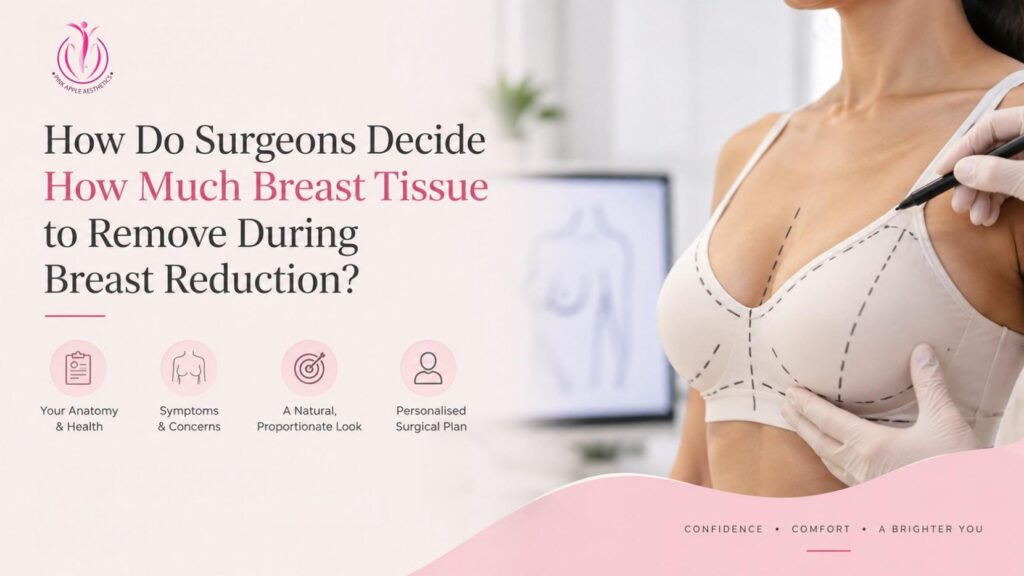
Breast reduction surgery is not simply about removing a fixed amount of breast tissue or achieving a particular cup size. The amount removed is determined individually for each patient based on their anatomy, symptoms, desired outcome, breast shape, skin quality, and the surgical technique being used.
For someone considering breast reduction in Bangalore, understanding how surgeons determine the amount of tissue to remove can help set realistic expectations before surgery.
What Is Removed During Breast Reduction?
Breast reduction, also known as reduction mammoplasty, involves removing a combination of:
- Excess breast glandular tissue
- Fat
- Excess skin
The remaining breast tissue is then reshaped and repositioned to create a smaller, more proportionate breast.
The exact combination varies from patient to patient. Some women may have more glandular tissue, while others may have a greater proportion of fatty tissue.
Importantly, the goal is not simply to remove as much tissue as possible. The surgeon needs to balance reduction with breast shape, proportion, blood supply to the nipple and areola, skin quality, and the patient’s desired outcome.
How Much Tissue Is Usually Removed in Breast Reduction?
There is no universal amount of tissue that is removed during breast reduction surgery.
Depending on the patient’s anatomy and surgical goals, the amount removed from each breast can range from relatively small amounts to well over a kilogram.
The number should therefore not be used as a measure of whether a breast reduction was “large” or “small.”
For example, two women may undergo breast reduction surgery and have very different amounts of tissue removed because their starting breast size, tissue composition, height, chest dimensions, and proportions are different.
Why isn’t there a standard amount?
Because breast reduction is an individualized procedure.
A surgeon may consider:
- Current breast volume
- Breast width and shape
- Amount of excess skin
- Amount of glandular tissue
- Amount of fatty tissue
- Chest and shoulder proportions
- Degree of breast ptosis (drooping)
- Skin elasticity
- Nipple and areola position
- Existing asymmetry
- Physical symptoms
- Patient’s desired size and proportions
Does Your Bra Size Determine How Much Tissue Will Be Removed?
Not exactly.
Bra sizes are not standardized across brands, and cup size does not directly correspond to a specific breast volume.
For this reason, a surgeon cannot reliably say:
“You are a certain cup size, so we need to remove a specific number of grams.”
Instead, the surgeon assesses the actual anatomy of the breasts and discusses the patient’s desired outcome.
This is particularly important when a patient wants to achieve a specific breast reduction size.
How Do Surgeons Decide the Desired Breast Size?
The consultation is an important part of surgical planning.
Rather than focusing only on a cup size, the surgeon may discuss the patient’s preferred overall breast shape and proportion.
For example, a patient may want:
- A significant reduction in breast volume
- A smaller and more proportionate breast shape
- Relief from the physical discomfort associated with very large breasts
- Better balance with their body frame
- Easier participation in physical activities
- Improved clothing fit
The surgeon then evaluates what can realistically be achieved while maintaining a safe and aesthetically balanced result.
What Factors Influence Breast Reduction Tissue Removal?
1. Starting Breast Size
The larger the breasts are initially, the greater the potential amount of tissue that may be removed.
However, starting size alone does not determine the final amount.
2. Breast Composition
Breasts contain different proportions of glandular tissue, fat and connective tissue.
A breast with a higher proportion of fatty tissue may have different surgical considerations from one with predominantly glandular tissue.
3. Amount of Excess Skin
Large breasts can stretch the skin over time.
When reducing breast size, the surgeon may need to remove excess skin and reshape the remaining breast envelope.
Therefore, breast reduction is not simply a tissue removal procedure. It is also a reshaping procedure.
4. Breast Shape and Drooping
Breast reduction often involves correcting some degree of breast ptosis.
The surgeon needs to consider:
- Position of the nipple
- Breast shape
- Skin envelope
- Amount of drooping
- Position of the breast fold
The amount of tissue removed must work with the reshaping plan.
5. Body Proportions
The desired breast size needs to be considered in relation to the patient’s overall body frame.
A particular breast volume may look very different on two people with different:
- Height
- Chest width
- Shoulder width
- Body proportions
This is why a surgeon may recommend a different final breast volume for different patients even when their starting breast sizes appear similar.
Can You Ask the Surgeon to Remove a Specific Amount?
You can certainly discuss your preferences.
However, choosing an exact number of grams is generally not the best way to plan breast reduction surgery.
For example, a patient might say:
“I want exactly 500 grams removed from each breast.”
But the surgeon must consider the actual anatomy during the operation.
The final amount removed can depend on what is necessary to achieve the planned shape and size while maintaining appropriate tissue and blood supply.
The surgeon’s priority is therefore safe reduction with appropriate reshaping and proportion, rather than simply reaching a predetermined weight.
Can Breast Reduction Achieve a Specific Cup Size?
A surgeon can discuss your desired size, but an exact postoperative cup size cannot always be guaranteed.
This is because:
- Bra sizing varies between manufacturers
- Breast shape affects how bras fit
- Swelling changes breast appearance during recovery
- Healing and tissue settling continue after surgery
- Individual anatomy limits the achievable result
Instead of relying entirely on a cup size, surgeons often focus on the overall breast volume, shape and proportion.
What Happens During the Surgical Planning Process?
A typical consultation may involve several steps.
Step 1: Medical and Symptom Assessment
The surgeon discusses your concerns, medical history and symptoms.
This may include problems such as:
- Neck or back discomfort
- Shoulder discomfort
- Bra-strap pressure
- Skin irritation
- Difficulty exercising
- Difficulty finding comfortable clothing
Step 2: Physical Examination
The breasts and surrounding anatomy are assessed.
The surgeon may evaluate:
- Breast size
- Shape
- Symmetry
- Skin quality
- Nipple position
- Breast fold
- Degree of drooping
Step 3: Discussing Your Goals
You can explain how much reduction you would like and what you hope to achieve.
This is where discussing breast reduction size becomes particularly important.
Step 4: Surgical Planning
The surgeon determines an appropriate surgical approach based on your anatomy and goals.
Step 5: Intraoperative Assessment
During surgery, tissue removal and breast reshaping are performed according to the surgical plan and the patient’s anatomy.
The removed tissue is typically weighed after removal, providing an objective record of how much tissue was excised.
Does Removing More Tissue Always Mean a Better Result?
No.
A larger amount of tissue removal does not automatically mean a better breast reduction result.
The surgeon has to maintain an appropriate balance between:
Reduction + Shape + Proportion + Safety
Removing excessive tissue could potentially affect the ability to create an aesthetically balanced breast and may have implications for nipple and tissue blood supply.
The objective is therefore to remove the appropriate amount, not simply the maximum amount possible.
What About Breast Asymmetry?
It is common for breasts to have some degree of natural asymmetry.
One breast may be:
- Slightly larger
- Different in shape
- Positioned differently
- Different in nipple height
When performing breast reduction, the surgeon may remove different amounts of tissue from each breast to improve symmetry.
Therefore, the amount removed from the left and right breast does not necessarily have to be identical.
Will the Breasts Look Smaller Immediately After Surgery?
The breasts will generally appear smaller after surgery, but the final appearance develops over time.
Immediately after breast reduction, you can expect some:
- Swelling
- Bruising
- Tightness
- Changes in breast shape
As healing progresses, the breasts gradually settle into their more stable shape.
Therefore, evaluating the final breast reduction size too early in recovery may be misleading.
What Happens to the Removed Breast Tissue?
The tissue removed during breast reduction may be sent for pathological examination depending on the surgeon’s protocol and clinical circumstances.
This allows the tissue to be assessed appropriately rather than simply being discarded without evaluation.
Questions to Ask Your Breast Reduction Surgeon
Before surgery, consider asking:
- How much breast tissue do you expect to remove?
- What breast size or proportion are we aiming for?
- What surgical technique is appropriate for me?
- How will you address breast asymmetry?
- Where will the scars be located?
- How will nipple position be managed?
- What changes should I expect during recovery?
- What factors could affect the final breast size?
A good consultation should give you a realistic understanding of what surgery can and cannot achieve.
The Bottom Line
There is no standard amount of tissue that every woman should have removed during breast reduction surgery.
The amount of tissue removed is individualized based on breast anatomy, tissue composition, excess skin, breast shape, asymmetry, body proportions, symptoms and the patient’s goals.
Rather than targeting a specific number of grams or an exact cup size, the surgical plan aims to create a smaller, proportionate and appropriately shaped breast while maintaining safety.
If you’re considering breast reduction surgery in Bangalore, an in-person consultation with a qualified plastic surgeon is the best way to understand what reduction may be appropriate for your anatomy and goals.
About Pink Apple Aesthetics
At Pink Apple Aesthetics, Bangalore, breast reduction surgery is planned on an individual basis after assessment of the patient’s anatomy, concerns and desired outcome. The expected approach, reduction and recovery can be discussed during a consultation with Dr. Pinky Devi Ayyappan, Plastic Surgeon.


