
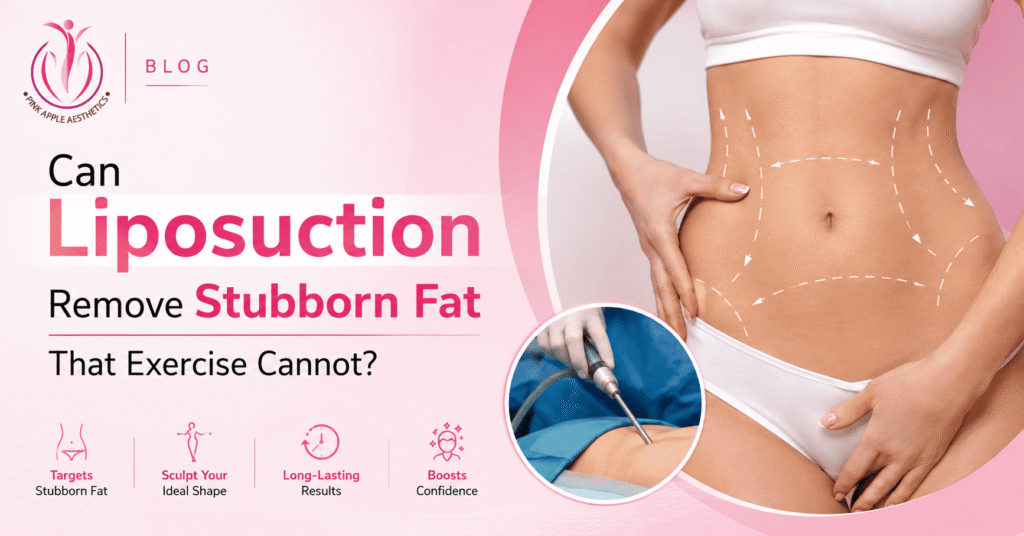
You exercise regularly, eat reasonably well, and may have already achieved a healthy or relatively stable weight—but certain areas of fat still seem difficult to change.
The abdomen, hips, thighs, arms, back, and chin are common areas where people notice stubborn fat that does not seem to go away with exercise.
This can be frustrating, particularly when the rest of your body has responded well to lifestyle changes. So, can liposuction remove this type of fat?
In suitable patients, liposuction can be used to reduce localized deposits of subcutaneous fat that remain despite healthy lifestyle efforts. However, it is important to understand that liposuction is a body-contouring procedure, not a replacement for exercise, healthy eating, or overall weight management.
Why Does Some Fat Not Go Away With Exercise?
Exercise is excellent for improving cardiovascular fitness, muscle strength, metabolic health, and overall body composition. However, it does not allow you to choose exactly where your body loses fat.
When you lose weight, your body determines where fat is mobilized based on factors such as genetics, hormones, age, sex, and overall body composition.
This means you may lose fat from your face, arms, or other areas while still retaining more noticeable fat around your abdomen or thighs.
This is sometimes referred to as localized or stubborn fat.
It does not necessarily mean that you are doing something wrong or that you need to exercise more. Some areas can simply be more resistant to changes in body fat.
What Is Stubborn Fat?
“Stubborn fat” is not a medical diagnosis. It is a commonly used term for localized fat deposits that remain noticeable despite efforts to maintain a healthy lifestyle.
These deposits are generally made up of subcutaneous fat, which is the fat located underneath the skin.
Common areas where localized fat may occur include:
- Abdomen
- Waist and flanks
- Hips
- Thighs
- Upper arms
- Back
- Chin and neck
The presence of localized fat does not necessarily mean that a person is overweight.
Someone can have a relatively stable and healthy weight while still having specific areas they would like to contour.
Can Liposuction Remove Stubborn Fat?
Yes, liposuction can remove suitable localized deposits of subcutaneous fat.
During liposuction, a plastic surgeon uses specialized techniques to remove fat from selected areas of the body. The aim is not simply to remove the maximum possible amount of fat.
Instead, treatment is planned around the individual’s anatomy, fat distribution, skin quality, and desired body proportions.
This is why liposuction is better understood as a body-contouring procedure rather than a general fat-loss or weight-loss treatment.
The American Society of Plastic Surgeons notes that liposuction is intended for removing localized fat deposits and is not a substitute for healthy lifestyle habits or a treatment for obesity.
Why Exercise Cannot Target Specific Fat Deposits
One of the most important things to understand is that spot reduction through exercise is generally not possible.
For example, doing hundreds of abdominal exercises can strengthen the abdominal muscles, but it does not necessarily cause the body to selectively remove fat from the abdomen.
Similarly:
- Arm exercises strengthen arm muscles but cannot guarantee localized arm-fat reduction.
- Squats strengthen the legs and glutes but cannot specifically remove thigh fat.
- Abdominal exercises improve core strength but cannot selectively burn belly fat.
Exercise can certainly contribute to overall fat loss when combined with appropriate nutrition and lifestyle habits. However, where the body loses fat first or last varies between individuals.
Liposuction works differently because it allows a surgeon to specifically target suitable fat deposits in selected areas.
Does This Mean You Should Stop Exercising?
Absolutely not.
Liposuction should not be viewed as an alternative to exercise.
Regular physical activity remains important for cardiovascular health, muscle strength, metabolic health, and maintaining a healthy body weight.
In fact, patients considering liposuction should generally have realistic lifestyle habits and understand that surgery does not protect against future weight gain.
Liposuction can address a specific contour concern, while exercise and healthy nutrition remain important for overall health.
Think of the two as serving different purposes:
Exercise and healthy lifestyle → overall health and body composition
Liposuction → targeted body contouring
Who May Consider Liposuction for Stubborn Fat?
Liposuction may be considered by people who:
- Are generally healthy enough for elective surgery
- Have relatively stable body weight
- Have localized deposits of subcutaneous fat
- Have realistic expectations
- Maintain healthy lifestyle habits
- Want to improve the contour of a specific area
Being at an appropriate or relatively stable weight is often more relevant than simply wanting to lose weight.
For example, someone may have achieved significant weight loss through diet and exercise but still have localized abdominal or thigh fat that affects their body proportions.
A consultation with a qualified plastic surgeon can help determine whether the concern is actually suitable for liposuction.
What If You Are Overweight?
Liposuction is not intended to treat obesity or produce substantial weight loss.
If someone has significant excess body weight, addressing overall weight management may be more appropriate before considering elective body-contouring surgery.
This is important because removing localized fat does not address the underlying causes of excess body weight.
A surgeon may therefore recommend reaching a more stable weight before considering liposuction, depending on the individual’s health, goals, and circumstances.
Does Liposuction Remove All the Fat From an Area?
No.
The objective of liposuction is not to completely remove every fat cell from a particular body area.
Trying to remove excessive amounts of fat can create contour irregularities and may increase surgical risks. A qualified surgeon therefore plans treatment carefully according to the patient’s anatomy.
The goal is proportion and contour, not complete fat elimination.
This is particularly important when treating visible areas such as the abdomen, arms, thighs, or chin.
What About Fat Inside the Abdomen?
Another important distinction is between subcutaneous fat and visceral fat.
Subcutaneous fat is located underneath the skin and may be accessible to liposuction.
Visceral fat is located deeper inside the abdomen around internal organs. Liposuction does not remove visceral fat.
This is another reason why liposuction should not be considered a treatment for overall obesity or metabolic health.
If your concern is primarily excess abdominal weight rather than a localized contour issue, a weight-management approach may be more appropriate.
What Happens After Stubborn Fat Is Removed?
Liposuction permanently removes fat cells from the treated area. However, it does not prevent future changes in body weight.
The body still contains fat cells elsewhere, and the remaining fat cells can enlarge if a person gains significant weight.
Maintaining a relatively stable weight after treatment can therefore help preserve the contour achieved through liposuction.
This is one reason why liposuction works best as part of a broader approach to maintaining a healthy lifestyle rather than as a standalone solution for weight management.
Can Stubborn Fat Come Back After Liposuction?
The fat cells removed during liposuction do not simply grow back. However, weight gain can still change the treated area’s appearance because the remaining fat cells can increase in size.
Significant weight gain can also result in fat accumulation in other areas of the body.
Therefore, liposuction should not be considered a permanent guarantee against future fat accumulation.
Maintaining a stable weight and continuing healthy lifestyle habits are important for long-term results.
Is Liposuction the Right Solution for Your Stubborn Fat?
The answer depends on what is causing the appearance you want to change.
If you have localized subcutaneous fat and your weight is relatively stable, liposuction may be an appropriate body-contouring option.
However, if the concern is primarily:
- Significant overall weight gain
- Visceral abdominal fat
- Major skin laxity
- Poor skin elasticity
- A medical condition affecting body weight
then liposuction alone may not address the underlying concern.
A proper assessment is therefore important before deciding on treatment.
What Should You Expect During a Consultation?
At Pink Apple Aesthetics, the assessment should focus on more than simply identifying where you have fat.
A plastic surgeon may evaluate:
- Your medical history
- Current and previous weight
- Weight stability
- Distribution of fat
- Skin quality and elasticity
- The specific area you want to improve
- Previous weight-loss efforts
- Your expectations
- Whether liposuction is appropriate for your goals
This assessment helps determine whether the fat is suitable for liposuction and whether another treatment may be more appropriate.
Frequently Asked Questions
Can liposuction remove fat that exercise cannot?
Liposuction can remove suitable localized deposits of subcutaneous fat that remain despite healthy lifestyle efforts. However, it is not a replacement for exercise or overall weight management.
Is stubborn fat a sign that I am overweight?
Not necessarily. A person can have a relatively healthy and stable weight while still having localized areas of fat that they would like to contour.
Can exercise remove belly fat?
Exercise can contribute to overall fat loss and improve muscle tone, but it cannot guarantee that fat will be lost from one specific area. Genetics and individual fat distribution influence where the body loses fat.
Is liposuction better than exercise for fat loss?
They serve different purposes. Exercise supports overall health and body composition, while liposuction is designed to contour specific areas by removing localized subcutaneous fat.
Can liposuction remove all stubborn fat?
No. Liposuction is not designed to remove every fat cell from an area. The goal is controlled fat reduction and improved body contour while maintaining natural proportions.
Can stubborn fat return after liposuction?
The removed fat cells do not simply grow back, but remaining fat cells can enlarge with weight gain. Maintaining a stable weight is important for preserving the result.
The Bottom Line
Having stubborn fat does not necessarily mean that you need to exercise more or lose more weight.
Some localized fat deposits can remain even when a person follows a healthy lifestyle and maintains a relatively stable weight. Liposuction may be considered when the concern is localized subcutaneous fat and the individual is an appropriate candidate for body-contouring surgery.
However, liposuction is not a weight-loss treatment and cannot replace healthy nutrition, exercise, or appropriate medical weight management.
At Pink Apple Aesthetics, the decision to recommend liposuction should be based on an individual’s anatomy, health, weight stability, skin quality, fat distribution, and aesthetic goals. A consultation with a qualified plastic surgeon can help determine whether liposuction is appropriate and what type of result can realistically be expected.


