
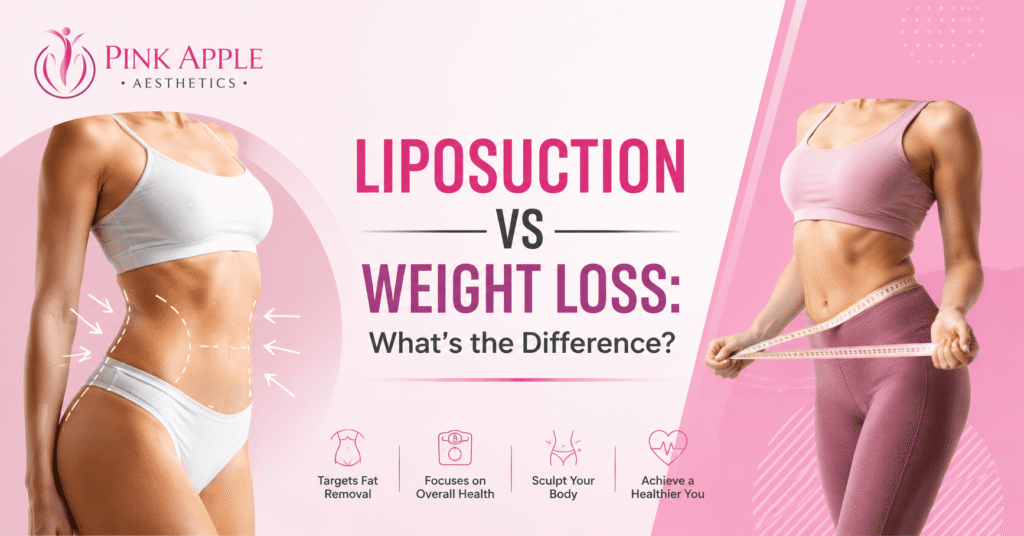
Liposuction and weight loss are often confused, but they serve very different purposes. Learn whether liposuction can help you lose weight, how it removes fat, who may benefit, and when weight management should come first.
If you have stubborn fat around your abdomen, waist, thighs, arms, or another area, you may have wondered: “Should I lose more weight, or would liposuction be better?”
It is an important question because liposuction is not a weight-loss procedure.
Liposuction is a surgical body-contouring procedure that removes selected deposits of subcutaneous fat to improve the shape and proportion of specific areas. Weight loss, on the other hand, involves reducing overall body fat through changes in energy balance, lifestyle, medical treatment, or—when appropriate—weight-loss procedures.
Understanding the difference can help you decide whether liposuction is appropriate for your goals.
At Pink Apple Aesthetics, liposuction is considered based on the patient’s individual anatomy, health, weight stability, fat distribution, skin quality, and expectations rather than simply the number on the weighing scale.
Liposuction vs Weight Loss: What Is the Difference?
The simplest way to understand the difference is:
Weight loss reduces overall body weight. Liposuction reshapes specific areas of the body by surgically removing localized fat.
| Liposuction | Weight Loss |
|---|---|
| Surgical body-contouring procedure | Overall reduction in body weight |
| Targets specific areas | Affects the body more broadly |
| Removes selected subcutaneous fat cells | Reduces overall stored energy/fat |
| Primarily intended to improve body contours | Primarily intended to improve overall weight and health |
| Not a treatment for obesity | May be important for managing overweight or obesity |
| Best suited to localized fat concerns | Appropriate when overall weight reduction is the goal |
These two approaches can sometimes complement each other, but they should not be considered interchangeable.
Can Liposuction Help You Lose Weight?
Liposuction can result in some reduction in body weight because fat tissue is removed, but it should not be considered a weight-loss treatment.
The primary goal of liposuction is body contouring.
For example, someone may have a relatively stable weight but continue to have disproportionate fat around the abdomen or waist. Removing some of this localized fat may improve their body shape even if the change on the weighing scale is relatively modest.
If your primary goal is to lose a substantial amount of weight, liposuction is generally not the appropriate treatment.
Instead, the focus should be on evidence-based weight-management strategies, which may include nutrition, physical activity, behavioural changes, medications when medically appropriate, or other medical interventions.
How Does Liposuction Work?
Liposuction works by physically removing selected fat cells from beneath the skin.
During the procedure, a plastic surgeon makes small incisions and uses a cannula to loosen and remove targeted subcutaneous fat.
The surgeon carefully controls the amount and location of fat removal to improve the contour of the treated area.
Common treatment areas include:
- Abdomen
- Waist and flanks
- Hips
- Thighs
- Arms
- Back
- Under the chin
- Selected areas of the chest
The exact areas that can be treated depend on the individual’s anatomy and surgical plan.
What Is the Difference Between Fat Loss and Liposuction?
Your body stores fat in different locations, and the amount of fat in those areas can change with weight gain and weight loss.
Fat loss
When you lose weight through lifestyle changes or medical treatment, your body generally reduces the size of fat cells throughout the body.
The amount of fat lost from each area varies from person to person.
You cannot reliably choose exactly where your body will lose fat first.
Liposuction
Liposuction allows the surgeon to specifically target selected areas of subcutaneous fat.
This makes it a contouring procedure rather than a general fat-loss treatment.
For example, a person may lose weight successfully but continue to have localized fullness around the waist. If that person is otherwise suitable for surgery, liposuction may be considered to refine that area.
Why Can’t Liposuction Replace Weight Loss?
There are several reasons.
1. Liposuction only targets selected areas
Liposuction is designed to treat specific deposits of subcutaneous fat.
It does not address overall excess body fat throughout the body.
2. It does not remove visceral fat
There are different types of fat in the body.
Subcutaneous fat is located underneath the skin and can be accessed through liposuction.
Visceral fat is located deeper inside the abdomen around internal organs and cannot be removed through conventional liposuction.
This distinction is particularly important when someone has significant abdominal obesity.
3. It does not treat the causes of weight gain
Liposuction does not address factors contributing to weight gain, such as:
- Excess calorie intake
- Physical inactivity
- Certain medications
- Hormonal or metabolic conditions
- Sleep problems
- Behavioural factors
- Other medical causes of weight gain
These issues require appropriate medical or lifestyle management.
4. Weight can still increase after liposuction
Liposuction removes fat cells from the treated area, but it does not make someone immune to future weight gain.
If a person gains significant weight after surgery, the remaining fat cells can enlarge, and overall body contours can change.
Can Liposuction Be Used for Fat Loss?
This depends on what you mean by “fat loss.”
If you mean:
“Can liposuction remove localized fat from a specific area?”
Yes. That is exactly what liposuction is designed to do in appropriately selected patients.
If you mean:
“Can liposuction help me lose a large amount of body weight?”
No. That is not its purpose.
The distinction is important because someone who undergoes liposuction expecting a major transformation on the weighing scale may be disappointed even if the contour improvement is good.
Who Is Liposuction Best Suited For?
Liposuction may be considered for someone who:
- Has localized deposits of excess fat
- Has a relatively stable weight
- Is generally healthy enough for surgery
- Has reasonable skin elasticity
- Has realistic expectations
- Wants to improve specific body contours
- Understands that liposuction is not a substitute for weight management
For example, someone may maintain a relatively healthy weight but have persistent fat around the abdomen or waist that does not respond significantly to their lifestyle efforts.
This is the type of situation where liposuction may have a role.
What About Liposuction for Overweight Patients?
Being overweight does not automatically mean someone cannot undergo liposuction.
However, liposuction for overweight patients requires careful consideration.
If someone has substantial overall excess weight, liposuction alone is unlikely to produce the degree of weight reduction they are looking for.
In such situations, a plastic surgeon may recommend focusing on weight management first.
Once a relatively stable weight has been achieved, remaining areas of localized fat can be reassessed.
This can sometimes provide a more predictable body-contouring result.
Is There a Specific BMI for Liposuction?
There is no single BMI number that can determine whether someone is automatically suitable or unsuitable for liposuction.
A surgeon considers the complete picture, including:
- Overall health
- Weight stability
- Body composition
- Fat distribution
- Skin elasticity
- Medical history
- Surgical and anaesthetic risks
- Patient expectations
BMI can be one part of the assessment, but it should not be used in isolation to determine candidacy.
Should You Lose Weight Before Liposuction?
For some patients, yes.
If you are actively trying to lose a significant amount of weight, it may make sense to reach a stable weight before undergoing elective body-contouring surgery.
Why?
Because significant weight loss after liposuction can change your body contours and may leave additional loose skin or alter the areas that would have benefited most from surgery.
A stable weight can therefore make surgical planning more predictable.
However, the appropriate timing depends on the individual.
Your plastic surgeon can assess your current weight, goals, body composition, and skin quality and advise whether weight loss should come before liposuction.
What Happens If You Gain Weight After Liposuction?
Liposuction permanently removes some fat cells from the treated area, but it does not prevent future weight gain.
If you gain weight after surgery:
- Remaining fat cells can enlarge
- Other areas of the body may also accumulate fat
- Overall body proportions can change
- The definition achieved through surgery may become less noticeable
This is why maintaining a relatively stable weight and healthy lifestyle after liposuction is important.
Can Liposuction Make You Look Thinner?
It can make the treated area look more contoured and proportionate, but that is different from losing significant body weight.
For example, removing localized fat from the waist may make the waistline appear more defined.
Similarly, reducing a localized abdominal fat deposit may improve the contour of the abdomen.
The visual change can sometimes be more noticeable than the change on the weighing scale.
This is because body shape and body weight are not the same thing.
Liposuction vs Weight Loss: An Example
Consider two hypothetical patients.
Patient A: Overall weight concern
A person has significant excess weight across the abdomen, arms, thighs, and other areas and wants to lose 15–20 kg.
Liposuction would not be the appropriate solution for achieving this goal.
The priority should be appropriate weight-management care.
Patient B: Localized fat concern
Another person has maintained a relatively stable weight through diet and exercise but has persistent fat around the lower abdomen and flanks.
Their overall weight is not their primary concern.
This patient may potentially benefit from liposuction, provided they are medically suitable and have realistic expectations.
This illustrates why the question should not simply be:
“Am I overweight?”
Instead, it should be:
“What is causing my concern, and which treatment addresses it?”
Can Liposuction and Weight Loss Work Together?
Yes, in some situations.
A patient may first lose weight through an appropriate weight-management plan and later have liposuction to address localized fat that remains after weight stabilization.
This can be particularly relevant when someone has reached a stable weight but still has disproportionate fat deposits in specific areas.
However, liposuction should not be viewed as the next mandatory step after weight loss.
Some patients may achieve their desired body contour through weight management alone, while others may have concerns related to loose skin that require a different surgical approach.
What If You Have Loose Skin After Weight Loss?
This is an important distinction.
After significant weight loss, some people are left with excess or loose skin.
Liposuction removes fat; it does not remove significant excess skin.
If loose skin is the dominant concern, procedures such as a tummy tuck or other body-contouring surgery may be considered depending on the area and the patient’s anatomy.
In some patients, liposuction and skin-removal procedures may be combined or staged.
A consultation is necessary to determine which approach is appropriate.
Liposuction Is Not a Shortcut to Weight Loss
It is tempting to think of liposuction as a quick solution for stubborn weight.
But this is not how the procedure should be approached.
A responsible treatment plan asks:
- Is the patient’s primary concern overall weight or localized fat?
- Is their weight relatively stable?
- Is the fat located in areas that can be treated?
- Is the skin likely to respond appropriately?
- Are there medical factors that need to be addressed first?
- Are the patient’s expectations realistic?
Only after these questions are answered should liposuction be considered.
Frequently Asked Questions
Can liposuction help me lose weight?
Liposuction removes fat and can therefore cause some reduction in body weight, but it is not designed for significant weight loss. Its primary purpose is body contouring.
Is liposuction better than losing weight?
Neither is universally “better.” They address different problems. Weight loss is appropriate when overall body weight needs to be reduced, while liposuction may be appropriate for localized fat in someone who is otherwise suitable for surgery.
Can overweight patients get liposuction?
Some overweight patients may be candidates, but liposuction is not a treatment for obesity. If substantial weight loss is needed, weight management generally needs to be addressed first.
Should I lose weight before liposuction?
If you are planning significant weight loss, your surgeon may recommend reaching a stable weight before liposuction. This can make treatment planning and the eventual contour more predictable.
Does liposuction permanently remove fat?
Fat cells removed during liposuction are physically removed. However, the remaining fat cells can enlarge with weight gain, so maintaining a stable weight remains important.
Can liposuction remove belly fat?
Liposuction can remove selected subcutaneous fat from the abdomen in appropriate patients. It does not remove visceral fat located around the internal organs.
Can liposuction treat obesity?
No. Liposuction is not a treatment for obesity and should not replace appropriate medical weight-management care.
Will I look thinner after liposuction?
You may look more contoured or proportionate in the treated areas. However, the goal is body contouring rather than major weight reduction.
The Bottom Line
Liposuction and weight loss are not the same thing.
Weight loss aims to reduce overall body weight and body fat, while liposuction is a surgical procedure designed to remove localized deposits of subcutaneous fat and improve body contours.
If you are significantly overweight or actively trying to lose substantial weight, weight management should generally be the priority.
If you are relatively weight-stable but have persistent localized fat that affects your body proportions, liposuction may be worth discussing with a qualified plastic surgeon.
At Pink Apple Aesthetics, the decision to recommend liposuction is based on an individual’s health, anatomy, fat distribution, skin quality, weight stability, and aesthetic goals.
The right question isn’t simply, “Can liposuction make me lose weight?” It’s “Is liposuction the right procedure for the concern I want to address?”


