
The area around our lips and mouth the perioral region often shows the first visible signs of aging. Both biological aging (intrinsic factors) and lifestyle / environmental influences (extrinsic factors) contribute to changes like fine lines, volume loss, and pigment irregularities. These changes aren’t just cosmetic; they can affect how one feels about themselves.
In this piece, I describe common perioral concerns, how we approach treatment, and what patients can expect from rejuvenating this delicate area.
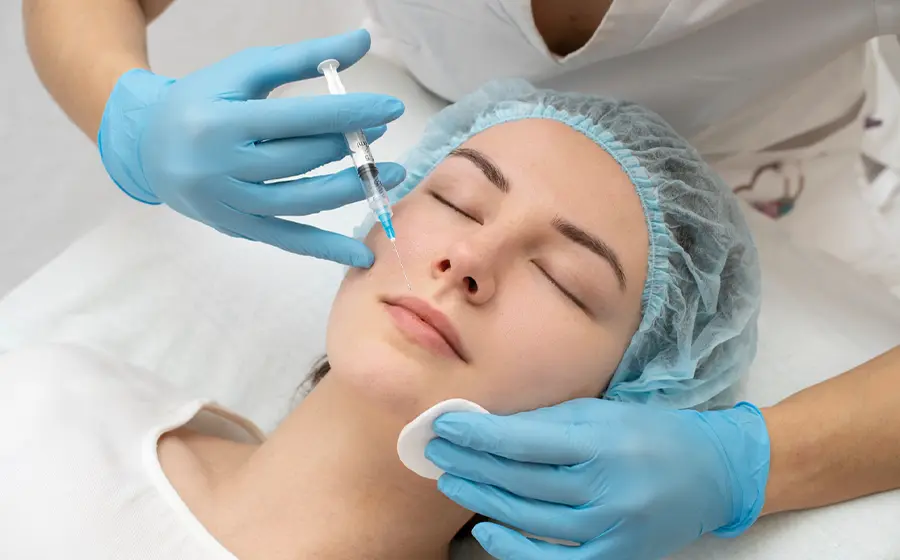
What Happens in the Perioral Region as We Age
With time, several characteristic changes occur in the perioral area:
- Thinning lips
- Loss of volume / fat atrophy around the lips
- Deepening of the lines from nose to corners of mouth (nasolabial folds)
- “Marionette” lines (lines that run downward from the mouth corners)
- Vertical lines above the upper lip (sometimes called “smoker’s lines” or “barcode” lines)
- Lips becoming longer or less defined
- Uneven pigmentation or texture changes
These are natural processes, often worsened by sun exposure, lifestyle (smoking, diet), gravitation effects, hydration status, and genetic predisposition.
Goals of Perioral Rejuvenation
Our aim is not to change a person’s identity, but to restore harmony, youthfulness, and freshness to the perioral area. Key outcomes patients often seek include:
- Smoother skin around the lips
- Restored lip fullness
- Balanced proportions (upper lip vs lower lip, corners of the mouth)
- Reduced depth of folds & wrinkles
- Improved skin texture and tone
Available Treatments & How We Combine Them
Because multiple changes occur (volume loss, skin laxity, pigmentation, wrinkling), we use a multimodal approach. The best results come when deeper structural issues and superficial skin changes are addressed together.
Here are treatment options we offer, and when they are used:
| Treatment | What It Addresses | Key Advantages | What to Expect |
|---|---|---|---|
| Dermal Fillers (e.g. hyaluronic acid) | Volume loss, nasolabial folds, marionette lines, lip border definition | Immediate result; minimally invasive | Possible swelling/bruising; lasts months to over a year depending on filler & area |
| Fat Grafting / Lipofilling | More substantial volume restoration; long-term correction of fat loss | Uses patient’s own tissue; more natural texture; long-lasting | Requires small donor area; takes some weeks for fat to settle |
| Chemical Peels / Laser Resurfacing | Fine lines, texture irregularities, pigmentation | Can improve skin’s overall quality; address superficial damage | Downtime may be needed (especially with ablative methods); several sessions may be required |
| Microneedling | Collagen induction; improves fine lines, texture, vertical lip lines | Less invasive; gradual improvement; can be combined with other treatments | Multiple treatments; results appear over time |
| Lip Lift / Mucosal Advancement | Lip-length imbalance or drooping corners; improves lip exposure | Long-term effect; changes the structure rather than just volume | More invasive; may leave more visible signs of surgery for some weeks |
| Laser Types (Ablative / Non-Ablative) | Deep wrinkles; pigmentation; skin tightening | Ablative lasers give stronger correction; non-ablative have less downtime | Ablative = more recovery; non-ablative = safer but more sessions needed |
Treatment Planning: What I Do with My Patients
When a patient comes to my clinic seeking perioral rejuvenation, here’s my approach:
- Detailed Assessment
- Examine lip shape, volume, symmetry
- Assess skin texture, pigmentation, wrinkle depth
- Review patient history: sun exposure, smoking, previous treatments
- Set Realistic Expectations
- Discuss what different treatments can achieve
- Talk about longevity, recovery time, cost
- Customized Treatment Plan
- Often we combine treatments: e.g., filler + microneedling + laser for more comprehensive rejuvenation
- Choose treatments according to the patient’s tolerance, downtime, and desired outcome
- Aftercare
- Skin care (retinol, vitamin C, moisturizers) is key
- Protect from sun exposure
- Follow-up to monitor healing and adjust if needed
Example Case & Outcomes
While I cannot reveal patient identity, here is a typical successful result from my clinic:
- A patient in her late 40s presented with thinning upper lip, pronounced marionette lines, vertical lip lines, and uneven pigmentation.
- Treatment plan: Hyaluronic acid fillers in lips & marionette lines; non-ablative laser sessions; microneedling; chemical peels for pigmentation.
- Outcome: Lips looked fuller, smoother; lines less visible; skin texture improved.
- Maintenance: Small touch-ups of fillers annually; skin care and laser / peels every few months for pigment & texture maintenance.
Safety, Recovery & What Patients Should Know
- Fillers / fat grafting carry risk of swelling, bruising, infection, unevenness.
- Ablative lasers and peels need careful wound care; downtime can be several days.
- Good hygiene, avoiding sun, and not using harsh products immediately post-treatment are vital.
- Results are only “permanent” to extent of your body’s biology; maintenance will often be needed.
Conclusion
Perioral rejuvenation is one of the most satisfying treatments for both patients and physicians, because the mouth area is expressive: improvements here can boost confidence, soften aging signs, and restore balance to one’s facial appearance.
If you notice things like thinning lips, deepening lines, or pigmentation around your mouth, a tailored assessment by a qualified aesthetic doctor can help you decide which treatment combination will work best.


