
Breast Augmentation Surgery in Bangalore
At Pink Apple Aesthetics, Jayanagar, breast augmentation surgery is performed by Dr. Pinky Devi Ayyappan, MCh (Plastic Surgery) — a female, board-certified plastic and reconstructive surgeon with 12+ years of experience and international fellowship training in Belgium, Seoul, and Italy. Dr. Pinky offers the full range of breast augmentation options — silicone implants, saline implants, fat transfer breast augmentation — and the planning approach to match the right size, shape, profile, and placement to each patient’s specific anatomy.
The goal at Pink Apple Aesthetics is not simply larger breasts. It is a result that looks proportionate, feels natural, and suits your body the way it was always meant to.
What Is Breast Augmentation Surgery and What Can It Achieve?
Breast augmentation — medically known as augmentation mammoplasty — is a surgical procedure that increases the size, fullness, and projection of the breasts using either implants (silicone or saline) or the patient’s own fat (fat transfer). The implant or fat is placed in a precisely created pocket behind the breast tissue, producing a fuller, better-proportioned breast contour.
Breast augmentation can address:
- Small or underdeveloped breasts (hypomastia) — where the breasts have not developed to a size proportionate to the body frame. This is the most common indication.
- Volume loss after pregnancy and breastfeeding — post-lactational deflation is one of the most significant changes breast tissue undergoes, leaving breasts smaller and less full than before.
- Volume loss after significant weight loss — the breasts often lose volume disproportionately during weight loss, creating a deflated appearance even at an otherwise desired body weight.
- Breast asymmetry — a meaningful difference in size between the two breasts is very common. Different implant sizes can be used for each breast to create a more symmetrical result.
- Tuberous breast deformity — a developmental condition characterised by a narrow breast base, ptosis, and an unusually prominent areola. Breast augmentation combined with specific tissue reshaping is the standard treatment.
- Post-mastectomy breast reconstruction — implant-based reconstruction is a major component of breast cancer reconstructive surgery (see the dedicated breast reconstruction page for full details).
Also known as: breast implant surgery, breast enlargement surgery, augmentation mammoplasty, boob job surgery Bangalore, silicone breast implants Bangalore, breast augmentation cost Bangalore, breast implant cost Bangalore, breast enhancement surgery.
Before and After Procedures
Before and After Breast Augmentation in Bangalore
Our breast augmentation before and after gallery showcases natural-looking outcomes from hundreds of satisfied patients. Whether it’s mini breast implant surgery, breast implant revision surgery, or a complete breast enhancement surgery in Bangalore, our results speak for themselves.
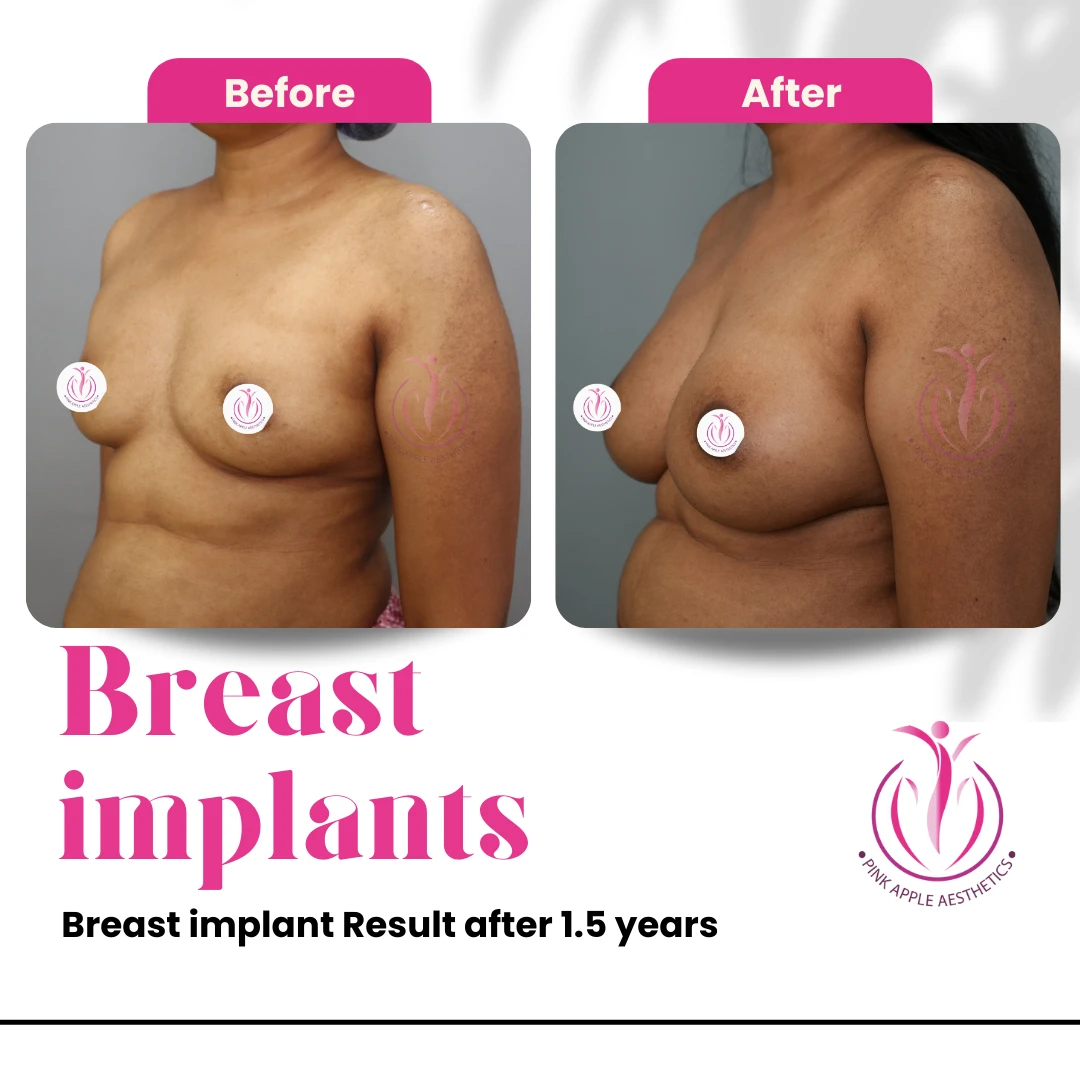
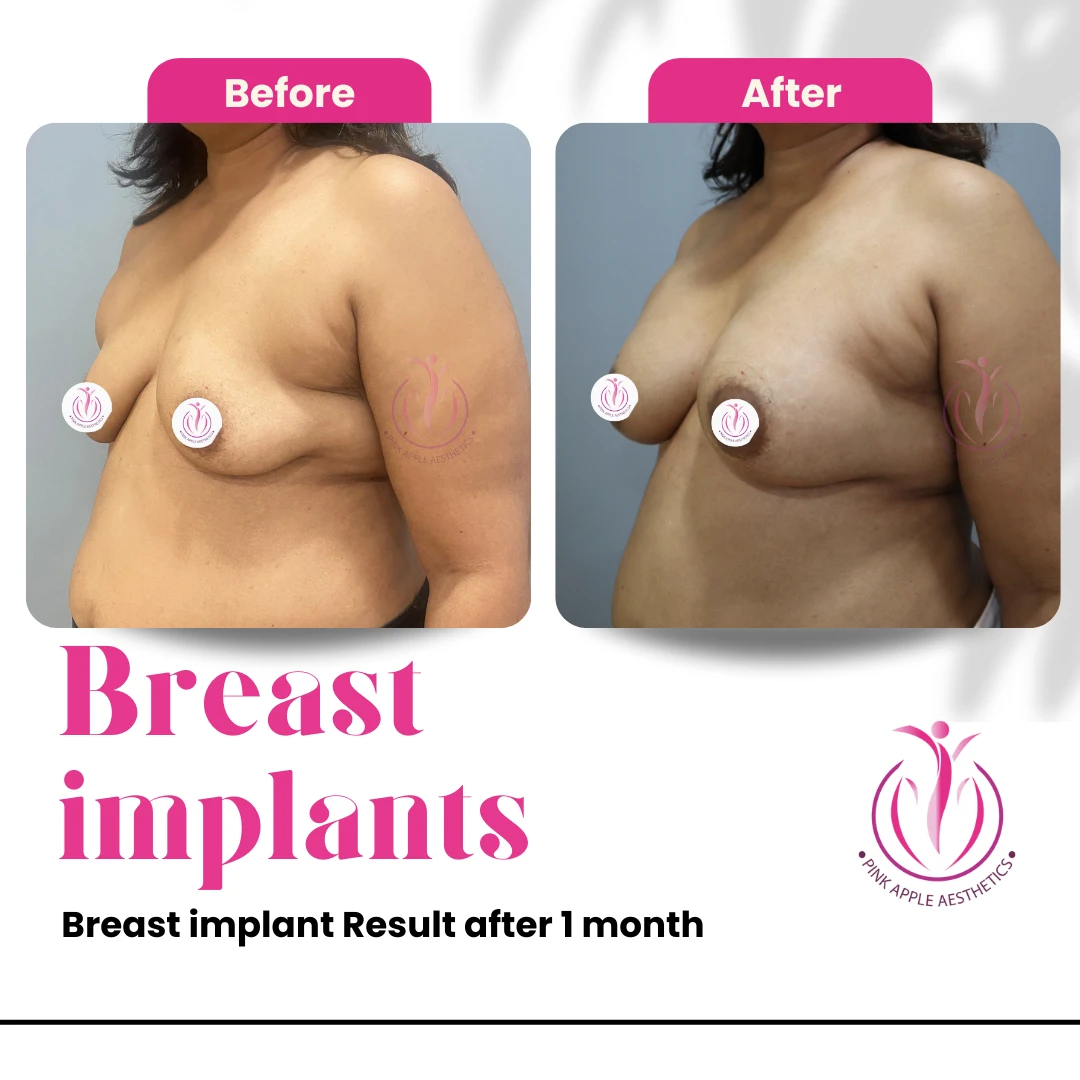
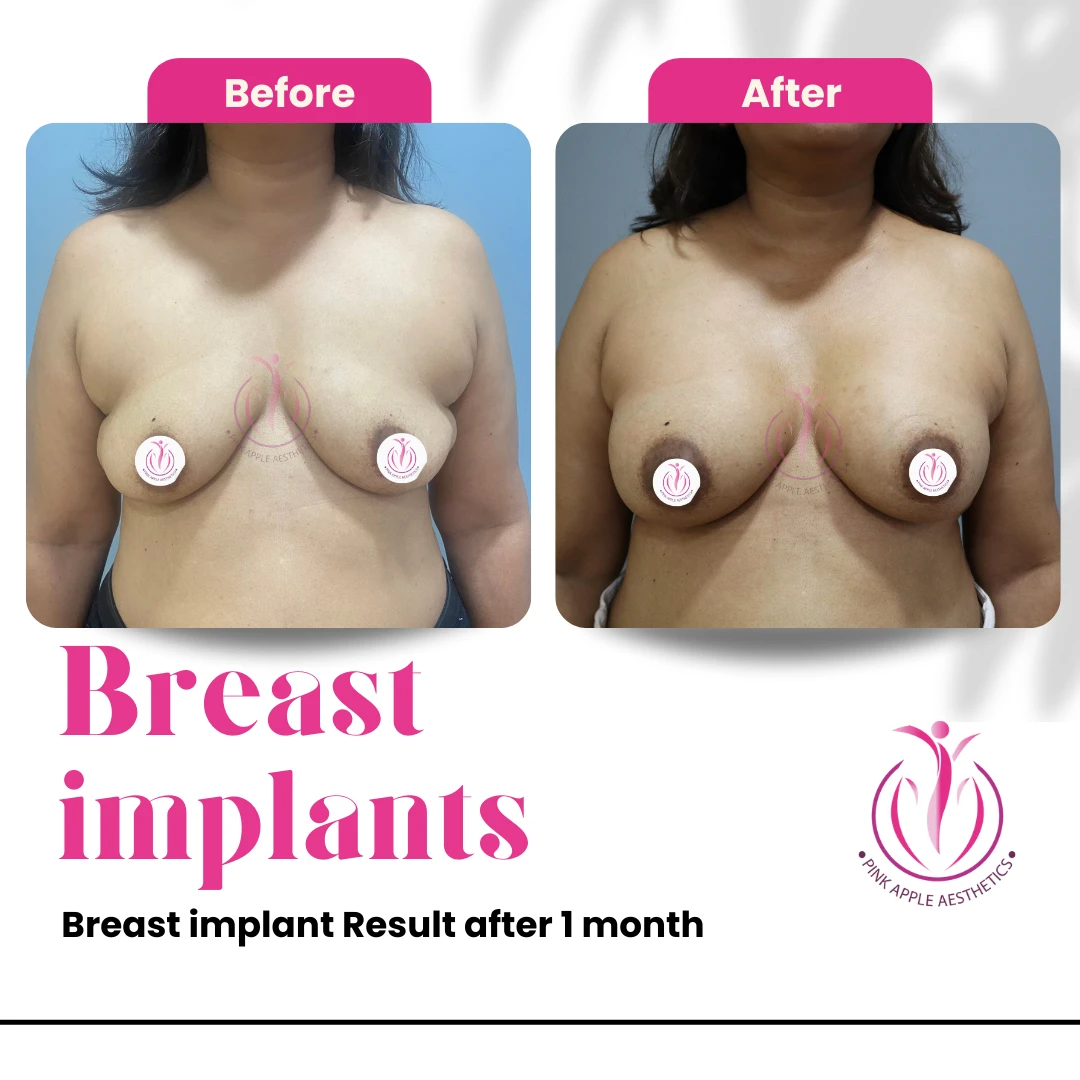
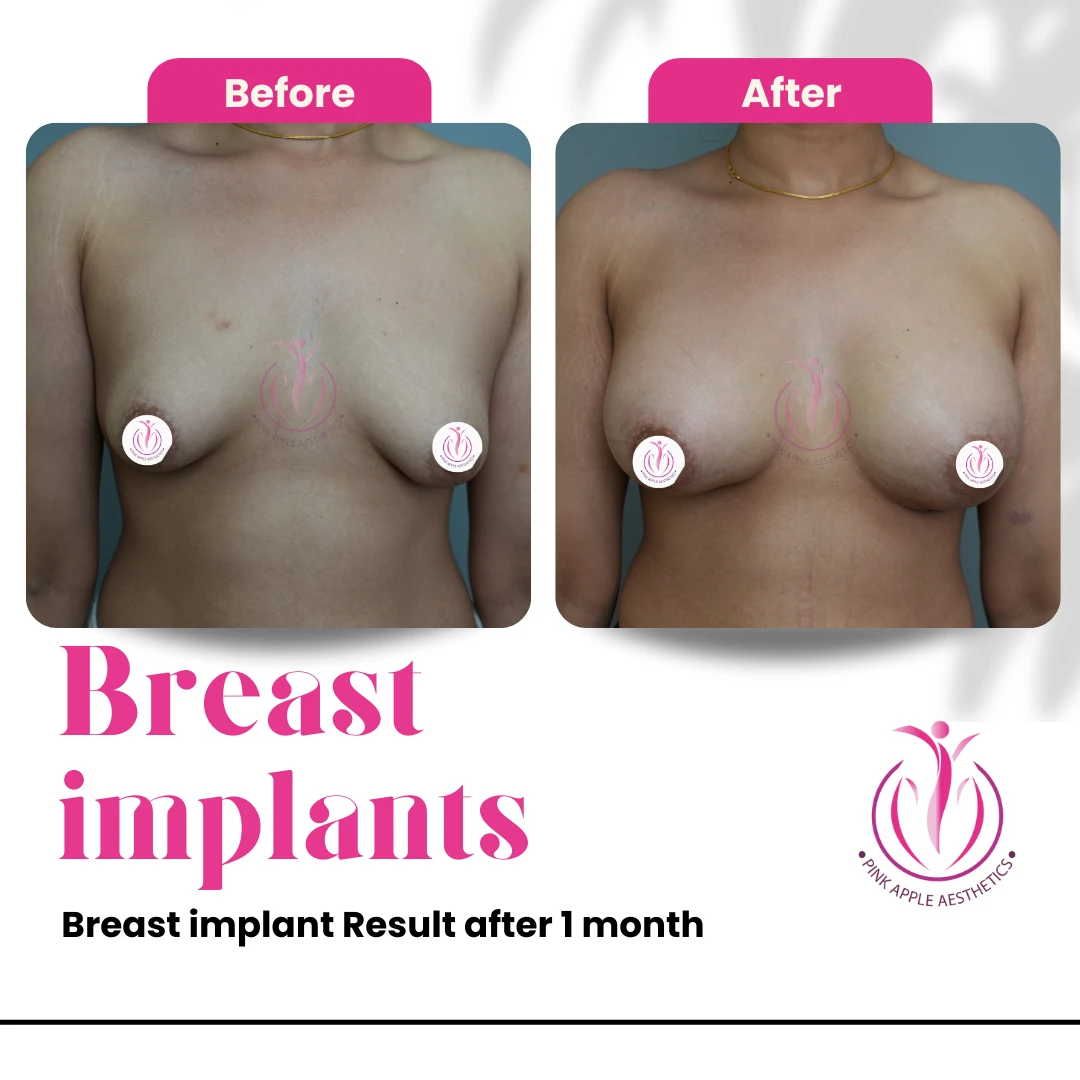
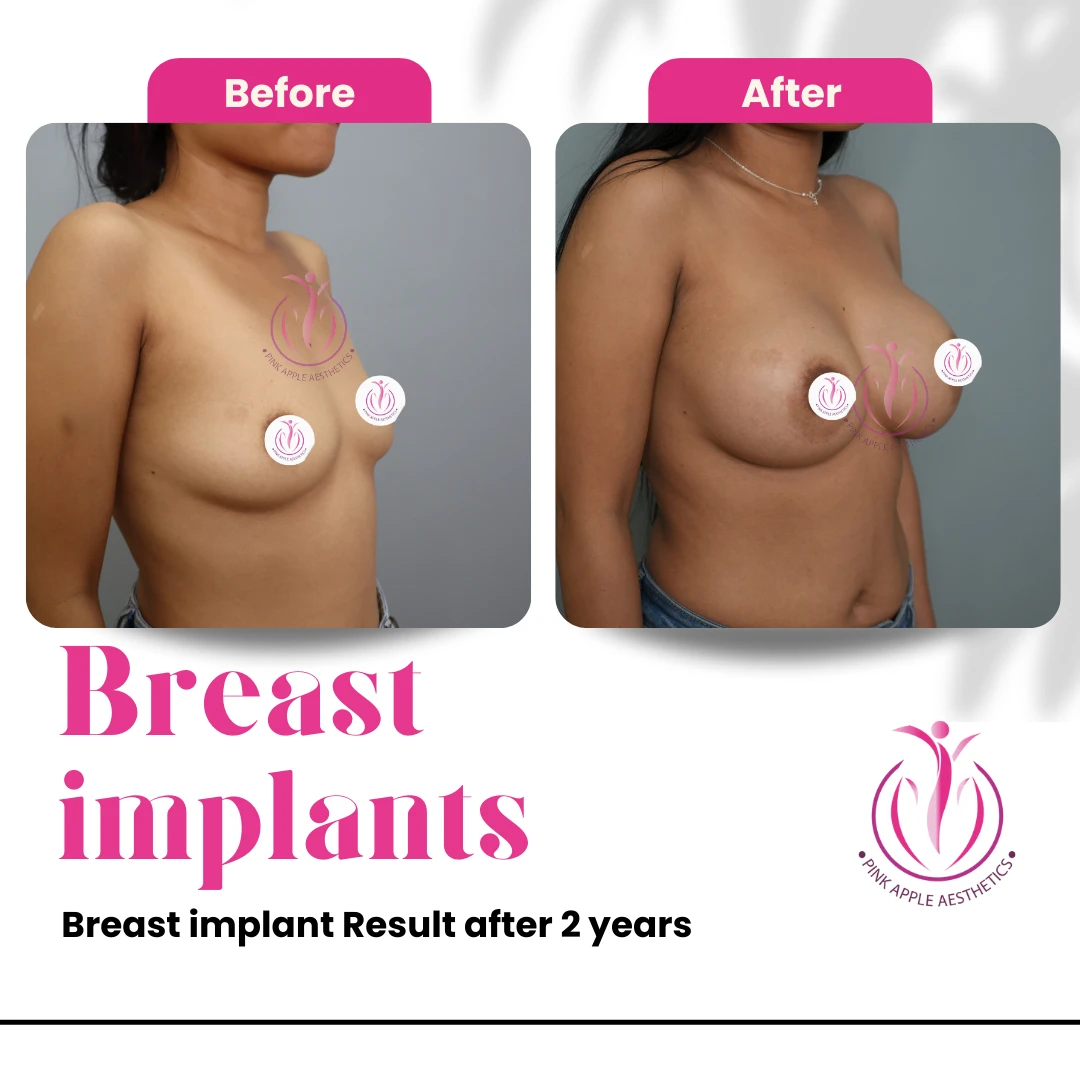
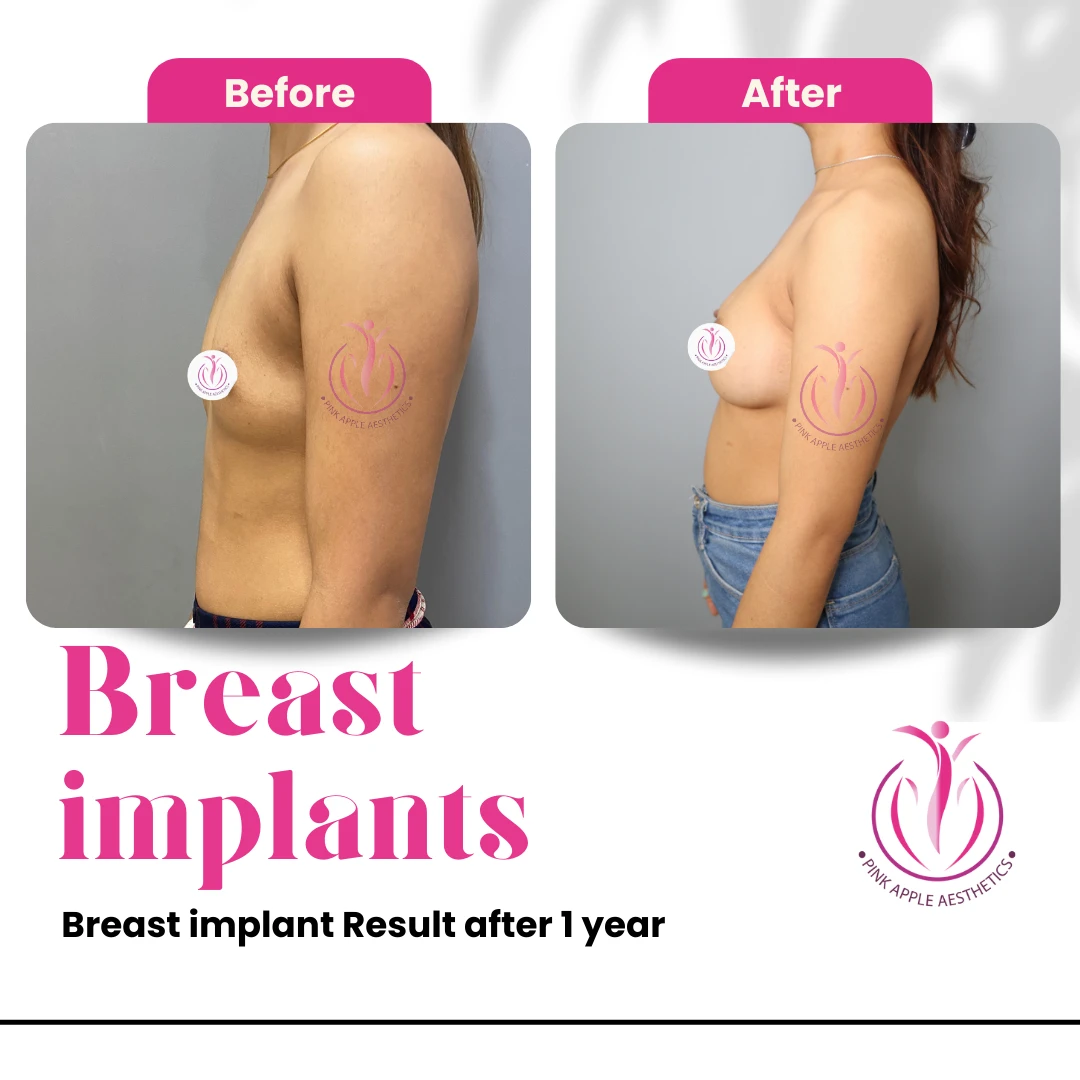
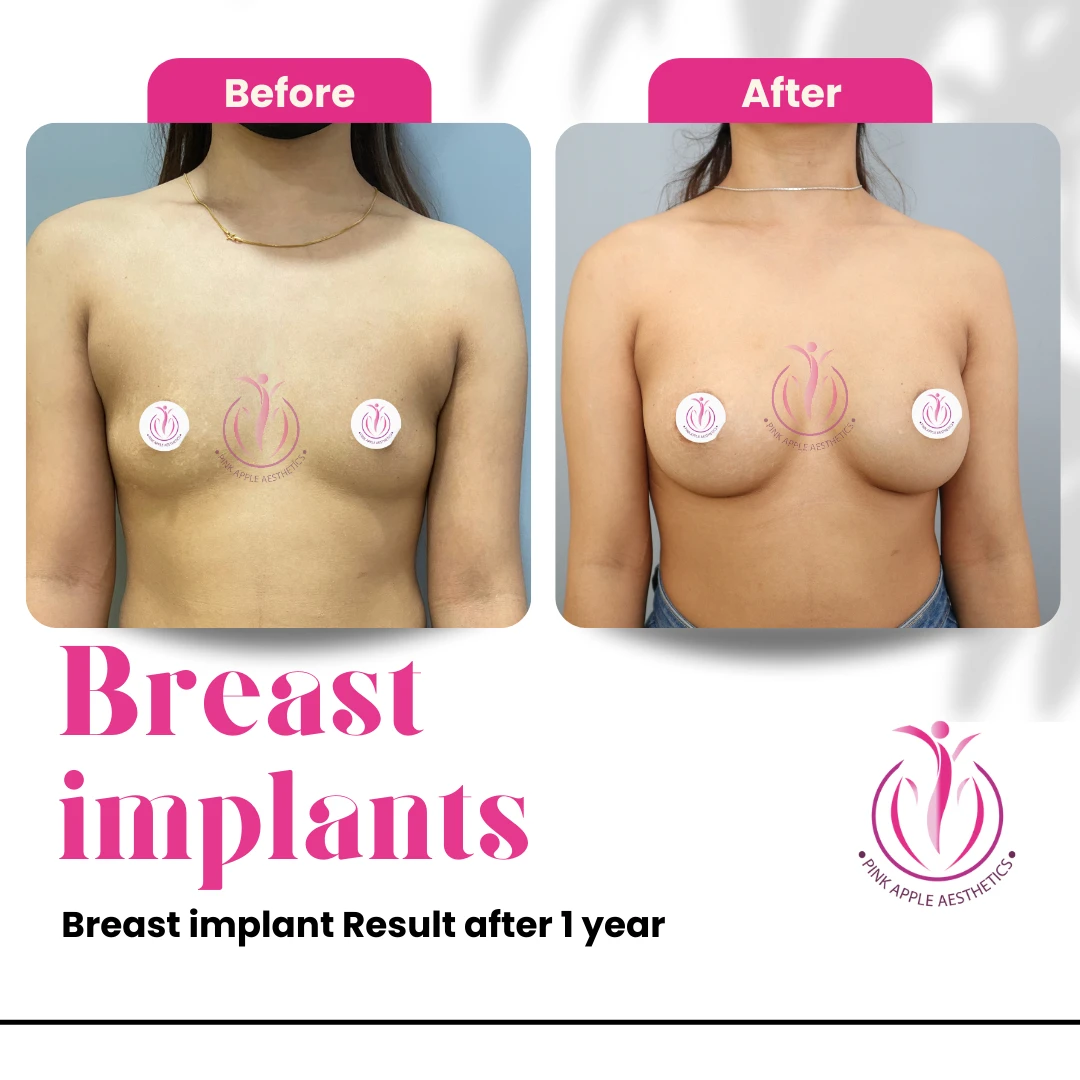

Results shown are from actual patients of Dr. Pinky Devi Ayyappan at Pink Apple Aesthetics, Bangalore. Individual outcomes vary based on breast anatomy, implant type and size, placement approach, and specific goals discussed at consultation. All images are shared with patient consent.
Types of Breast Augmentation — Silicone Implants, Saline Implants, and Fat Transfer
The first major decision in breast augmentation planning is what material is used for the augmentation. Each has distinct characteristics, advantages, and limitations. Understanding these helps you make an informed choice at consultation.
1. Silicone Gel Implants — the gold standard
Silicone implants are filled with a cohesive silicone gel that closely mimics the feel and consistency of natural breast tissue. They are the most commonly chosen implant type globally and in India, and have an excellent safety record spanning decades of clinical use. Modern silicone implants — often called fifth-generation or ‘gummy bear’ implants — use a highly cohesive gel that maintains its shape even if the outer shell is damaged, does not leak freely into surrounding tissue, and returns to its original form even after compression or squeezing.
Fifth-generation silicone implants use either a smooth or nano-textured surface, which significantly reduces the risk of capsular contracture compared to the macro-textured implants used in earlier decades. Key brands used at Pink Apple Aesthetics include internationally approved options with CE marking and extensive clinical track records.
- Natural feel: closest to natural breast tissue — firm but soft, with natural movement.
- Longevity: modern silicone implants are not routinely replaced unless a problem develops. They typically last 15 to 20 years or longer without issues.
- Rupture detection: because cohesive gel does not flow freely, a rupture may not be immediately apparent (silent rupture). Periodic MRI or ultrasound monitoring is recommended every 5 to 7 years.
- Incision size: requires a slightly larger incision than saline implants (implants are pre-filled and cannot be adjusted after placement).
2. Saline Implants — adjustable but less natural in feel
Saline implants have an outer silicone shell filled with sterile salt water. They are inserted empty and filled with saline solution after placement — allowing size adjustment during surgery and a slightly smaller incision than silicone. Modern structured saline implants (e.g., Ideal Implant) have internal baffles that reduce the rippling and sloshing associated with older saline designs, producing a more natural result than traditional saline implants. However, the overall feel of saline implants is firmer and less natural than cohesive silicone gel.
- Rupture detection: immediate and obvious — deflation is visible within days as the saline is absorbed harmlessly by the body. No silent rupture concern.
- Feel: firmer than silicone; more visible rippling, especially in thin patients with limited breast tissue cover.
Current use: saline implants are less commonly used for cosmetic augmentation today, primarily reserved for specific reconstructive applications or patient preference.
3. Fat Transfer Breast Augmentation — natural, no implant
Fat transfer breast augmentation uses the patient’s own harvested fat — liposuctioned from the abdomen, thighs, or flanks, processed, and injected into the breast tissue to add volume. There is no implant, no foreign material, and no implant-related risks (capsular contracture, rupture, BIA-ALCL). The result feels entirely natural because it is natural.
The limitation is volume: fat transfer typically achieves a half-cup to one full cup size increase per session. Patients seeking two or more cup sizes of augmentation are not well served by fat transfer alone. It is excellent for: subtle natural enhancement, correction of mild asymmetry, restoring volume to the upper pole after deflation, and for patients who want a more rounded result from a small implant by adding fat around it simultaneously.
- Best suited to: patients with sufficient donor fat, wanting subtle natural enhancement of up to one cup size, no implant preference, or as a complement to a small implant.
- Longevity: surviving fat is permanent; initial 20–40% resorption expected over 3 months.
- Also see: our dedicated Breast Augmentation with Fat Grafting page for full details.
Breast Augmentation Surgery Cost at Pink Apple Aesthetics
Breast augmentation surgery at Pink Apple Aesthetics starts from ₹1,00,000 to ₹1,50,000 (terms and conditions apply). Your confirmed cost is provided after a personal consultation with Dr. Pinky, once the implant type, size, and approach have been selected for your anatomy.
What your breast augmentation cost typically includes:
- Surgeon's fee — Dr. Pinky Devi Ayyappan, MCh Plastic Surgery.
- Implant cost — FDA-approved / CE-marked silicone or saline implants. The implant brand and specification is discussed and disclosed at consultation.
- General anaesthesia and anaesthesiologist's fee.
- Surgical facility / operating theatre charges.
- One night post-operative observation (if preferred) or same-day discharge.
- Post-operative medications — antibiotics and prescribed pain relief.
What affects the final cost:
- Implant brand and type — different implant brands have different costs. The brand used is discussed transparently at consultation.
- Implant size and profile — larger volume implants may have a different cost.
- Surgical approach — transaxillary (endoscopic) vs inframammary vs periareolar.
- Combination procedures — breast augmentation combined with breast lift (augmentopexy), areola reduction, or fat transfer.
Breast augmentation is a cosmetic procedure and is not covered by health insurance. EMI payment options are available at Pink Apple Aesthetics. Please mention your preference at consultation.
Implant Shape, Profile, and Size — What the Decisions Actually Mean for Your Result
Once the implant material is decided, three further decisions determine the final breast shape: implant shape, implant profile, and implant size (volume in cc). Understanding what each means prevents the most common misconceptions about breast augmentation planning.
Implant Shape: Round vs. Anatomical (Teardrop)
Round implants are symmetric circular discs — they look the same from every angle and produce a full, rounded breast with excellent upper pole fullness. They are the most widely used implant shape globally. When a round implant rotates in the pocket — which occasionally happens — there is no change to the appearance. Round implants are appropriate for the majority of breast augmentation patients.
Anatomical (teardrop or shaped) implants taper at the top and are fuller at the base, mimicking the natural breast shape. They can produce a very natural-looking result, particularly for patients with minimal existing breast tissue. The disadvantage: if an anatomical implant rotates, the resulting asymmetry is visible and may require revision surgery. They are used in selected patients — typically those with tuberous breast or specific reconstruction cases.
Implant Profile: Low, Moderate, High, and Ultra-High
Profile refers to how far the implant projects forward from the chest wall for a given base width. Understanding profile is the most underexplained aspect of implant planning in most Bangalore clinic pages.
| Profile | Low | Moderate | High | Ultra-High |
|---|---|---|---|---|
| Projection | Minimal forward projection | Moderate projection | Significant forward projection | Maximum forward projection |
| Base width | Widest — fills chest wall broadly | Moderate | Narrower base for more projection | Narrowest base |
| Best suited to | Wide chest, broader build | Most body types — most common choice | Narrow chest, petite frame, more projection desired | Very petite frame, maximum result in small volume |
| Indian frame suitability | Appropriate for broader-framed patients | Most suitable for average Indian body frame | Good for petite Indian patients | Specific applications |
For Indian patients, moderate to high profile implants most commonly produce the most natural-looking, proportionate result. Indian women typically have a narrower chest wall relative to their overall body width compared to Western patients, meaning that a wider-base, lower-profile implant can look disproportionately broad. Dr. Pinky measures chest wall width and existing breast dimensions at every consultation to select the profile and volume that will look most natural and proportionate for your specific frame.
Implant Placement — Subglandular, Submuscular, and Dual Plane
Where the implant is placed relative to the chest muscle is one of the most important decisions in breast augmentation surgery — and one that is frequently underexplained. The placement plane affects the look, feel, animation, and recovery profile of the result.
Subglandular (Over the Muscle)
The implant is placed between the breast tissue and the pectoral chest muscle. The procedure is simpler and recovery is faster as the muscle is not disturbed. Upper pole fullness is achieved more easily. The disadvantage in patients with limited breast tissue is that the implant edge may be visible or palpable, and the risk of capsular contracture may be slightly higher than dual plane. Best suited to patients with moderate to good existing breast tissue who want a faster recovery.
Submuscular (Under the Muscle)
The implant is placed completely beneath the pectoralis major muscle. This provides an additional layer of soft tissue cover over the implant, which is beneficial in very thin patients or those with minimal breast tissue. The natural appearance is generally better in lean patients. The downside is a more involved recovery — the muscle must heal around the implant — and animation deformity (temporary distortion of the breast shape when the chest muscle contracts strongly) can occasionally be visible. Full submuscular placement is less commonly used today, largely replaced by dual plane.
Dual Plane — the Contemporary Standard
Dual plane placement is a refinement of submuscular positioning — used by most experienced breast augmentation surgeons today. The upper part of the implant sits beneath the muscle (providing good soft tissue coverage), while the lower part sits beneath the glandular tissue only. This combination gives the coverage benefits of submuscular placement with less animation deformity and a more natural lower breast contour than full submuscular placement. Dual plane is the most versatile approach and is suitable for the widest range of patients. Dr. Pinky uses dual plane placement as the standard approach, selecting the specific variant based on each patient's anatomy.
Sub-fascial placement — a fourth option gaining popularity in Asia — places the implant between the pectoral muscle fascia and the muscle itself. It offers some of the coverage benefits of submuscular without disturbing the muscle. Dr. Pinky will advise on the most appropriate plane for your anatomy at consultation
Breast Augmentation Incisions — Where Is the Scar?
The incision determines where the surgical scar will be located. Three main options are used in clinical practice:
Inframammary fold (IMF) incision
A small incision (3 to 5 cm) in the natural crease beneath the breast. This is the most common approach globally and in India. The scar sits in the breast fold and is completely hidden when wearing a bra, swimwear, or with breasts resting naturally. It provides excellent access for implant placement and pocket creation. Recovery is straightforward and the scar is virtually invisible in normal daily situations.
Periareolar incision
Placed at the border between the areola and the surrounding skin. The scar blends with the natural colour transition at the areola edge and is very well concealed. This approach is suitable when the areola is large enough to accommodate the implant passage. It is also used when areola reduction is being performed simultaneously. A slight risk of altered nipple sensation is associated with this approach.
Transaxillary (armpit) incision
Made within the axillary fold, leaving no scar on the breast itself. The implant is passed through the axilla using an endoscope. This approach, sometimes marketed as 'scarless' breast augmentation or 'markless endoscopic technique', leaves the breast without any incision. The limitation is more restricted surgical access and the need for specialised endoscopic equipment. Dr. Pinky will advise on whether the transaxillary approach is appropriate for your anatomy.
The inframammary fold incision is recommended by most breast augmentation experts as the most reliable approach — it provides the best surgical access, allows precise pocket creation and implant positioning, and heals to a very inconspicuous scar in the natural fold. The choice of incision is always discussed with the patient before surgery.
Breast Implant Safety — BIA-ALCL, Capsular Contracture, and Implant Longevity
Every patient considering breast augmentation deserves an honest, complete picture of implant safety. This section covers the key safety topics.
BIA-ALCL (Breast Implant-Associated Anaplastic Large Cell Lymphoma)
BIA-ALCL is a rare type of non-Hodgkin’s lymphoma associated with a specific category of breast implants — macro-textured (rough-surface) implants, particularly certain brands that are no longer widely used. It is not breast cancer; it is a rare immune reaction in the fluid or capsule surrounding the implant. The risk with smooth or nano-textured implants — the types now used as standard at Pink Apple Aesthetics and most current breast surgery practices — is extremely low, considered comparable to background lymphoma risk in the general population.
Pink Apple Aesthetics uses smooth-surface or nano-textured silicone implants with established international safety records. Macro-textured implants associated with elevated BIA-ALCL risk are not used.
Capsular contracture
When the body forms scar tissue (a capsule) around an implant — which is a normal physiological response — this capsule can occasionally tighten and harden, compressing the implant and changing the breast shape. This is called capsular contracture and is graded from Baker Grade I (soft, natural) to Grade IV (hard, painful, visibly distorted). Rates have fallen dramatically with modern smooth and nano-textured implants and submuscular/dual plane placement. Mild capsular contracture is typically monitored; severe cases require revision surgery.
Implant longevity
Modern silicone implants are not routinely replaced on a schedule — they are replaced when a problem develops. The majority of implants remain problem-free for 15 to 20 years or longer. Routine MRI or ultrasound monitoring every 5 to 7 years is recommended to screen for silent rupture of silicone implants. The FDA recommends MRI at 3 years after placement and every 2 years thereafter for silicone implants.
At Pink Apple Aesthetics, implant brand and specifications are discussed transparently at consultation. Only internationally approved, CE-marked implants with established clinical track records are used. If you have questions about a specific implant brand, its surface type, or its safety record, Dr. Pinky will answer them directly. No question is too technical.
Who Is a Good Candidate for Breast Augmentation Surgery?
- Women aged 18 or above — breast tissue continues developing through the late teens. Saline implants: approved from age 18. Silicone implants: FDA approval for cosmetic augmentation from age 22 (India follows similar guidelines).
- Physically healthy — good general health without uncontrolled conditions affecting surgical safety or healing.
- Non-smoker or committed to stopping — smoking impairs healing and is a significant risk factor for post-augmentation complications.
- Realistic expectations — breast augmentation achieves fuller, better-proportioned breasts. It does not recreate a specific celebrity result, cannot address severe ptosis alone, and does not produce a permanent result immune to the effects of pregnancy, ageing, or weight change
- Stable weight — significant weight changes after augmentation affect the result. Most surgeons recommend being at a stable, comfortable weight for at least 6 months before surgery.
- Not currently pregnant or breastfeeding — and ideally not planning pregnancy within the next 1 to 2 years, as pregnancy significantly changes breast volume and shape.
- Adequate breast tissue for implant coverage — patients with very limited breast tissue benefit from dual plane or submuscular placement to ensure adequate soft tissue coverage of the implant.
If you have a family history of breast cancer or are awaiting genetic testing (BRCA1/BRCA2), this should be discussed at your consultation. Breast augmentation does not cause breast cancer, but it can affect imaging interpretation and screening. Dr. Pinky will advise on appropriate screening modifications after implant surgery.
What to Expect: From Consultation to Your Final Result
Step 1 — Consultation and implant planning
Dr. Pinky conducts a thorough breast assessment at consultation — measuring chest wall width, sternal notch to nipple distance, breast dimensions, skin quality, and ptosis degree. She discusses your goals honestly, shows you implant sizers or imaging previews, and explains the specific implant type, shape, profile, size, and placement recommended for your anatomy. The planned incision approach is shown and discussed. Nothing is assumed from a photograph — this planning is done in person.
Step 2 — Pre-operative preparation
Blood tests, baseline breast imaging (if indicated based on age or history), stopping of blood thinners and smoking. A post-operative surgical bra is sized pre-operatively. Markings are drawn while standing before entering the operating theatre.
Step 3 — The surgery (1 to 1.5 hours)
Breast augmentation is performed under general anaesthesia and takes 1 to 1.5 hours. Most patients go home on the same day or after one night of observation, depending on anaesthetic comfort and personal preference. The procedure follows the planned approach — incision, pocket creation, implant placement, final symmetry check, closure.
Step 4 — Recovery: weeks 1 and 2
A post-operative surgical bra is worn continuously day and night for 4 to 6 weeks. Significant swelling and tightness of the chest is expected for the first 1 to 2 weeks — particularly with dual plane or submuscular placement where the muscle has been elevated. This tightness resolves as the muscle relaxes and the implant softens. Most patients return to desk work within 5 to 7 days. Driving is avoided for 1 to 2 weeks. Arm raising above shoulder height is restricted for 2 weeks.
Step 5 — The drop and fluff phase
In the first 4 to 8 weeks after surgery, the implants undergo a natural settling process known as 'drop and fluff.' Initially the implants sit high on the chest wall and appear firm and round. As the surrounding tissue relaxes and the implant descends into the breast pocket, the breast takes on its final natural shape and position. Patients are advised not to judge their final result during this phase — the breast continues changing and softening for 3 to 6 months.
Step 6 — Your final result
The final, fully settled result is visible at 3 to 6 months. The implants are soft, sit naturally, and move with the body. Scars have faded significantly. The result is long-lasting — modern silicone implants are designed to last 15 to 20 years or longer without routine replacement. Monitoring through periodic imaging is recommended.
What Are the Risks of Breast Augmentation Surgery?
- Capsular contracture — the most common longer-term complication. The normal capsule of scar tissue around the implant can tighten, compressing the implant and distorting the breast shape. Rates are significantly lower with modern smooth/nano-textured implants and dual plane placement than with older techniques.
- Implant rupture — modern cohesive gel implants are designed to resist rupture under significant compressive forces. If rupture does occur, the gel does not migrate freely. Periodic imaging monitoring is recommended to detect silent rupture.
- Implant displacement or malposition — the implant can shift from its intended position during healing. Managed conservatively or with revision surgery depending on severity.
- Altered nipple or skin sensation — temporary changes in nipple or breast skin sensation are common and typically resolve over 3 to 12 months. Permanent sensory change is uncommon.
- Animation deformity — visible breast distortion when the pectoral muscle contracts strongly. More common with submuscular placement; minimised with dual plane technique.
- BIA-ALCL — extremely rare with smooth/nano-textured implants. Risk is negligible with the implant types used at Pink Apple Aesthetics. Signs to watch: persistent swelling around one implant, new lump, or breast pain months to years after surgery — report any of these to your surgeon.
- Haematoma and seroma — blood or fluid collection; uncommon. Managed with aspiration or surgical drainage if needed.
- Infection — rare; managed with antibiotics. In severe cases, temporary implant removal may be required to resolve infection before re-implantation.
- Unsatisfactory size or shape — the most common reason for revision surgery — the result does not match the patient's expectations. Prevented through thorough implant planning and honest pre-operative expectation-setting at consultation.
At Pink Apple Aesthetics, transparent, honest consultation is the foundation of safe breast augmentation outcomes. Dr. Pinky will not recommend a procedure that does not serve your anatomy and goals — and will not present an unrealistic expectation of what surgery can achieve.
Why Choose Dr. Pinky Devi Ayyappan for Breast Augmentation Surgery?
Female, board-certified MCh plastic surgeon
One of very few female MCh plastic surgeons in Bangalore. For a procedure this personal, many women specifically seek a female surgeon — and the combination of surgical credential and personal understanding makes a meaningful difference in consultation quality, planning, and patient experience.
MCh (Plastic, Reconstructive & Aesthetic Surgery)
India’s highest postgraduate plastic surgery qualification. Comprehensive training in breast augmentation — all implant types, all placement planes, all incision approaches, and breast reconstruction.
FDA-approved and CE-marked implants only
Pink Apple Aesthetics uses internationally approved implants with established clinical track records. No sub-standard or unverified implants are used.
Anatomy-based planning
Implant selection (type, shape, profile, size, placement plane, incision) is based on your specific chest wall dimensions, existing breast tissue, body frame, and goals — not a standard package applied to everyone.
DAFPRS Fellowship — Belgium (Dr. Patrick Tonnard & Dr. Alexis Verpaele)
International training with globally recognised plastic surgeons.
Facial Aesthetic Surgery Fellowship — Seoul
Additional international training at YK Plastic Clinic and Jayjun Plastic Surgery.
4.9 stars from 191+ verified Google reviews
Consistent, trusted patient outcomes.
Times of India Top Brand 2024
Recognised among Bangalore’s leading aesthetic clinics.

Breast Augmentation Surgery — Frequently Asked Questions

How long do breast implants last and do they need to be replaced?
Modern cohesive silicone breast implants are not replaced on a routine schedule — they are replaced when a problem develops (rupture, significant capsular contracture, desire to change size). The majority of patients have no issues for 15 to 20 years or longer. The old advice to replace implants every 10 years was based on older implant generations — it does not apply to current fifth-generation cohesive gel implants. Periodic MRI or ultrasound monitoring is recommended every 5 to 7 years to screen for silent rupture of silicone implants.
What is dual plane breast augmentation?
Dual plane is the contemporary standard placement technique for breast implants. The upper portion of the implant sits beneath the pectoral chest muscle, providing additional soft tissue coverage and a natural upper breast contour. The lower portion sits beneath the breast gland only, allowing the lower breast to take its natural shape without being compressed by the muscle. Dual plane gives the coverage benefits of submuscular placement with better lower breast shaping and less animation deformity. Dr. Pinky uses dual plane as her standard approach, adapted to each patient’s specific anatomy.
What is capsular contracture and how is it prevented?
Capsular contracture occurs when the scar tissue capsule that forms naturally around every implant hardens and tightens, distorting the breast. Rates have fallen dramatically with the use of smooth and nano-textured implants, dual plane placement, and meticulous sterile technique during surgery (including the ‘no-touch’ technique for implant insertion). Early treatment of any infection, following post-operative instructions carefully, and attending monitoring appointments are the key patient-side prevention measures.
Can I breastfeed after breast augmentation?
Yes — in the majority of cases. Breast implants placed via the inframammary incision and positioned behind the breast tissue or muscle do not significantly disrupt the milk-producing glands or the milk ducts in most patients. Periareolar incisions carry a slightly higher risk of affecting milk duct connections to the nipple. If breastfeeding is a priority, this should be discussed at consultation so the incision approach and placement can be planned accordingly. Many thousands of women breastfeed successfully after breast augmentation.
What is the 'drop and fluff' process after breast augmentation?
In the first 4 to 8 weeks after surgery, the implants settle from their initially high, firm position into their final natural position. This process — called ‘drop and fluff’ — happens as the tissues relax, the implant descends in the pocket, and the lower breast tissue expands to accommodate the implant. The breast appears tight and round immediately after surgery; by 3 to 6 months it appears softer, rounder, and more natural. Patients are advised not to judge their final result during the first 6 to 8 weeks
What’s the difference between breast implants and fat transfer?
Round implants are the most commonly used shape globally — symmetric, with excellent upper pole fullness, and position-independent (rotation does not change the appearance). Anatomical implants are fuller at the base and taper at the top, mimicking the natural breast shape, and can produce a very natural result particularly in patients with minimal breast tissue. The risk of rotation applies to anatomical implants — if they rotate, the result looks asymmetric. For the majority of cosmetic breast augmentation patients, round implants are the appropriate and more commonly recommended choice.
How much size increase can I expect from breast augmentation?
The size increase depends on the implant volume and your starting breast dimensions. As a general guide: 200 to 300 cc typically adds approximately one cup size; 300 to 400 cc adds approximately one to two cup sizes. However, cup size is an inconsistent measure — the same implant volume produces different-looking results in different patients depending on chest width, breast base diameter, and starting tissue. Dr. Pinky uses chest measurements and sizer assessment at consultation to give you an accurate visual preview of the expected result from specific implant dimensions.


