
Introduction
Gynecomastia surgery, also known as male breast reduction surgery, is a procedure used to remove excess glandular breast tissue, fat or skin when clinically appropriate. Recovery is a gradual process, and the time needed to resume normal activities varies from person to person.
During the initial days, swelling, bruising, soreness and chest tightness are common. As healing progresses, these symptoms generally improve, although changes in sensation, swelling and scar appearance may continue for several months.
Understanding the gynecomastia surgery recovery timeline can help patients prepare for time away from work, follow postoperative instructions and recognise symptoms that require medical attention.
This guide explains the typical recovery stages, from the first few days through the following months. It is intended for general education and does not replace the instructions provided by the operating surgeon.
What Factors Affect Recovery After Gynecomastia Surgery?
Recovery depends on several factors, including:
- Surgical technique: Liposuction, glandular tissue excision and combined procedures involve different incisions and tissue changes.
- Severity of gynecomastia: More extensive enlargement or excess skin may require a more involved procedure.
- Individual healing: Age, general health, smoking and other factors can influence wound healing.
- Postoperative care: Following wound-care instructions and attending follow-up appointments help the surgical team assess recovery.
- Physical demands: Returning to desk-based work may require less recovery time than returning to heavy manual work or strenuous exercise.
A person who undergoes a limited procedure may recover differently from someone who requires glandular tissue removal and skin reduction. Therefore, no single timeline applies to every patient.
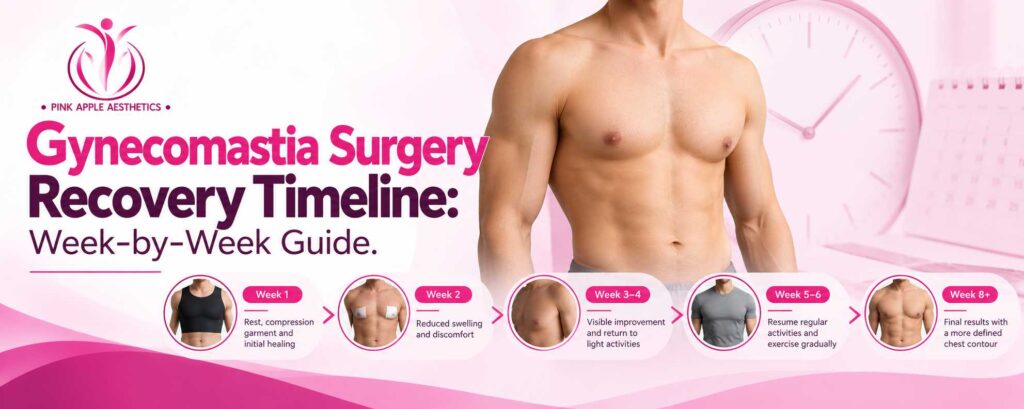
Gynecomastia Surgery Recovery: Week-by-Week Timeline
Days 1–3: Initial Recovery
The first few days are generally focused on rest, discomfort management and protecting the surgical area.
What you may experience:
- Swelling and bruising around the chest.
- Soreness, tightness or tenderness.
- Temporary changes in nipple or chest sensation.
- Dressings and, in some cases, surgical drains.
- The need for assistance with certain daily activities.
Recovery guidance:
Follow the prescribed medication schedule and instructions for caring for incisions and dressings. Gentle walking may be encouraged, but strenuous activities and heavy lifting should be avoided.
A compression garment may be recommended to support the healing tissues and help manage swelling. Wear it according to the operating surgeon’s instructions.
Do not remove dressings, manipulate incisions or change wound-care routines unless instructed to do so.
Days 4–7: Early Healing
During the remainder of the first week, discomfort may begin to improve. Bruising and swelling can still be noticeable, and the chest may feel firm or uneven.
What you may experience:
- Gradually improving soreness.
- Persistent swelling or bruising.
- Mild discomfort with certain movements.
- Follow-up appointments to review the incisions or manage drains, if present.
Recovery guidance:
Continue following activity restrictions and wound-care instructions. Light daily movement may be appropriate, but avoid lifting, strenuous upper-body movement and activities that place tension on the incisions.
Whether you can return to work during this period depends on your procedure, symptoms and job requirements. Do not assume that everyone can resume normal duties within one week.
Week 2: Gradual Return to Daily Activities
By the second week, some patients may find everyday movements more comfortable. However, healing remains ongoing, and swelling may still affect the chest contour.
What you may experience:
- Bruising that is gradually fading.
- Residual swelling and firmness.
- Incisions that continue to heal.
- Temporary numbness or sensitivity around the chest.
Recovery guidance:
Your surgeon may allow a gradual return to light daily activities or desk-based work if recovery is progressing appropriately.
Continue using a compression garment if prescribed. Avoid returning to strenuous exercise, heavy lifting or chest workouts without medical clearance.
People who undergo more extensive surgery may need additional time before resuming normal routines.
Weeks 3–4: Continued Healing
During weeks three and four, swelling may continue to decrease, and movement may become easier. However, the chest may not yet reflect its eventual contour.
What you may experience:
- Gradual improvement in bruising.
- Residual swelling or areas of firmness.
- Continued healing of the incisions.
- Ongoing changes in nipple or chest sensation.
Recovery guidance:
Your surgeon can assess whether your activity level can be increased. Do not use the absence of pain as the sole indicator that the tissues have healed sufficiently for exercise.
Follow advice regarding driving, lifting, work, sports and any ongoing compression garment use.
Weeks 5–6: Progressing Towards Routine Activity
Some patients can gradually resume more activities around this stage, provided their healing and clinical review support doing so.
What you may experience:
- Less noticeable bruising.
- A chest contour that is easier to assess.
- Residual swelling or firmness.
- Scars that remain visible while continuing to heal.
Recovery guidance:
The timing for resuming gym workouts, running, swimming and upper-body exercises should be determined by your surgeon. More extensive procedures may require longer restrictions.
Do not stop wearing a prescribed compression garment or begin scar treatments without following the instructions provided by your surgical team.
Months 2–3: Ongoing Tissue Recovery
Although many daily activities may have resumed by this stage, internal healing and changes in the chest contour can continue.
What you may experience:
- Further reduction in swelling.
- Gradual softening of firm areas.
- Continued changes in skin and nipple sensation.
- Scars that remain noticeable.
Recovery guidance:
Attend recommended follow-up appointments and discuss any persistent asymmetry, discomfort, unusual firmness or wound concerns with your clinician.
A contour that looks uneven during early recovery does not necessarily indicate a permanent problem. However, persistent or worsening changes should be assessed rather than self-diagnosed.
Months 3–6 and Beyond: Assessing the Healing Outcome
The chest contour often becomes more stable over several months as swelling decreases and tissues settle. Some patients may need longer for scar maturation or changes in sensation.
The final appearance depends on the original anatomy, the procedure performed and individual healing.
Scars can continue to mature for a year or longer. They may become less noticeable over time, but they do not always disappear completely.
Your operating surgeon can assess whether recovery is progressing as expected and whether any further evaluation is necessary.
When Can You Return to Work After Gynecomastia Surgery?
The timing depends on the type of work and the extent of surgery.
Desk-based work may be possible within days to approximately two weeks for some patients. Jobs involving lifting, repetitive upper-body movements or strenuous physical activity may require a longer break.
Before returning to work, consider whether you can move comfortably, manage your prescribed medication safely and follow any remaining restrictions.
Your surgeon should confirm when it is appropriate to resume your usual duties.
When Can You Exercise After Gynecomastia Surgery?
Exercise should be reintroduced gradually and only when the operating surgeon considers it appropriate.
- Gentle walking: Often encouraged early in recovery, as advised by the surgical team.
- Light daily activities: Resume gradually according to symptoms and instructions.
- Running and other vigorous cardio: Wait for medical clearance.
- Weightlifting and chest exercises: Avoid until the surgical team confirms that the healing tissues can tolerate them.
- Contact sports: Resume only when specifically cleared.
Returning to strenuous exercise too early may place stress on healing tissues and increase the risk of complications.
How Can You Support Healing After Gynecomastia Surgery?
The following measures may help support recovery:
- Follow the prescribed wound-care and medication instructions.
- Wear a compression garment for the recommended duration, if prescribed.
- Avoid smoking and nicotine during the period advised by your clinician, as they can impair wound healing.
- Maintain a balanced diet and adequate hydration.
- Avoid heavy lifting and activities that strain the chest until cleared.
- Attend scheduled postoperative appointments.
- Ask before applying creams, silicone products or other treatments to healing incisions.
Do not stop prescribed medication or start supplements intended to influence hormones without medical advice.
Warning Signs During Gynecomastia Surgery Recovery
Some discomfort, swelling and bruising are expected after surgery. However, certain symptoms require prompt assessment.
Contact your surgical team promptly if you experience:
- Rapidly increasing or markedly one-sided chest swelling.
- Severe or worsening pain.
- Bleeding that does not stop or an incision that opens.
- Fever, spreading redness, pus or other signs of infection.
- A sudden or significant change in the appearance of the surgical area.
Seek emergency medical care for chest pain, difficulty breathing or fainting. These symptoms should not be attributed to routine postoperative recovery.
Frequently Asked Questions
1. How long does gynecomastia surgery recovery take?
Initial recovery commonly takes days to weeks, while swelling, tissue settling and scar maturation can continue for several months. The timeline depends on the procedure and individual healing.
2. How long does swelling last after gynecomastia surgery?
Swelling usually improves gradually over the first several weeks, but some residual swelling may persist for months. Sudden, increasing or markedly one-sided swelling needs prompt medical assessment.
3. How long should I wear a compression garment?
The duration varies according to the procedure and the surgeon’s protocol. Wear the garment for the period prescribed by your surgical team rather than following a universal schedule.
4. Can I sleep on my side after gynecomastia surgery?
Your surgeon may recommend sleeping on your back initially to reduce pressure on the surgical area. Ask when it is appropriate to resume side sleeping, based on your procedure and healing.
5. When can I go to the gym after gynecomastia surgery?
The timing varies. Gentle walking may be allowed early, but vigorous exercise, weightlifting and chest workouts should wait until your surgeon provides clearance.
6. Will I have scars after gynecomastia surgery?
Surgical incisions produce scars. Their location and visibility depend on the technique, skin characteristics and healing. Scars may become less noticeable over time but may remain visible.
7. When will I see the final results of gynecomastia surgery?
The chest contour often becomes easier to assess over three to six months. Some changes in swelling, sensation and scars can continue beyond that period.
8. What should I do if one side of my chest becomes more swollen?
Contact your surgical team promptly, especially if the change is sudden or accompanied by pain, bruising or tightness. Rapid swelling may require urgent assessment.
Conclusion
Recovery after gynecomastia surgery progresses through several stages, from initial wound care and swelling management to a gradual return to daily activities and longer-term tissue healing.
The week-by-week timeline provides a general framework, but individual recovery depends on the procedure, the extent of tissue removal and the patient’s health. Following the operating surgeon’s instructions and recognising warning signs are essential parts of postoperative care.
Medical advice should always take priority over general online timelines.
Medical review: This article should be reviewed by a qualified medical professional before publication. Add the reviewer’s verified name and credentials only after the review has actually taken place.
Educational disclaimer: This article provides general information and is not a substitute for individual medical assessment or postoperative instructions.


