
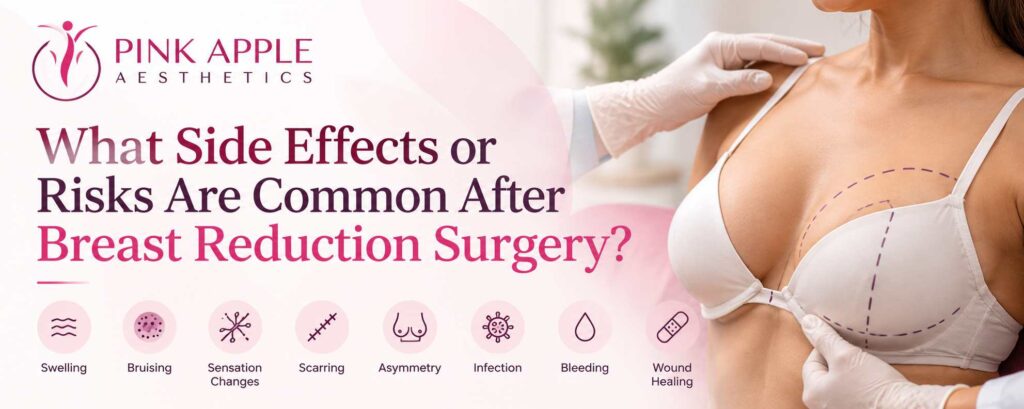
Breast reduction surgery, also called reduction mammaplasty, can help reduce the physical discomfort associated with very large breasts while creating a more proportionate breast shape. However, like any surgical procedure, breast reduction involves a period of healing and carries potential side effects and complications.
Some changes after surgery are normal parts of recovery, such as swelling, bruising and temporary changes in sensation. Other problems, including infection, significant bleeding or delayed wound healing, are less common but should be understood before deciding to undergo surgery.
At Pink Apple Aesthetics, breast reduction is planned according to each patient’s breast size, tissue characteristics, body proportions, health history and individual goals. Your plastic surgeon should discuss the potential benefits, limitations and risks with you before surgery.
What Side Effects Are Common After Breast Reduction Surgery?
The recovery experience varies from person to person. The following are some of the changes patients may notice after breast reduction surgery.
1. Swelling
Swelling is one of the most common effects after breast reduction surgery.
Because breast tissue and skin have been surgically reshaped, the body naturally responds with inflammation and fluid accumulation during the healing process. Swelling may make the breasts appear larger, firmer or less symmetrical during the early recovery period.
The swelling usually reduces gradually rather than disappearing immediately. It can take several weeks or longer for the breasts to settle, and residual swelling may sometimes persist for a few months.
Patients should therefore avoid judging their final breast shape during the first few weeks after surgery.
2. Bruising
Bruising around the breasts is also common following surgery.
Small blood vessels can be affected during the procedure, resulting in areas of blue, purple or yellow discoloration. Bruising generally improves as the tissues heal.
The amount and duration of bruising can vary depending on the individual, the extent of surgery and other factors.
Your surgeon will provide specific postoperative instructions regarding medications, activity and wound care that can help support recovery.
3. Temporary Changes in Breast Sensation
Changes in breast sensation can occur after breast reduction.
Patients may notice areas that feel:
- Numb
- Less sensitive
- More sensitive
- Tingling
- Different from the surrounding skin
These changes can occur because nerves in the breast are affected during surgery. Sensation may gradually return as the nerves recover, although the outcome differs between individuals. In some patients, sensory changes can be long-lasting or permanent.
This is one of the reasons why discussing expectations about sensation with your plastic surgeon before surgery is important.
4. Nipple and Areola Sensation Changes
The nipple and areola can also experience changes in sensation after breast reduction.
Some patients experience temporary numbness, while others may notice increased sensitivity. In many cases, sensation improves with time, but it cannot be guaranteed that sensation will return completely to its preoperative state.
In very large breast reductions, surgical techniques may involve greater repositioning of the nipple-areola complex. Rarely, particularly in very extensive reductions, there can be more serious complications involving the blood supply to the nipple and areola.
Your surgeon should explain which technique is appropriate for your anatomy and what that may mean for sensation.
5. Scarring
Breast reduction requires incisions, so some degree of scarring is unavoidable.
Depending on the surgical technique and the amount of tissue being removed, scars may be located around the areola, extend vertically down the breast, and sometimes continue along the breast crease.
Initially, scars may appear red, darker or more prominent. They generally mature and fade gradually over time, although they do not completely disappear.
Scar appearance varies between individuals and can be influenced by factors such as genetics, skin characteristics, healing and postoperative care.
Your surgeon can discuss appropriate scar-care options once the incisions have healed sufficiently.
6. Breast Asymmetry
It is normal for breasts to have some degree of natural asymmetry before surgery.
Breast reduction aims to improve symmetry and proportion, but perfectly identical breasts cannot be guaranteed.
Differences in breast size, shape, nipple position or healing may remain after surgery. Temporary asymmetry can also be more noticeable while one breast has more swelling than the other.
As the swelling settles and tissues heal, the appearance usually becomes more stable. However, some degree of asymmetry may remain.
7. Infection
Infection is an uncommon but recognised complication of breast reduction surgery.
Possible warning signs can include:
- Increasing redness around an incision
- Increasing warmth
- Worsening pain rather than gradual improvement
- Pus or unusual discharge
- Fever
- Increasing swelling
Not every change in redness or swelling means an infection, particularly during the early healing period. However, new or worsening symptoms should be reported to your surgical team rather than self-treated.
Infection following surgery may require medication and, depending on its severity, additional treatment.
8. Bleeding and Haematoma
Some bleeding is expected during and immediately after surgery, but significant bleeding is a potential complication.
A haematoma occurs when blood collects within the surgical area. It can cause increasing swelling, pain, firmness or asymmetry and may sometimes require additional treatment or another procedure to control the bleeding.
A rapidly increasing breast swelling or significant worsening pain after surgery should not be ignored.
9. Wound-Healing Problems
Breast reduction involves relatively large areas of skin and tissue healing together, so delayed wound healing can occur.
Small areas of the incision may sometimes take longer to close, particularly at points where surgical incisions meet or where there is greater tension on the skin.
Wound-healing problems may require additional dressings, closer follow-up or other treatment depending on their severity.
Factors such as smoking, certain medical conditions and individual healing characteristics can influence surgical wound healing. Your surgeon should assess your individual risk before surgery.
Are These Side Effects Permanent?
Not necessarily.
Many postoperative changes—including swelling, bruising and some changes in sensation—improve progressively as healing takes place.
However, some outcomes can be long-lasting. These may include:
- Visible scars
- Residual breast asymmetry
- Persistent changes in breast or nipple sensation
- Changes in breast shape
- Rare complications involving skin or nipple-areola tissue
The exact outcome cannot be predicted with complete certainty because healing varies between patients.
When Should You Contact Your Surgeon?
After breast reduction surgery, you will receive specific instructions about what to expect during recovery and when to attend follow-up appointments.
Contact your surgical team promptly if you experience symptoms such as:
- Rapidly increasing swelling
- Significant or worsening pain
- Heavy bleeding
- Fever or other signs of infection
- Increasing redness or warmth
- Unusual discharge from the incision
- Significant changes in skin colour
- A wound that is opening or not healing as expected
These symptoms do not automatically mean that a serious complication has occurred, but they should be assessed by your healthcare team.
How Can You Reduce the Risk of Complications?
There is no way to eliminate all surgical risks, but following your surgeon’s instructions can support a safer recovery.
Depending on your individual situation, this may include:
- Following wound-care instructions carefully
- Taking prescribed medications as directed
- Wearing the recommended support garment
- Avoiding strenuous activity until your surgeon allows it
- Avoiding smoking
- Attending scheduled follow-up appointments
- Informing your surgeon about all medications and supplements you take
- Reporting unusual symptoms early
Your surgeon will also assess your medical history and individual risk factors before recommending surgery.
What Should You Discuss With Your Plastic Surgeon?
Before undergoing breast reduction, it is worth discussing more than just the expected breast size.
Ask your surgeon about:
- The surgical technique recommended for you
- Expected scar pattern
- Possible changes in nipple sensation
- Breastfeeding considerations
- Your individual wound-healing risks
- How asymmetry will be addressed
- Expected recovery time
- When you can return to work and exercise
- What symptoms should prompt an urgent call to the clinic
A detailed consultation allows your surgeon to assess your anatomy and explain which risks are particularly relevant to you.
Breast Reduction at Pink Apple Aesthetics
At Pink Apple Aesthetics, breast reduction surgery is approached as an individualised procedure rather than simply removing a predetermined amount of breast tissue.
Dr. Pinky Devi Ayyappan evaluates the patient’s breast size, shape, proportions, skin quality, symptoms and aesthetic goals before developing a surgical plan.
The aim is to reduce excess breast tissue while creating a breast shape that is appropriate for the patient’s individual anatomy. During consultation, patients can also discuss expected scars, sensation changes, recovery, breastfeeding considerations and potential complications.
Final Thoughts
Breast reduction surgery can provide meaningful relief for women experiencing the physical burden of large breasts, but it is still a major surgical procedure and should be approached with realistic expectations.
Swelling, bruising, temporary changes in sensation and visible scars can be part of the normal recovery process. Complications such as infection, significant bleeding, wound-healing problems and persistent sensory changes are less common but should be understood before surgery.
The most important step is having an honest discussion with a qualified plastic surgeon about your individual anatomy, goals and risk factors.
Medical Disclaimer: This article is intended for general educational purposes and should not replace an individual consultation with a qualified plastic surgeon. Surgical risks and recovery can vary considerably between patients. Your surgeon should provide personalised advice based on your medical history, examination and planned surgical technique.


