

When considering breast reduction surgery, one of the first things many women want to see is a before-and-after photograph.
Photos can provide a useful visual reference, but they cannot tell the complete story of what breast reduction surgery may achieve for an individual patient. Breast size, breast shape, skin quality, tissue distribution, nipple position, body proportions, surgical technique and healing can all influence the final result.
Breast reduction surgery is designed to remove excess breast tissue and skin and reshape the remaining breast tissue to create a smaller, more proportionate breast. However, the goal is not simply to make the breasts smaller—it is to create a result that is appropriate for the patient’s individual anatomy.
At Pink Apple Aesthetics, breast reduction surgery is planned individually for each patient, with realistic expectations discussed before surgery.
What Can Before-and-After Photos Show?
Before-and-after photographs can help patients understand the type of changes that may be possible with breast reduction surgery.
They may show changes in:
- Overall breast size
- Breast projection
- Breast shape
- Breast position
- Nipple-areola position
- Breast proportions
- Visible scarring at different stages of healing
Photographs can be particularly useful during a consultation because they allow the surgeon and patient to discuss expectations and surgical goals.
However, photographs should be viewed as examples of individual patient outcomes rather than guarantees of what another patient will achieve.
What Can Before-and-After Photos Not Show?
A photograph cannot show everything about a patient’s surgical experience.
For example, before-and-after images cannot fully demonstrate:
- Postoperative discomfort
- Changes in breast sensation
- The healing process
- How scars feel or mature
- Recovery time
- Individual surgical risks
- How the breasts may change with pregnancy or weight fluctuations
- Whether the same result is achievable for another patient
Even photographs that appear similar may represent patients with very different anatomy and surgical requirements.
This is why a personal consultation remains important.
Changes in Breast Size
The most obvious change after breast reduction is usually a reduction in breast volume.
During surgery, the surgeon removes an appropriate amount of breast tissue, fat and skin based on the patient’s anatomy and surgical plan.
The objective is not necessarily to achieve a specific bra cup size.
Bra sizing is not completely standardised between brands, and breast reduction is planned according to factors such as:
- Existing breast size
- Body proportions
- Amount of excess tissue
- Skin quality
- Breast shape
- Nipple position
- Patient preferences
- Surgical safety
For some women, the reduction may be substantial. For others, a more moderate reduction may be appropriate.
The amount of tissue removed should therefore be discussed with your plastic surgeon rather than relying solely on a desired cup size.
Why Breasts May Look Larger Immediately After Surgery
It is important to understand that the breasts may not appear smaller immediately after surgery in the way patients expect.
Swelling and postoperative inflammation can temporarily affect breast size and shape.
As healing progresses, swelling gradually decreases and the breasts begin to settle into their new shape.
This means that an early postoperative photograph should not necessarily be considered the final result.
Changes in Breast Shape
Breast reduction is not simply a volume-reduction procedure.
The surgeon also reshapes the remaining breast tissue and repositions the nipple and areola when necessary.
Depending on the patient’s anatomy, the procedure may improve:
- Breast proportion
- Breast projection
- Position of the breast
- Shape of the lower breast
- Relationship between breast and chest wall
- Nipple position
The final shape depends on factors such as the amount of tissue removed, skin elasticity, breast anatomy and the surgical technique used.
A patient’s breasts may also continue to settle and change in appearance during the months following surgery.
Scarring After Breast Reduction
Scars are an unavoidable part of breast reduction surgery because the procedure requires surgical incisions.
The location and extent of scars depend on the technique used and the amount of skin and tissue that needs to be removed.
Depending on the individual case, scars may be positioned:
- Around the areola
- Vertically below the areola
- Along the breast crease
Some patients may have more visible scars than others.
Initially, scars can appear red, darker or more prominent. With time, they generally mature and become less noticeable, although scars do not completely disappear.
Scar healing can be influenced by genetics, skin type, wound healing, tension on the incision and postoperative care.
How Long Does It Take to See the Final Breast Reduction Result?
Breast reduction results develop gradually.
Immediately After Surgery
The breasts may appear swollen and feel firm or tight. Bruising and temporary asymmetry can also occur.
First Few Weeks
Swelling and bruising gradually improve. The breast shape may still look different from the expected final result.
First Few Months
The breasts generally continue to soften and settle. Scars also begin to mature.
Longer-Term Healing
The final appearance becomes more stable as swelling resolves and the tissues continue to heal.
The exact timeline varies between patients. Your surgeon can provide more specific guidance based on your procedure and recovery.
What About Breast Symmetry?
Breast reduction surgery aims to improve breast symmetry, but perfect symmetry cannot be guaranteed.
Most women naturally have some degree of breast asymmetry before surgery.
There may be differences in:
- Breast volume
- Breast shape
- Nipple position
- Breast projection
- Chest wall anatomy
The surgeon can plan the procedure to improve these differences, but the two breasts may not become completely identical.
Temporary asymmetry can also be more noticeable during recovery because one side may have more swelling or may heal at a different rate.
Why Do Breast Reduction Results Vary Between Patients?
Looking at another patient’s before-and-after photographs can be useful, but it is important to understand why the same procedure may produce different results in different women.
Factors that can influence the outcome include:
Breast Size and Shape
Patients begin with different breast dimensions and tissue distributions.
Skin Elasticity
Skin quality influences how the breast tissue settles after surgery.
Amount of Tissue Removed
The extent of reduction affects the resulting breast volume and shape.
Surgical Technique
Different techniques may be appropriate depending on the patient’s anatomy.
Nipple Position
The starting position of the nipple and the amount of repositioning required can affect the final appearance.
Body Proportions
The same breast size may look very different on two people with different body frames.
Healing
Scarring, swelling and tissue settling vary from person to person.
Weight Changes
Significant weight gain or weight loss after surgery can alter breast size and shape over time.
Pregnancy
Pregnancy and breastfeeding can also cause changes to breast tissue and skin, potentially affecting the surgical result.
For these reasons, before-and-after photographs should be used to understand possibilities rather than to predict an exact personal outcome.
Can Breast Reduction Results Be Permanent?
Breast reduction removes breast tissue, but the breasts can still change over time.
Factors such as:
- Ageing
- Pregnancy
- Breastfeeding
- Significant weight gain
- Significant weight loss
- Changes in skin elasticity
may affect breast size and shape in the future.
Maintaining a relatively stable weight and following your surgeon’s postoperative recommendations can help support the long-term result, but natural changes cannot be completely prevented.
Real Patient Results at Pink Apple Aesthetics
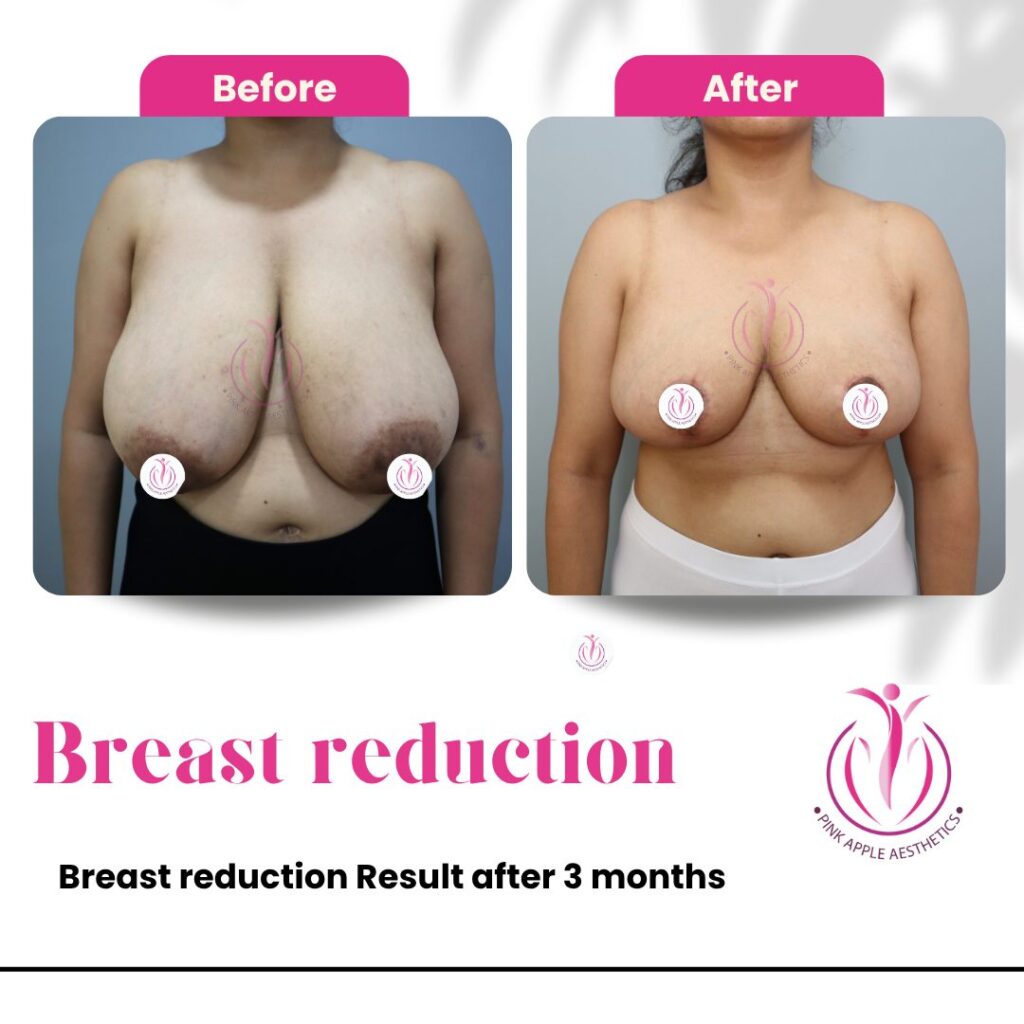
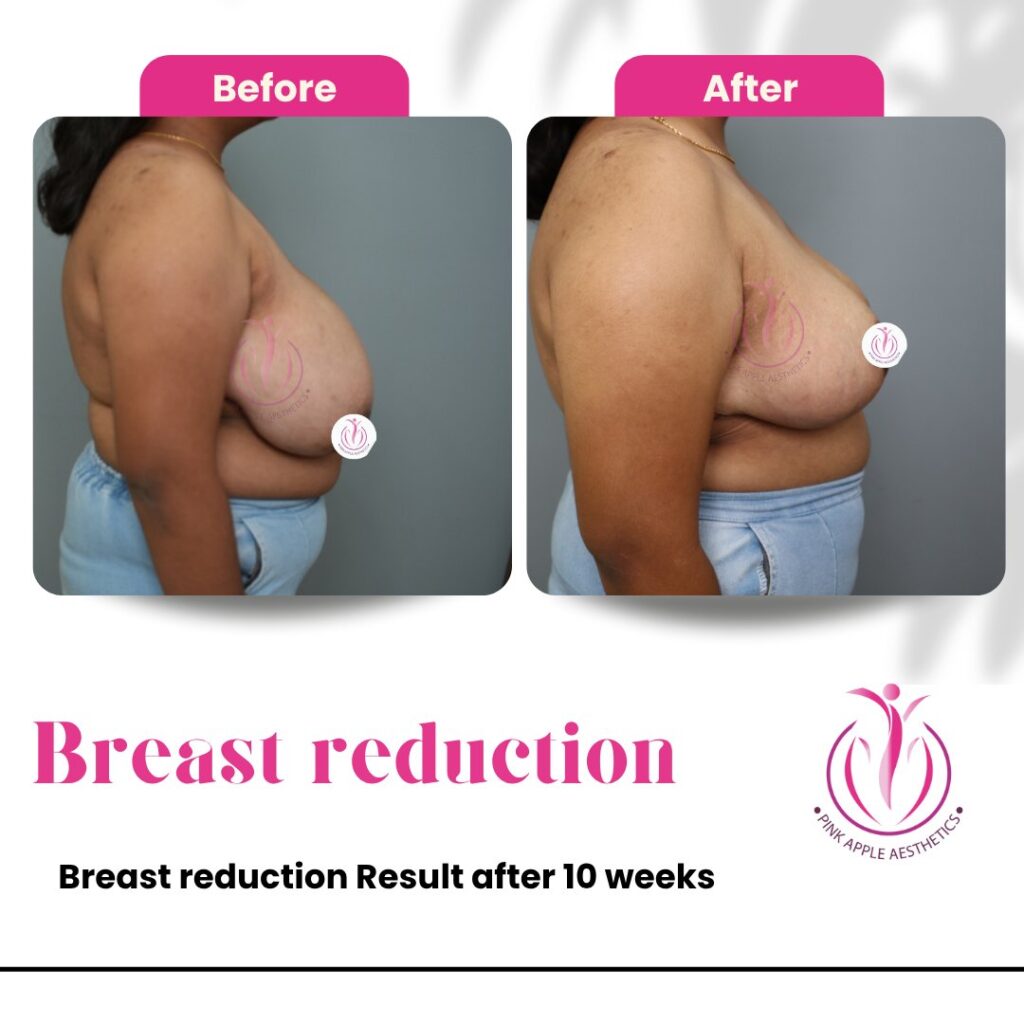
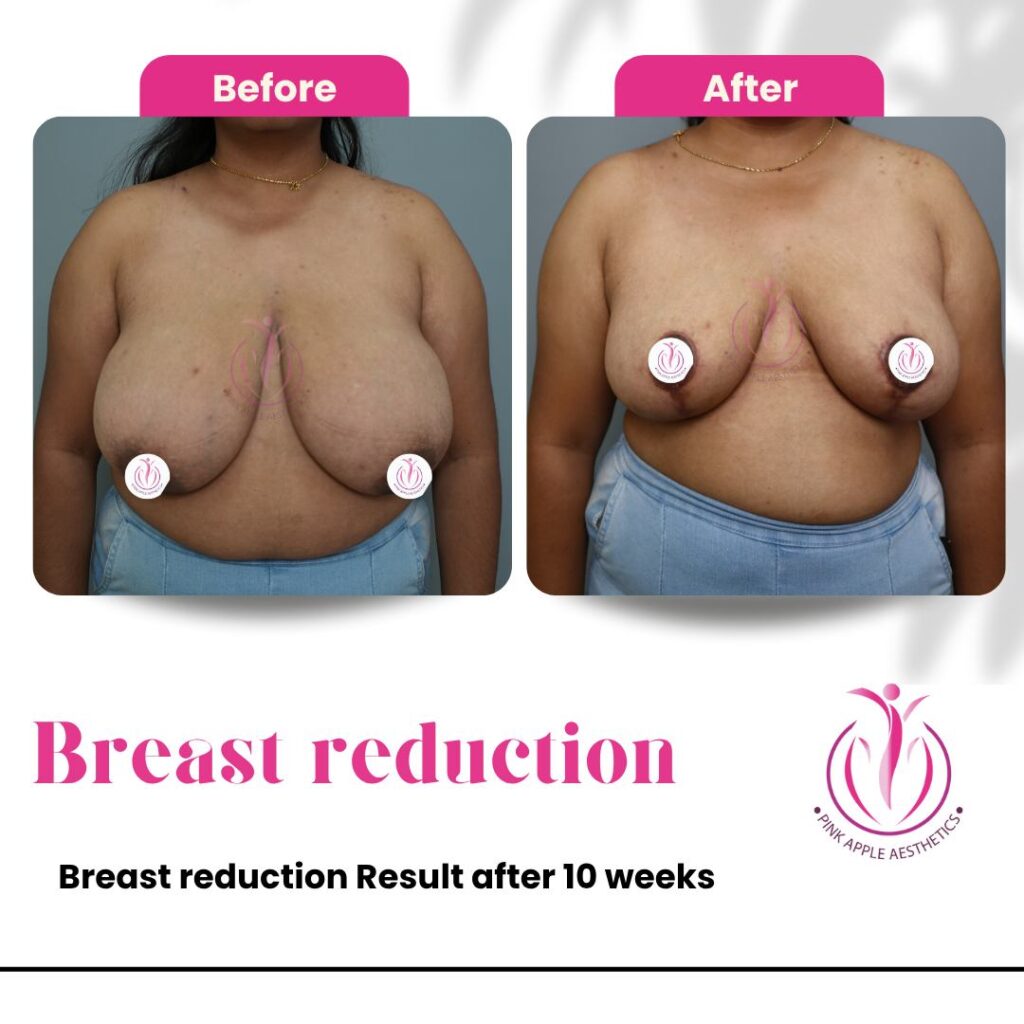
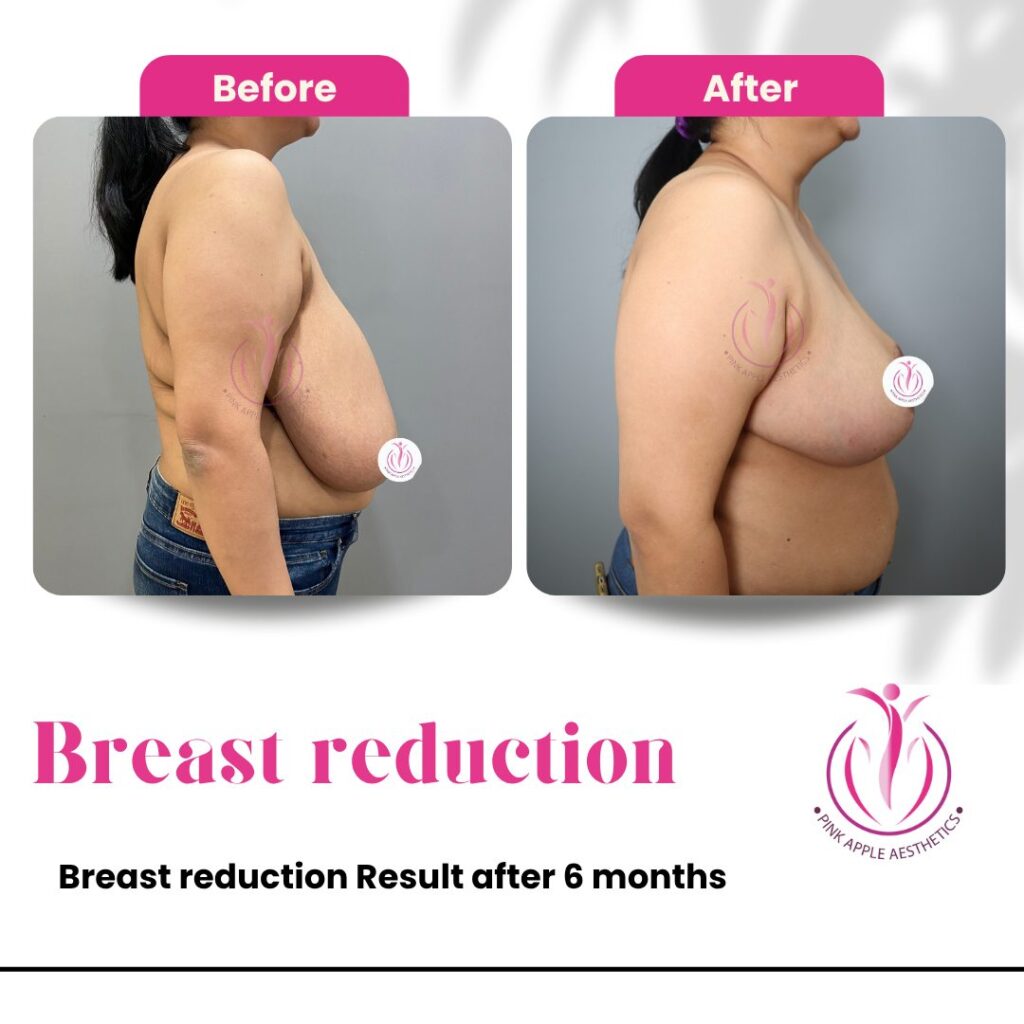
At Pink Apple Aesthetics, before-and-after photographs may be used during consultations to help patients understand the types of changes that breast reduction surgery can achieve.
Real patient results can demonstrate changes such as:
- Reduction in breast volume
- Improved breast proportions
- Changes in breast shape
- Nipple repositioning
- Changes in breast projection
- The appearance and progression of surgical scars
However, each photograph represents an individual patient with their own anatomy, surgical plan and healing process.
Patient photographs should therefore be viewed as examples, not guarantees.
Where patient images are shared publicly, appropriate patient consent and privacy considerations should be followed.
Dr. Pinky Devi Ayyappan at Pink Apple Aesthetics
Breast reduction surgery at Pink Apple Aesthetics is led by Dr. Pinky Devi Ayyappan, a plastic surgeon who evaluates each patient’s anatomy and goals before developing an individual surgical plan.
During consultation, patients can discuss:
- Their desired breast size
- Breast shape
- Existing asymmetry
- Expected scars
- Nipple position
- Recovery
- Potential risks
- Long-term considerations
The surgical plan is then tailored to the patient’s individual anatomy rather than trying to reproduce another patient’s result.
What Should You Look for in Breast Reduction Before-and-After Photos?
When reviewing before-and-after photographs, look beyond simply asking whether the breasts appear “smaller.”
Consider:
Has the overall breast proportion changed?
How has the breast shape changed?
Where is the nipple positioned?
How do the breasts relate to the patient’s body proportions?
What does the scar look like at the particular stage of healing?
Are the before and after photographs taken from comparable angles?
How much time passed between surgery and the after photograph?
These details can make before-and-after photographs much more useful when evaluating potential outcomes.
Questions to Ask Your Plastic Surgeon
Before undergoing breast reduction surgery, consider discussing:
- What kind of result is realistic for my anatomy?
- How much breast tissue may need to be removed?
- What surgical technique would you recommend?
- Where will my scars be located?
- How much change in breast sensation should I expect?
- How will existing asymmetry be addressed?
- How long will it take for my breasts to settle?
- Can I see examples of patients with similar anatomy?
- How might pregnancy or future weight changes affect the result?
- What should I expect during the recovery period?
These questions can help you develop realistic expectations before surgery.
Final Thoughts
Before-and-after photographs are an important part of understanding breast reduction surgery, but they are only one part of the decision-making process.
Breast reduction can produce significant changes in breast size, shape and proportion, but the outcome varies between patients. Swelling, scars, asymmetry and changes in sensation can all form part of the recovery process.
The most useful before-and-after photograph is not necessarily the one showing the most dramatic change. It is one that helps you understand what may be achievable for a patient with anatomy and goals similar to your own.
At Pink Apple Aesthetics, the focus is on creating a breast reduction result that is appropriate for each patient’s body, expectations and individual surgical requirements.
Medical Disclaimer: This article is for general educational purposes and does not replace an individual consultation with a qualified plastic surgeon. Before-and-after photographs are examples of individual outcomes and cannot guarantee a specific result. Surgical outcomes, recovery and scarring vary between patients.


