
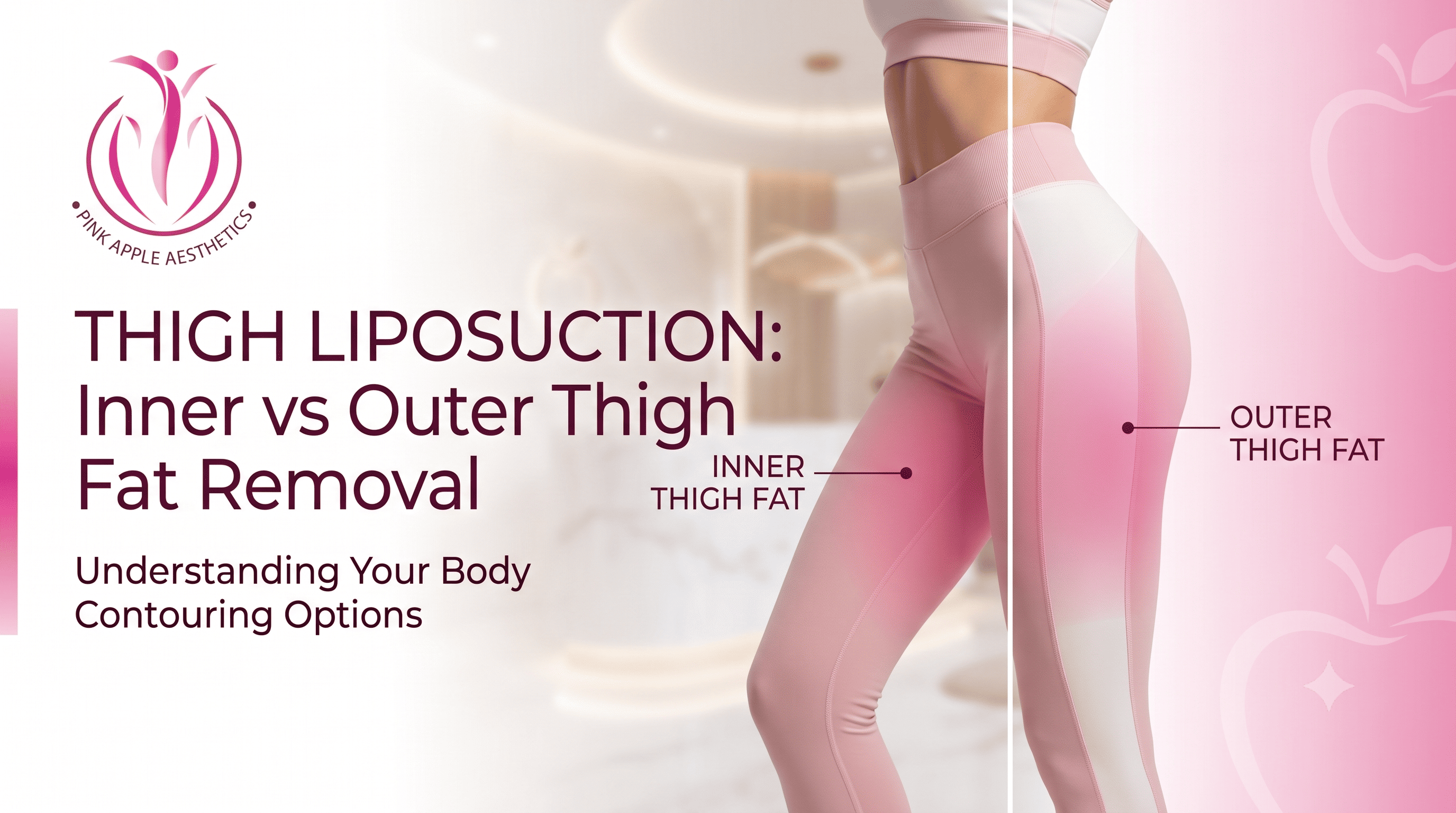
Fat accumulation around the thighs can affect the overall shape and proportions of the lower body. While regular physical activity and a balanced diet can support a healthy body composition, some people continue to have localized fat deposits on the inner or outer thighs.
Thigh liposuction is a surgical body-contouring procedure that can remove selected deposits of subcutaneous fat from these areas. However, inner and outer thigh fat are not identical in terms of anatomy, contour and skin characteristics. The appropriate approach depends on the individual’s body shape, skin elasticity, fat distribution and treatment goals.
If you are considering thigh liposuction in Bangalore, understanding the difference between inner and outer thigh fat removal can help you have a more informed discussion with a qualified plastic surgeon.
What Is Thigh Liposuction?
Thigh liposuction is a procedure that uses a thin cannula to remove targeted deposits of subcutaneous fat from selected areas of the thighs.
The objective is body contouring, not significant weight loss.
Depending on the individual’s anatomy, treatment may focus on:
- Inner thighs
- Outer thighs
- Front of the thighs
- Back of the thighs
- Areas around the knee
- A combination of areas
Not everyone needs treatment in every region. A surgeon should assess the entire contour of the thigh before recommending which areas, if any, should be treated.
Inner vs Outer Thigh Fat: What’s the Difference?
Although both areas can contain localized fat, they create different contour concerns.
Inner Thigh Fat
Inner-thigh fullness occurs along the medial aspect of the upper legs.
Some people seek treatment because the inner thighs appear fuller or rub together during movement. In suitable candidates, targeted fat removal can reduce this fullness and improve the contour of the area.
However, the inner thigh can also have relatively delicate skin and varying degrees of laxity. Removing fat without considering skin quality may not produce the desired result.
Outer Thigh Fat
Outer-thigh fullness is commonly associated with the contour sometimes described as “saddlebags.”
The area extends around the lateral upper thigh and can influence the transition between the hips, buttocks and thighs.
For suitable candidates, liposuction can reduce localized fat and create a smoother transition between these regions.
The surgeon needs to consider the surrounding anatomy rather than treating the outer thigh as an isolated pocket.
Inner Thigh vs Outer Thigh Liposuction
| Feature | Inner Thigh Liposuction | Outer Thigh Liposuction |
|---|---|---|
| Main area treated | Medial/inner thigh | Lateral/outer thigh |
| Common concern | Inner-thigh fullness | Outer-thigh or “saddlebag” fullness |
| Skin considerations | Skin laxity may be important | Overall hip-thigh contour is important |
| Main objective | Reduce localized inner-thigh fullness | Improve lateral thigh contour |
| Treatment planning | Requires attention to skin and leg proportions | Requires attention to hips, buttocks and thighs |
Who Is a Good Candidate for Thigh Liposuction?
Thigh liposuction may be considered for adults who have localized deposits of fat and are otherwise suitable candidates for elective surgery.
Potential candidates generally have:
Localized Fat Deposits
The procedure is most appropriate when the concern is concentrated in a specific area rather than generalized excess body weight.
Relatively Stable Weight
People who have maintained a relatively stable weight may be better candidates than those currently undergoing substantial weight changes.
Reasonable Skin Elasticity
The skin needs to adapt to the reduced volume after fat removal. Good skin elasticity can contribute to a smoother contour.
Realistic Expectations
Liposuction can improve the shape and contour of the thighs, but it cannot guarantee a specific body shape.
Suitable General Health
Your surgeon will consider your medical history, medications, previous procedures and overall health before recommending surgery.
When Might Thigh Liposuction Not Be the Best Option?
Liposuction may not be appropriate when the primary problem is significant loose skin rather than localized fat.
It may also be unsuitable for someone who:
- Wants substantial overall weight loss
- Has unrealistic expectations
- Has significant skin laxity
- Has medical factors that increase surgical risk
- Is experiencing major fluctuations in weight
An in-person assessment is necessary to determine whether liposuction is appropriate.
How Is Thigh Liposuction Performed?
Preoperative Assessment
Before surgery, the plastic surgeon examines the thighs and assesses:
- Fat distribution
- Skin elasticity
- Overall leg proportions
- Symmetry
- Medical history
- Previous surgeries
- Current medications
- Treatment goals
The surgeon then determines which areas can be safely and appropriately treated.
Targeted Fat Removal
During surgery, small incisions are made in carefully selected locations.
A thin cannula is inserted through the access points to remove targeted subcutaneous fat.
The surgeon works systematically to create a smooth transition between treated and untreated areas.
Creating Balanced Contours
The goal is not simply to make the thigh smaller.
Removing too much fat from one area can create contour irregularities or an unnatural transition. A skilled surgical plan therefore considers the relationship between the inner or outer thigh and surrounding areas.
Can You Have Inner and Outer Thigh Liposuction Together?
In selected patients, both areas may be treated during the same surgical procedure.
Whether this is appropriate depends on:
- Overall health
- Amount and location of fat
- Skin quality
- Total surgical extent
- Safety considerations
- Desired outcome
The surgeon should determine whether combined treatment is appropriate rather than assuming that treating more areas will produce a better result.
What Is Recovery Like After Thigh Liposuction?
Recovery varies according to the extent of surgery and the individual’s healing response.
Common temporary effects can include:
- Swelling
- Bruising
- Tenderness
- Tightness
- Temporary numbness or altered sensation
A compression garment may be recommended during recovery.
First Few Days
The treated thighs may feel swollen and tender. Your surgical team will provide instructions regarding wound care, medication, movement and compression garments.
Gentle movement may be encouraged, but strenuous activities should be avoided until your surgeon advises that they are appropriate.
First Few Weeks
Swelling and bruising generally begin to settle gradually.
You may be able to return to routine activities progressively, depending on the extent of surgery and your individual recovery.
Your surgeon will advise when it is appropriate to resume:
- Running
- Gym workouts
- Lower-body strength training
- Cycling
- Swimming
- Other strenuous exercise
Longer-Term Healing
The final contour develops gradually as postoperative swelling resolves and the tissues heal.
It is important not to judge the final result immediately after surgery.
When Will You See the Results?
Some improvement may become visible as swelling decreases, but the final appearance takes time to develop.
The outcome depends on factors including:
- Amount of fat removed
- Skin elasticity
- Body proportions
- Surgical technique
- Healing response
- Weight stability
Your surgeon can provide a more individualised expectation after examining your thighs.
Can Thigh Fat Return After Liposuction?
The fat cells removed during liposuction are permanently removed from the treated area.
However, the remaining fat cells can enlarge if you gain significant weight.
This means liposuction does not prevent future changes in body composition.
Maintaining a relatively stable weight and healthy lifestyle can help preserve the contour achieved through surgery.
Does Thigh Liposuction Tighten Loose Skin?
Not necessarily.
Liposuction primarily removes fat. It does not remove significant excess skin.
If someone has substantial skin laxity, removing fat alone may not provide the desired appearance. In some cases, another procedure may be more appropriate.
This is particularly important when considering inner-thigh treatment, where skin quality can significantly influence the final contour.
What Are the Risks of Thigh Liposuction?
Like any surgical procedure, thigh liposuction carries potential risks.
Possible complications include:
- Infection
- Bleeding
- Fluid accumulation
- Changes in sensation
- Contour irregularities
- Asymmetry
- Skin irregularities
- Scarring
- Anaesthesia-related complications
- Blood clots and other uncommon but serious complications
Individual risk depends on factors such as your health, the extent of surgery, medications and surgical technique.
A qualified plastic surgeon should discuss the potential benefits, limitations and risks before you make a decision.
Thigh Liposuction vs Weight Loss
Thigh liposuction should not be confused with a weight-loss treatment.
Weight loss reduces overall body fat, but it cannot precisely control where fat is lost.
Liposuction, by contrast, allows a surgeon to target selected areas of localized subcutaneous fat.
Someone may therefore maintain a healthy weight and still have persistent inner or outer thigh fullness.
However, if a person needs significant overall weight loss, addressing weight management first may be more appropriate than using liposuction as a substitute.
Thigh Liposuction in Bangalore
If you are considering thigh liposuction in Bangalore, choose a qualified plastic surgeon who can evaluate your individual anatomy rather than relying only on photographs, online claims or package pricing.
During consultation, the surgeon can determine:
- Whether the fullness is primarily caused by fat
- Whether the inner or outer thigh is the main concern
- Whether skin laxity is present
- Whether liposuction alone is appropriate
- What degree of improvement may be realistic
- What recovery and risks may apply
A personalised assessment is particularly important because the thighs need to remain proportionate to the hips, buttocks and lower legs.
Questions to Ask Your Plastic Surgeon
Would I benefit from inner or outer thigh liposuction?
Your surgeon should explain which area is responsible for the contour concern and whether treatment is appropriate.
Is my skin elastic enough for liposuction?
Skin quality can influence the final appearance after fat removal.
Would treating both areas be appropriate?
Combined treatment may be suitable for some patients but is not necessary for everyone.
How much improvement can I realistically expect?
Ask for an honest discussion of potential results rather than a guarantee.
What will my recovery involve?
Discuss compression garments, activity restrictions, follow-up appointments and expected swelling.
What are the risks in my particular case?
Your surgeon should explain the risks relevant to your health and planned procedure.
Frequently Asked Questions
Is inner or outer thigh liposuction better?
Neither is universally better. The appropriate treatment depends on where the localized fat is located, skin quality and the individual’s overall body proportions.
Can liposuction remove saddlebags?
Yes, outer-thigh liposuction can be used to reduce localized fat deposits commonly described as saddlebags in appropriately selected patients.
Can liposuction reduce inner-thigh fat?
Yes. Targeted liposuction can remove localized subcutaneous fat from the inner thighs when the patient is an appropriate candidate.
Will my thighs become completely slim after liposuction?
Liposuction is intended to improve contour, not guarantee a particular leg size or shape. Results depend on anatomy, skin elasticity and the amount of localized fat.
Can exercise remove inner or outer thigh fat?
Exercise can improve overall fitness and body composition, but it cannot selectively remove fat from a particular area.
How long does recovery from thigh liposuction take?
Recovery varies from person to person. Swelling, bruising and tenderness can persist during the healing period, while the final contour develops gradually.
Is thigh liposuction permanent?
The fat cells removed during the procedure are permanently removed. However, remaining fat cells can enlarge with significant weight gain.
The Bottom Line
Thigh liposuction can target localized fat from the inner or outer thighs in appropriately selected patients. However, these areas require different contouring considerations, and the best treatment depends on individual anatomy, fat distribution and skin elasticity.
Inner-thigh liposuction primarily addresses localized fullness along the medial thigh, while outer-thigh liposuction can improve lateral thigh or saddlebag contour.
If you are considering thigh liposuction in Bangalore, a consultation with a qualified plastic surgeon can help determine whether inner-thigh treatment, outer-thigh treatment, both, or an alternative approach is most appropriate for you.


