Rhinoplasty Surgery in Bangalore
A naturally balanced nose — one that fits your face, not someone else’s — is what good rhinoplasty delivers. Dr. Pinky Devi Ayyappan, MCh (Plastic Surgery), brings over 12 years of experience and international fellowship training in facial surgery to every nose reshaping procedure at Pink Apple Aesthetics, Jayanagar, Bangalore.
What Is Rhinoplasty (Nose Job Surgery)?
Rhinoplasty — commonly called a nose job — is a surgical procedure that reshapes the structure of the nose. It can address the bone in the upper portion, the cartilage in the lower portion, the overlying skin, or all three, depending on what you need.
People choose rhinoplasty for very different reasons. Some want to refine a nose tip that feels out of proportion with the rest of their face. Others have a dorsal hump (a raised bump along the bridge) they have been self-conscious about for years. Many patients come in because structural irregularities are genuinely affecting how well they breathe.
For Indian patients specifically, the goals of rhinoplasty are often different from what you might see in Western examples. The most common concerns we see at Pink Apple Aesthetics include:
- A flat or low nasal bridge — wishing for slightly more height and definition without looking unnatural.
- A wide or rounded nasal tip — seeking a subtle refinement that feels right for the face.
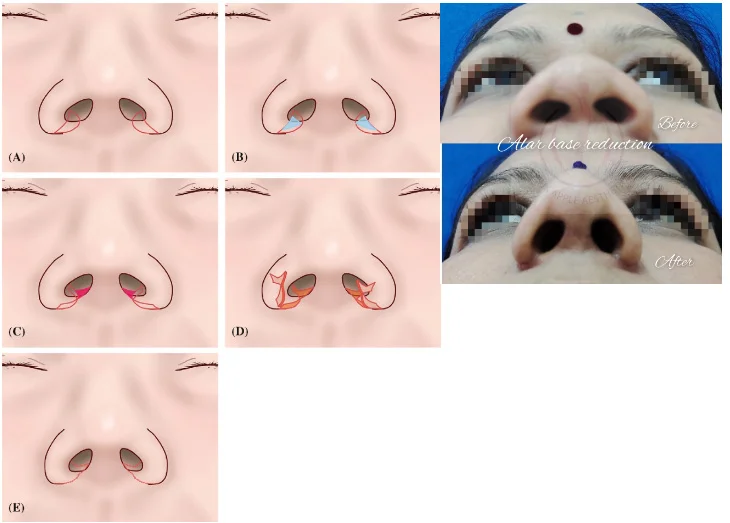
- Broad nostrils — wanting a slight narrowing that brings the nose into better proportion.
- A dorsal hump — correcting a raised bump that is visible from the side.
- Breathing difficulties — often caused by a deviated septum or narrow internal passages.
It is important to understand that good rhinoplasty for an Indian face does not mean creating a ‘Western’ nose. The goal is always a nose that sits naturally on your face, suits your ethnic features, and looks like it was always there.

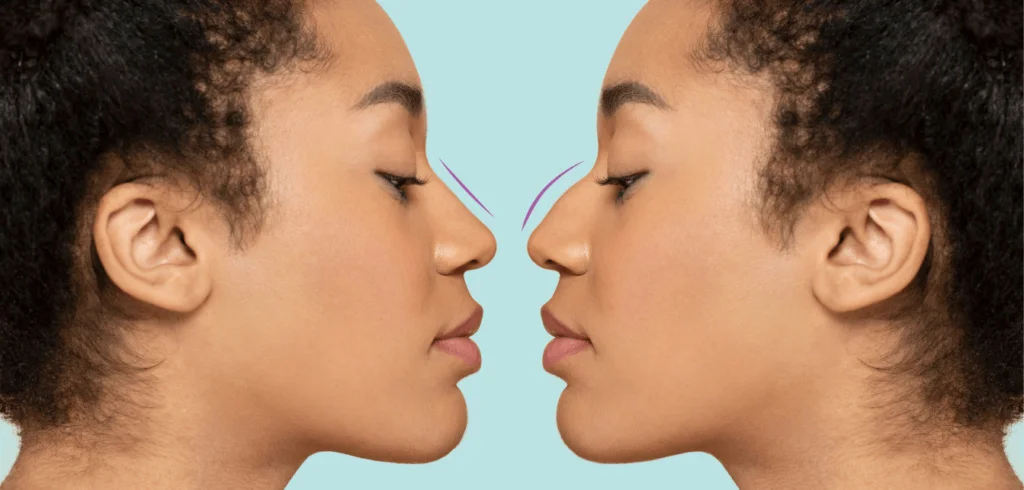
Rhinoplasty Before & After Results
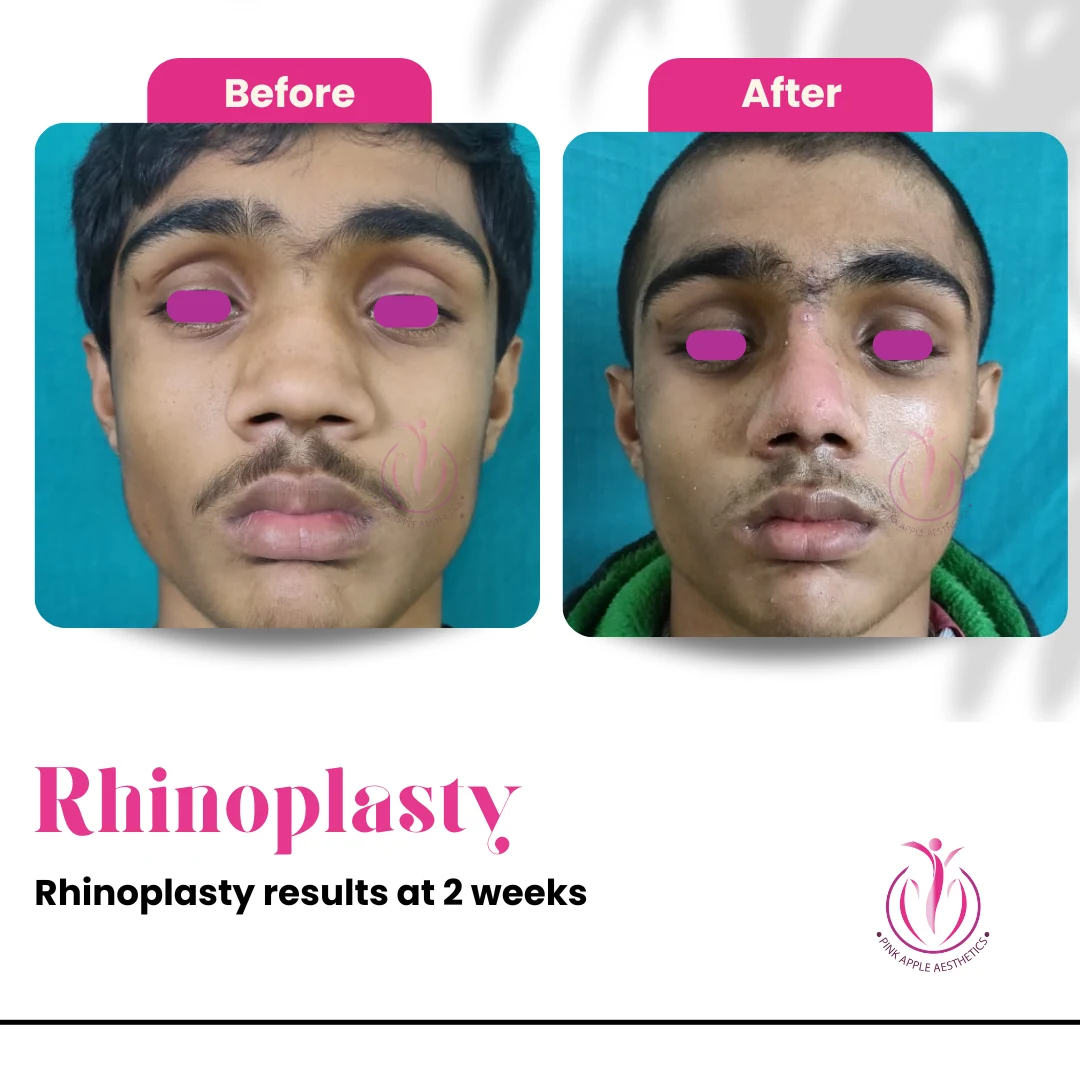
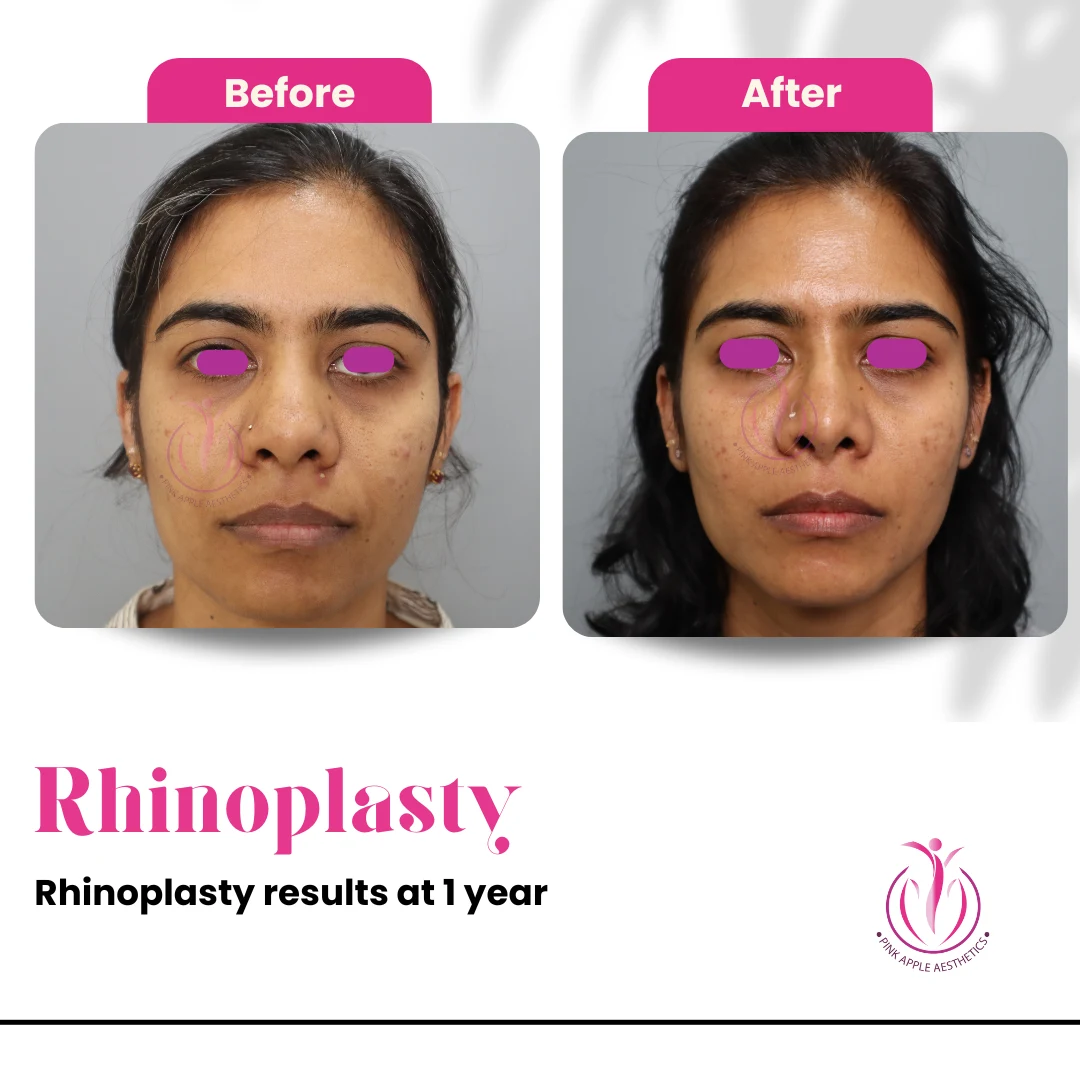
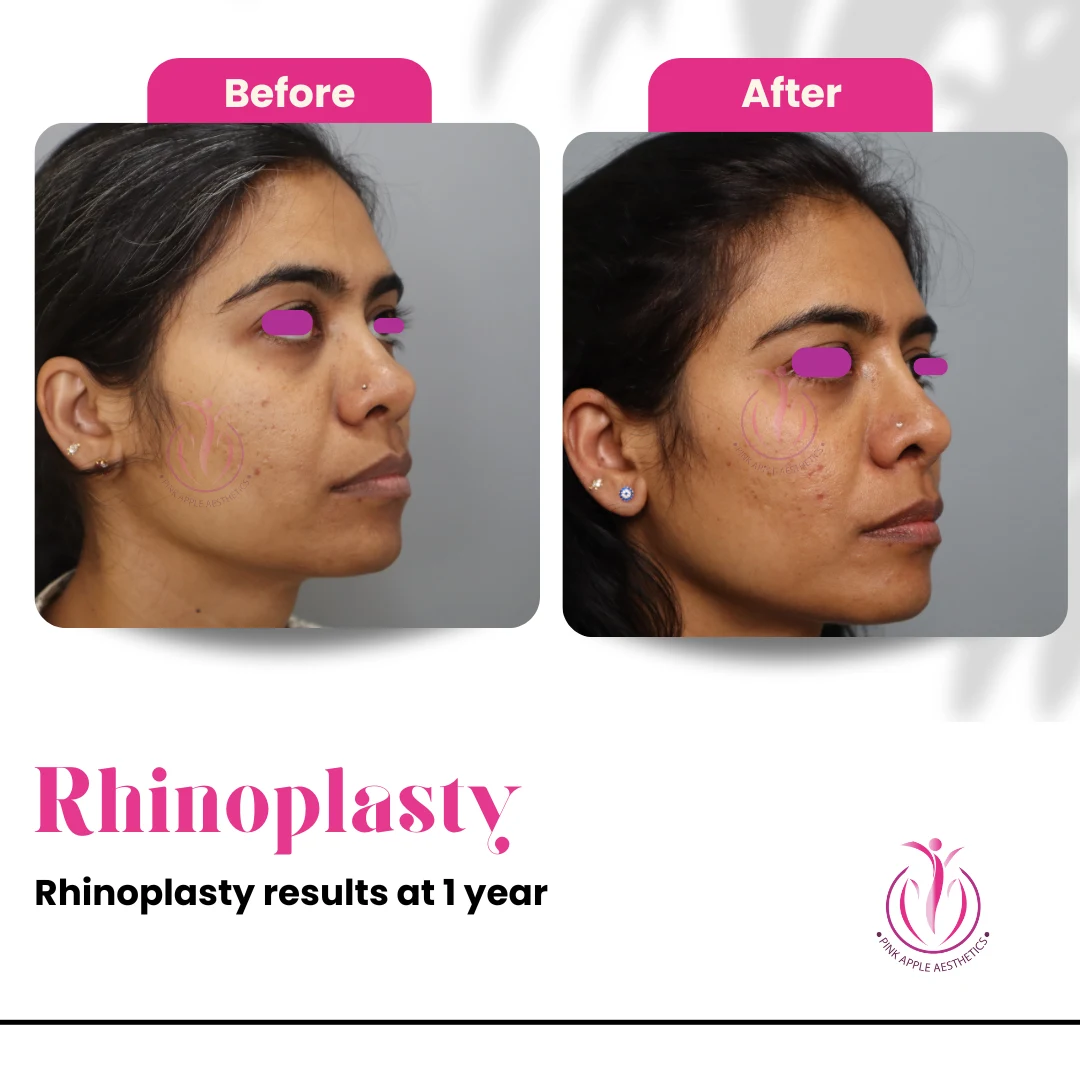

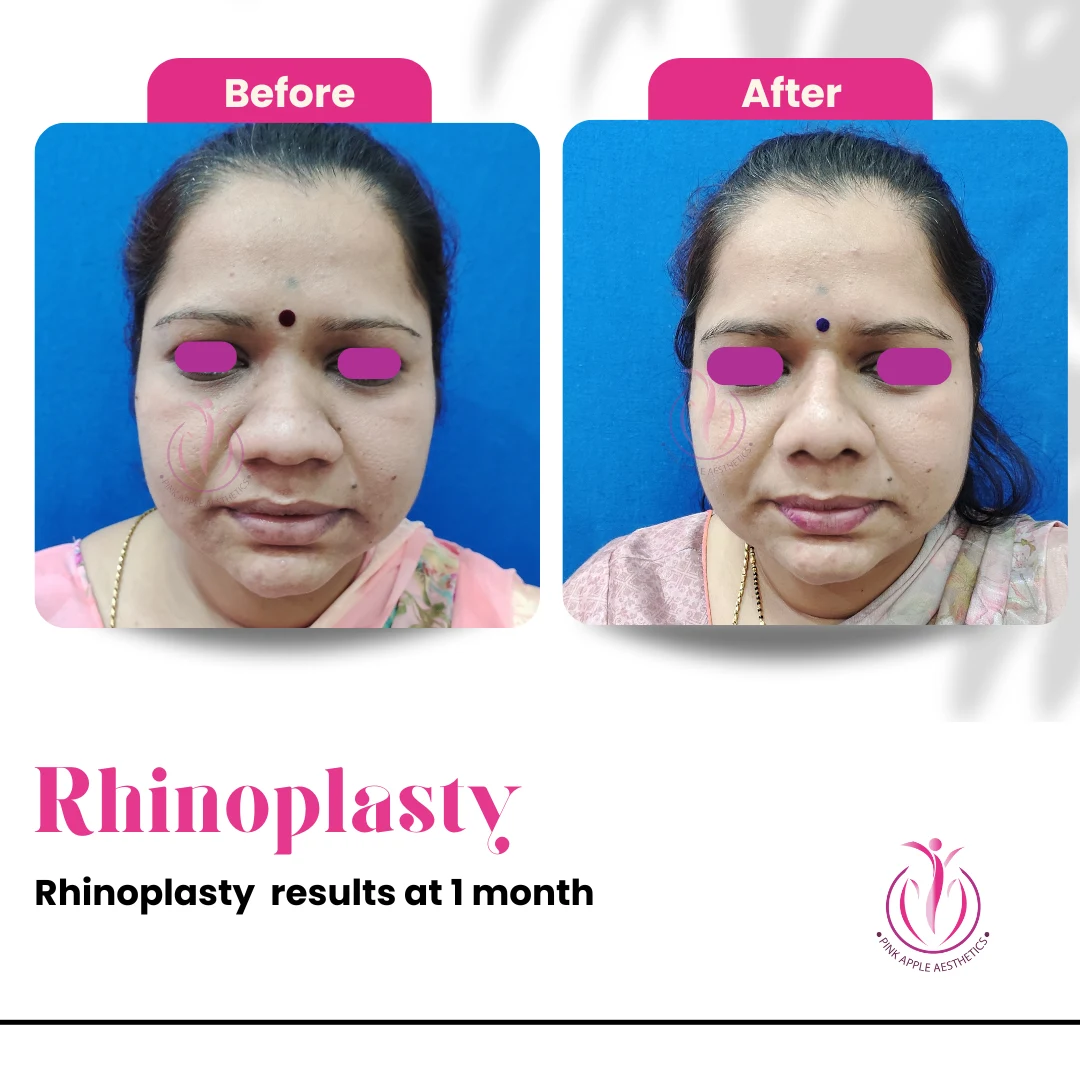


Results shown are from actual patients of Dr. Pinky Devi Ayyappan at Pink Apple Aesthetics, Bangalore. Individual outcomes vary based on nasal anatomy, skin type, and the specific goals discussed in consultation. All images are shared with patient consent.
Types of Rhinoplasty in Bangalore
Every nose is different. During your consultation, Dr. Pinky will evaluate your nasal structure, skin thickness, facial proportions, and your goals before recommending the most appropriate approach.
Open Rhinoplasty
A small incision is made across the columella (the strip of tissue between the nostrils). This gives the surgeon full, direct visibility of the internal nasal structure and is preferred when significant reshaping is required — for example, tip refinement, bridge augmentation, or correction of a complex asymmetry. The scar, though technically external, sits in a natural fold and becomes virtually invisible after healing.
Closed Rhinoplasty (Endonasal Rhinoplasty)
All incisions are made inside the nostrils, leaving no visible external scars. This approach is well-suited for more limited corrections such as smoothing a dorsal hump, minor tip refinement, or addressing nasal bone width. Recovery is typically faster with closed rhinoplasty.
Augmentation Rhinoplasty
This is one of the most commonly requested procedures among Indian patients. When the bridge is low or flat, or the tip needs more projection, augmentation rhinoplasty builds volume and height using either cartilage grafts taken from your own septum or ear, or implants in select cases. The result is a nose that looks more defined without looking operated-on.
Reduction Rhinoplasty
When certain features of the nose are disproportionately prominent — a large nasal hump, wide flared nostrils, or an excessively broad tip — reduction rhinoplasty carefully scales these down to bring the nose into better balance with the rest of the face.
Tip Rhinoplasty (Tip Plasty)
A focused procedure that addresses only the nasal tip, without changing the bridge or overall structure of the nose. If your main concern is a rounded, drooping, or asymmetric tip, tip rhinoplasty can make a significant difference with a relatively smaller intervention and shorter recovery.
Functional Rhinoplasty (Septorhinoplasty)
When breathing difficulties are the primary concern — or when they accompany cosmetic goals — functional rhinoplasty corrects the underlying structural causes. A deviated nasal septum, narrow nasal passages, or nasal valve issues can all be addressed. If you have both cosmetic and functional goals, these can be addressed in a single surgery, which is both more efficient and more cost-effective than two separate procedures.
Revision Rhinoplasty (Secondary Rhinoplasty)
If you have had a previous rhinoplasty elsewhere and are not happy with the result — whether due to persistent asymmetry, breathing problems, or an outcome that simply didn't meet your expectations — revision rhinoplasty is performed to correct and refine the nose further. This is a complex procedure requiring an experienced surgeon, as scar tissue from the original operation must be navigated carefully. Dr. Pinky accepts revision cases for patients from across Bangalore and beyond.
Rhinoplasty Surgery Cost at Pink Apple Aesthetics
Rhinoplasty at Pink Apple Aesthetics starts from ₹1,00,000 to ₹1,50,000 (terms and conditions apply). Your final cost will be confirmed after your personal consultation with Dr. Pinky.
We do not publish a single fixed price for rhinoplasty because no two noses — and no two goals — are the same. What you pay depends on what your nose actually needs, and quoting a price before examining you would not be honest.
What your rhinoplasty cost typically includes:
- Surgeon's fee — Dr. Pinky Devi Ayyappan, MCh Plastic Surgery.
- Anaesthesia and anaesthesiologist's fee — rhinoplasty is performed under general anaesthesia.
- Operating theatre charges — use of a fully equipped, sterile surgical facility.
- Nasal splint and post-operative dressings — required for safe healing in the first 7–10 days.
- Pre-operative blood investigations — routine health assessments required before surgery.
- Post-operative follow-up appointments — Dr. Pinky monitors your healing at scheduled intervals.
Are You a Good Candidate for Rhinoplasty?
Good candidates for rhinoplasty share a few common characteristics. During your consultation, Dr. Pinky will assess whether you are ready for the procedure:
- Facial growth is complete — ideally 18 or older, when the nasal structure has finished developing.
- You are in good general health — no uncontrolled conditions such as bleeding disorders, unmanaged diabetes, or active infections.
- You are a non-smoker, or can stop smoking — smoking significantly impairs healing and increases complication risk.
- You have realistic expectations — rhinoplasty can meaningfully improve your nose; it cannot create a perfect or idealised nose that ignores your individual anatomy.
- Your motivation is personal — the best outcomes come from patients who want change for themselves, not under pressure from others.
If you have a history of chronic sinusitis, severe nasal allergies, or previous nasal fractures, please mention this during your consultation. These factors are manageable but do need to be accounted for in planning.
What to Expect: From Consultation to Recovery
Rhinoplasty involves several phases, each important to a safe and successful outcome. Here is what the journey looks like at Pink Apple Aesthetics.
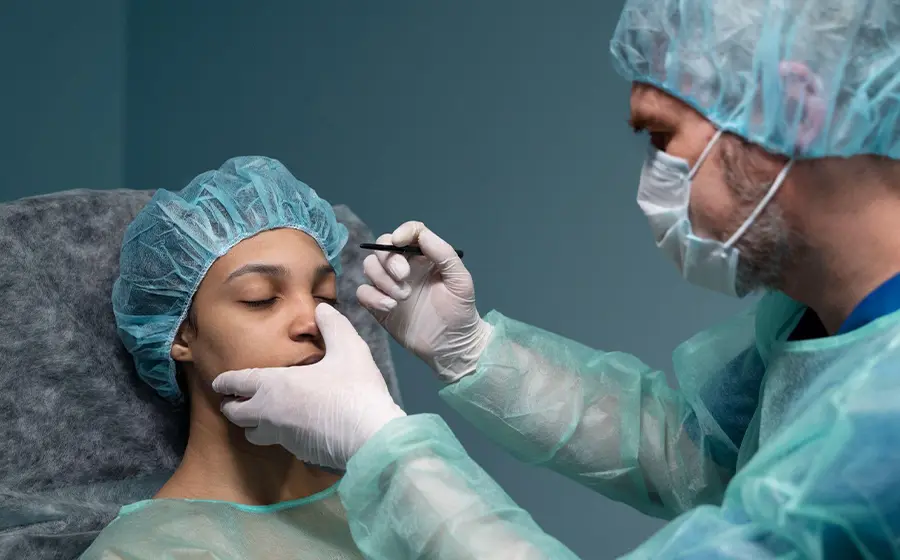
Step 1 — Your Consultation
Dr. Pinky will spend time understanding your concerns, examining your nasal structure, skin, and facial proportions, and discussing your goals in realistic terms. She uses imaging tools to help you visualise potential outcomes. She will also take a thorough medical history and, if you have breathing concerns, may request a CT scan of the nasal passages.
This consultation is a conversation, not a sales pitch. Dr. Pinky is known for honest, unhurried assessments — if she feels a different procedure would serve you better, she will tell you.
Step 2 — Pre-Operative Preparation
Before your surgery date, you will have a set of blood tests and any other relevant investigations. You will receive clear written instructions covering medications to avoid (including blood thinners and certain herbal supplements), dietary guidelines, and what to arrange for your recovery period at home.
Step 3 — The Surgery
Rhinoplasty is performed under general anaesthesia and typically takes between 1.5 and 3 hours, depending on the complexity and type of procedure. You will be in the operating theatre and recovery suite on the same day. Most patients are discharged the same day or the following morning.
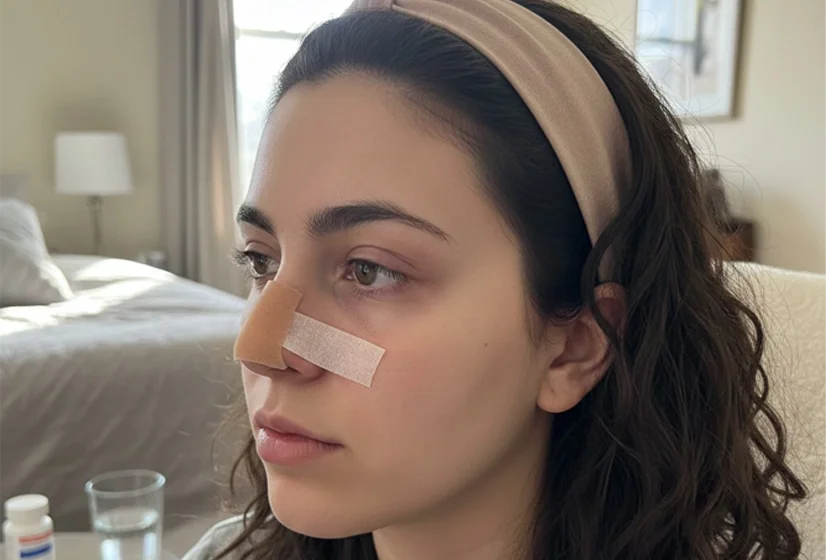
Step 4 — Immediate Recovery
Step 5 — Seeing Your Results Rhinoplasty results reveal themselves gradually. The initial swelling resolves within the first few weeks, and the nose continues to settle and refine over 3 to 6 months. The full, final result — including complete softening of tip swelling — can take up to a year in some patients, particularly those with thicker skin. Patience is genuinely important with this procedure.
Factors that influence the final cost:
- Type and complexity of rhinoplasty — a tip rhinoplasty is typically less involved than a full open rhinoplasty or a septorhinoplasty.
- Open vs. closed technique — open rhinoplasty, which requires more surgical time and precision, may cost more than a closed approach.
- Whether functional correction is combined — if breathing issues (deviated septum) are addressed alongside cosmetic reshaping, this involves additional steps.
- Revision rhinoplasty — secondary procedures are more complex and generally take longer, which is reflected in cost.
Cosmetic rhinoplasty is not covered by health insurance. If you have a medically documented breathing disorder (such as a deviated septum confirmed on a CT scan), the functional component of the surgery may be partially covered — we recommend checking directly with your insurer. EMI options are available.
What Are the Risks of Rhinoplasty?
Rhinoplasty is a safe procedure when performed by a board-certified plastic surgeon in a proper surgical facility. However, like any surgery, it carries some risks that every patient deserves to know about before making a decision.
- Swelling and bruising — expected and temporary, typically resolving within 2 weeks for most of the visible swelling
- Infection — rare but possible; managed with prescribed antibiotics if it occurs.
- Asymmetry — some minor asymmetry in healing is normal; significant asymmetry requiring correction is uncommon with an experienced surgeon.
- Temporary changes in skin sensation — numbness or altered sensation around the nose is common during recovery and usually resolves.
- Prolonged swelling — tip swelling in particular can persist for several months, especially in patients with thicker skin.
- Need for revision — a small percentage of patients (estimated at 5–15% across the literature) may desire or require a revision procedure. Revision is not performed for at least 12 months after the primary surgery, to allow full healing.
- Anaesthesia risks — general anaesthesia carries small, well-managed risks that are discussed with you by the anaesthesiologist before surgery.
At Pink Apple Aesthetics, we believe informed patients make the best surgical decisions. Dr. Pinky will take the time during your consultation to explain all relevant risks in the context of your specific case — no question is too small.
Why Choose Dr. Pinky Devi Ayyappan for Your Rhinoplasty?
Not all plastic surgeons specialise in nasal surgery. Rhinoplasty is regarded as one of the most technically demanding cosmetic procedures because the nose sits at the centre of the face — every millimetre matters, and errors are immediately visible.
Dr. Pinky Devi Ayyappan completed a dedicated Facial Aesthetic Surgery Fellowship at YK Plastic Clinic and Jayjun Plastic Surgery in Seoul, South Korea — one of the world’s most respected centres for rhinoplasty and facial refinement. This means her technique for nose reshaping has been trained and refined at an internationally recognised level.
Her qualifications and training at a glance:
- MCh (Plastic, Reconstructive & Aesthetic Surgery) — the highest postgraduate qualification in plastic surgery in India.
- MS (General Surgery) + MBBS — full surgical foundation.
- Facial Aesthetic Surgery Fellowship, Seoul, South Korea — specialised rhinoplasty and facial surgery training.
- Fellowship, Dr. Patrick Tonnard & Dr. Alexis Verpaele, Belgium — trained by two of Europe's leading facial surgeons.
- Observership, Villa Bella Clinic, Dr. Giovanni Botti, Italy — exposure to advanced Italian aesthetic surgery techniques.
- Board-Certified Plastic Surgeon — registered with the Karnataka Medical Council.
- Times of India Top Brand 2024 Award — recognised among Bangalore's leading aesthetic clinics.
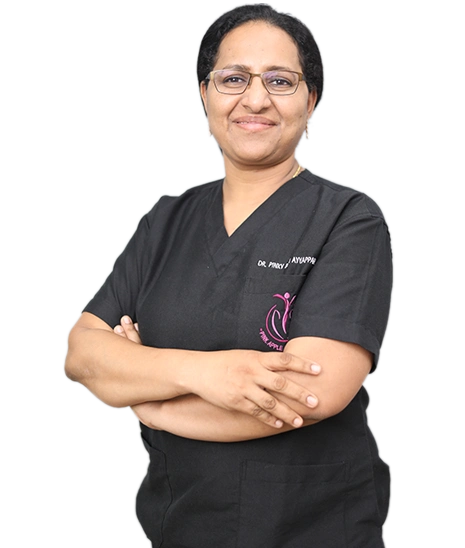
Dr. Pinky’s Seoul fellowship specifically focused on facial aesthetics including rhinoplasty techniques suited to Asian and South Asian facial anatomy — making her particularly experienced with Indian nose types and proportions.
Rhinoplasty — Frequently Asked Questions

Will my nose look natural after rhinoplasty?
Yes — when performed with the right technique and a surgeon trained in Asian and Indian facial anatomy, rhinoplasty results should look natural. The goal at Pink Apple Aesthetics is never to make you look ‘done’ or to create a Westernised nose. Dr. Pinky’s Seoul fellowship training in facial aesthetics specifically focused on rhinoplasty for Asian facial proportions, which is highly relevant for Indian patients.
What is the minimum age for rhinoplasty in India?
Most surgeons, including Dr. Pinky, recommend waiting until the age of 18, when facial growth and nasal development are complete. For female patients, nasal growth is typically complete between 15 and 17 years; for male patients, slightly later. Performing rhinoplasty on a growing nose risks the results changing as the face continues to develop.
How long does the swelling last after a nose job?
Most of the visible bruising and swelling resolves within 2 weeks, and you will look largely normal to others by that point. However, subtle swelling — particularly at the tip — continues to reduce over 3 to 6 months. For patients with thicker skin, full resolution can take up to a year. The results get better with time.
Is rhinoplasty painful?
The surgery itself is performed under general anaesthesia, so you feel nothing during the procedure. After surgery, most patients describe the discomfort as pressure and congestion rather than sharp pain, which is well managed with prescribed pain medication. The majority of patients find the first 2–3 days the most uncomfortable, after which it improves significantly.
Can rhinoplasty fix breathing problems?
Yes. When breathing difficulties are caused by structural issues — such as a deviated septum, collapsed nasal valve, or enlarged turbinates — functional rhinoplasty (also called septorhinoplasty) can address these directly. Many patients choose to combine functional correction with cosmetic reshaping in the same procedure, which is both practical and more cost-effective.
Can rhinoplasty be done under local anaesthesia?
At Pink Apple Aesthetics, rhinoplasty is performed under general anaesthesia for patient comfort and surgical precision. Tip rhinoplasty in very selected cases may be done under local anaesthesia with sedation — Dr. Pinky will advise what is appropriate for your specific procedure during consultation.
What is the recovery time for rhinoplasty surgery in Bangalore?
You can return to light daily activities and office-based work within 7 to 14 days in most cases. Exercise and strenuous activity should be avoided for 4 to 6 weeks. You can wear spectacles after approximately 6 weeks, once the nose has healed sufficiently to bear the pressure. Sun exposure to the nose should be limited during the healing phase.
Will there be visible scars after rhinoplasty?
With closed rhinoplasty, all incisions are inside the nostrils and there are no external scars. With open rhinoplasty, there is a small incision across the columella (the underside of the nose between the nostrils). This heals into a very fine line that sits in a natural shadow and is not visible in normal social interaction. The surgical benefit of better access with open rhinoplasty typically outweighs the minimal scar concern for patients requiring significant reshaping.
Is a rhinoplasty result permanent?
Yes. Surgical rhinoplasty produces permanent structural changes to the bone and cartilage of the nose. The results do not reverse over time, though the natural ageing process continues to affect the overlying skin. Non-surgical rhinoplasty using dermal fillers is temporary and typically lasts 6 to 18 months, requiring repeat treatments.
How do I choose the right rhinoplasty surgeon in Bangalore?
Look for an MCh-qualified plastic surgeon (the highest Indian postgraduate qualification in the specialty), not just a cosmetic surgeon or ENT with limited aesthetic training. Ask to see a genuine before and after portfolio of the surgeon’s own rhinoplasty work. Seek out someone who takes time to understand your goals rather than rushing to quote a price — and someone who is honest if they feel a procedure is not right for you.